
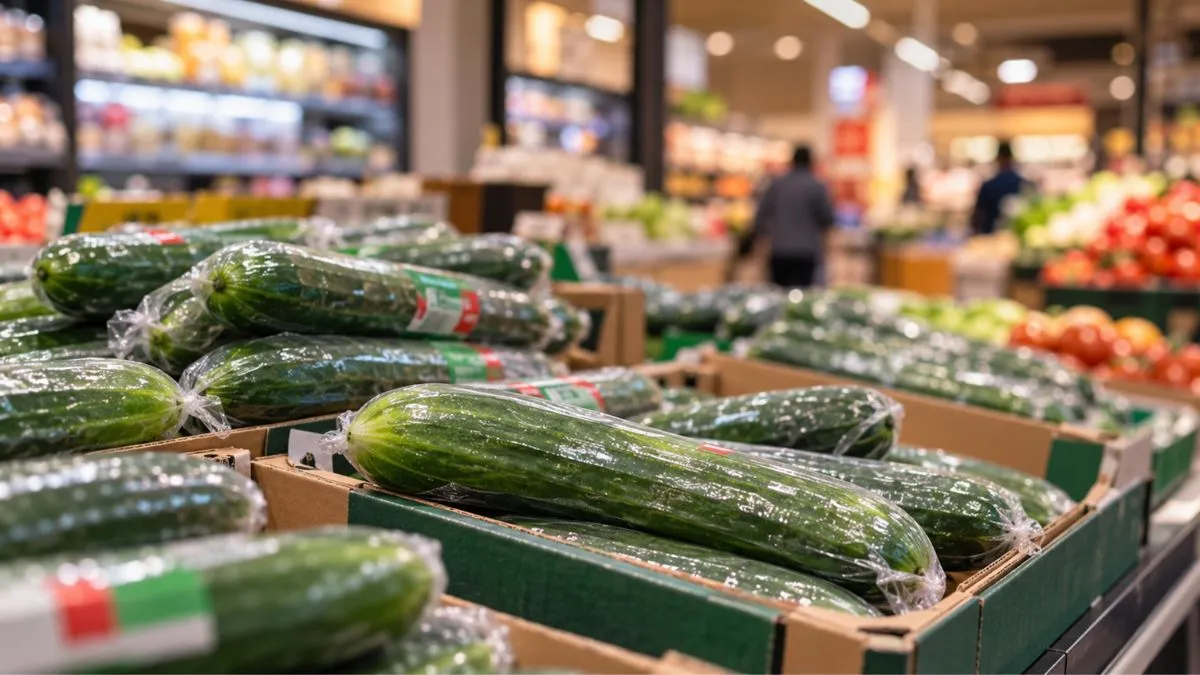
An Indian living in Norway has sparked a conversation online after sharing a look at just how expensive some everyday vegetables can be there compared with prices back home. The user, Vinod, posted a video on X, formerly Twitter, showing organic lemons, tomatoes and cucumbers being sold at prices that may come as a shock to many Indians.
The video shows organic lemons selling for around Rs 850 per kilogram, tomatoes for about Rs 680 per kilogram and a single cucumber for roughly Rs 300. Vinod said that despite having lived in Norway for years, the prices at local supermarkets still surprise him whenever he goes grocery shopping.
Vegetable prices that caught his attention
"Even after living in Norway for years, it still surprises me every time I visit the butikk," Vinod wrote.
He then listed the prices shown in the video: "These are the daily prices of groceries: Organic lemon: Rs 850/kg, tomato: Rs 680/kg, cucumber: Rs 300 each."
For comparison, Vinod said vegetable prices in India's metros can be far lower. "In India's metros, lemons can cost around Rs 90-Rs 110/kg, tomatoes Rs 60-Rs 80/kg, and cucumbers Rs 20-Rs 30 each, depending on quality."
According to his comparison, vegetables are eight times cheaper in India than in Norway, while salaries in Norway are not eight times higher.
"Still, we complain as always," Vinod wrote. "It's not about Norway's cost structure, salaries, imports and so on... it just makes me wonder if we're paying our farmers a fair price, enough for their hard work in India."
He ended by putting the question to his followers: "What do you think, fam? Are we failing our farmers in India?"
Take a look at the post below:
Social media debate over farmer prices
The post went viral and opened up a wider discussion around how agricultural value chains work across different economies.
One user argued that farmers are not receiving a fair share despite consumers in cities paying more, writing, "Farmers aren't getting a fair price, even though urban consumers often pay more relative to their incomes. The real gains go to middlemen, whose influence over prices is allegedly tied to political control."
Another commenter took a different approach and said the comparison needed to account for income levels before drawing conclusions. "Look at the per capita income in the countries you're comparing with India. Then examine how much of that income is concentrated among the top 1% in each country. Once you have that authentic data, you can make the comparison again," he wrote.
A third user strongly praised Vinod for raising the issue and said such comparisons often miss what low prices in India can mean for farmers and other workers.
"I have immense respect for you for raising such an important issue. I see countless posts from NRIs criticising high vegetable prices abroad while praising India for being cheaper, but very few stop to ask whether those low prices are partly because our farmers are being underpaid. The same applies to people celebrating services like Blinkit that offer rapid delivery in India but are less common abroad. The uncomfortable reality is that vulnerable sections of society may be bearing the cost of that convenience," he wrote.
ALSO READ:
Mumbai biker gets uneasy as stranger follows her, his one-line explanation changes everything
