
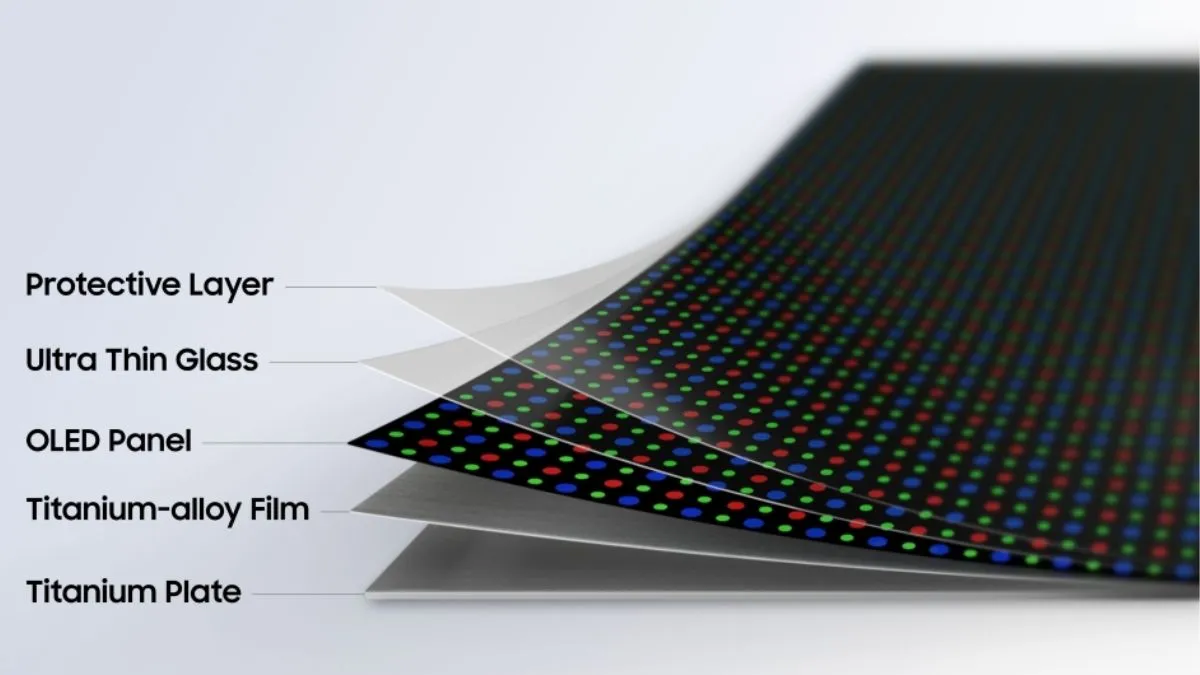
Samsung has just pulled the wraps off Flex Titanium, its newest foldable display tech that’s supposed to make the next wave of Galaxy foldables slimmer, tougher, and just way more durable. This setup blends titanium-based materials with cutting-edge OLED design, so you not only get a display that can handle daily wear but also one that looks and feels better—say goodbye to deep creases and that nagging worry about fragility.
Samsung is keeping quiet about which models will actually ship with Flex Titanium, but pretty much everyone expects to see it launch with their upcoming Galaxy foldables.
What is Samsung Flex Titanium?
Flex Titanium is Samsung's newly developed foldable display structure, which will be replacing conventional support materials with two titanium-based components:
- A titanium-alloy film positioned beneath the OLED display.
- A flexible titanium support plate located underneath the display module.
It is a reimagined foldable display that swaps out the old standard support layers for a pair of new titanium-based components.
Picture this: right under the OLED display, there’s a layer of titanium-alloy film, and beneath the whole display module sits a flexible titanium plate. Together, these pieces boost durability without adding bulk—you get strength and flexibility, all while keeping the device nice and slim.
Titanium-alloy film makes the display stronger
Honestly, if you have ever worried about foldable phones wearing out too soon or developing those ugly creases, this is Samsung’s answer. The real highlight here is the titanium-alloy film. It sits just under the OLED layer and, according to Samsung, is twenty times stiffer than the usual polymer films.
Thanks to an ultra-precise rolling process, it’s only about a third the thickness of a human hair. So your phone stays light and sleek but takes folding and unfolding in stride.
Then you have the flexible titanium support plate underneath. Samsung engineers gave it a micro-patterned hole design that lets the plate bend smoothly but still hold it together. It also ditches air gaps between the display components, which means better bonding, greater longevity, and a less visible crease where the display folds.

Why go with titanium?
This stuff is legendary for strength and corrosion resistance; think spacecraft, satellites, and Mars rover wheels. It’s not easy to make titanium work in a wafer-thin foldable phone because, well, it’s not exactly known for being bendy. But Samsung’s team spent seven generations perfecting this compromise between toughness and flexibility.
On top of all that, Samsung upgraded the display itself. Flex Titanium introduces a higher-res display, next-gen organic OLED materials, and better power efficiency—so you get crisper visuals, nicer colours, and your battery lasts longer.
When will Flex Titanium arrive?
As for when you will actually see this in the wild, that is still under wraps. But all signs point to a big reveal at Samsung’s next Galaxy Unpacked event on July 22, where the new foldables should make their debut.
Flex Titanium claims to deliver; it’s going to change how people think about foldable phones. They are expected to be sturdier, look better, and just make more sense for day-to-day life.