
With the Ministry of Home Affairs (MHA) officially notifying the resignation of Jagdeep Dhankhar as Vice-President on Tuesday, all eyes are now on the Election Commission to kickstart the process of choosing his successor. While the law mandates a strict deadline for presidential elections to be held within six months of a vacancy, no such timeline exists for vice-presidential polls. However, it now appears unlikely that the new Vice-President will take charge before the conclusion of the Monsoon Session. The Constitution of India mandates that the election to fill a vacancy in the office of the Vice-President must be conducted "as soon as possible." The newly elected Vice-President is entitled to serve a full five-year term starting from the date he/she assumes office.
Statutory timeline after notification
The reason lies in the detailed procedure outlined in the Presidential and Vice-Presidential Elections Act. Once the Election Commission notifies the election schedule, a statutory timeline of 30 to 32 days comes into play. Candidates are allowed 14 days to file their nominations followed by one day allotted for scrutiny and a two-day period for withdrawal of nominations. If the need for polling arises, the election must be held no earlier than 15 days after the withdrawal deadline. This means the entire process from notification to declaration of results spans at least 32 days.
Preparation period before notification
Moreover, the Commission usually takes about two to three weeks to prepare before issuing the election notification. This preparatory phase includes updating the electoral college list -- which consists of members of both Lok Sabha and Rajya Sabha -- along with printing ballot papers with counterfoils. These need to be prepared in specific formats and languages approved by the Election Commission. Rule 6 of the Presidential and Vice-Presidential Elections Rules, 1974, mandates that candidates' names appear in the exact order as per the final list of contesting candidates.
New VP unlikely before August 12
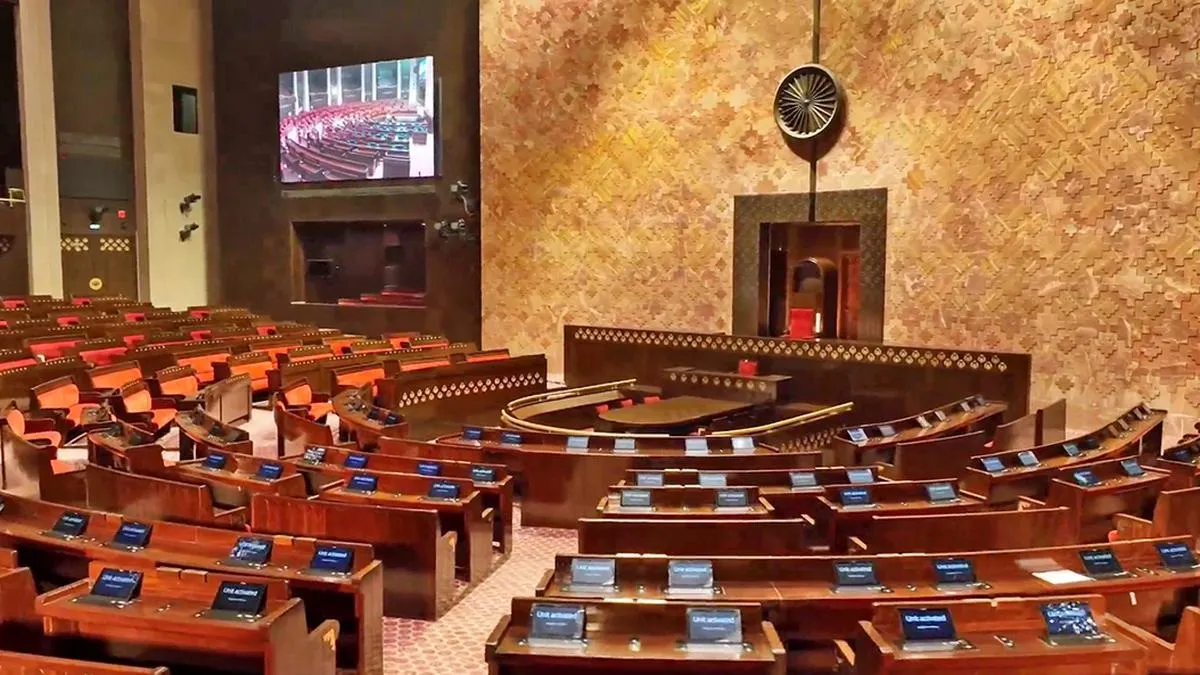
Given the time-consuming procedural requirements and the initial preparatory period, even if the Election Commission begins work immediately, the election process is highly unlikely to wrap up before the Monsoon Session ends on August 12. This means the Rajya Sabha may have to wait until the Winter Session, expected around November or December, to welcome its new Chairperson.
Election process for new Vice President
The process for electing a new Vice President is governed by the Vice-President Election Rules, 1997, under the Representation of the People Act. The election is conducted by the Election Commission of India.
The electoral college for the Vice Presidential election includes:
- Members of both the Lok Sabha and the Rajya Sabha
- Nominated members of both Houses are also eligible to vote
The voting is done by secret ballot using the single transferable vote system to ensure a proportional representation method is followed.
Dhankhar resigned on July 21
It is to be noted here that Dhankhar resigned from his post on Monday evening "to prioritise health care and abide by medical advice".He sent his resignation letter to President Droupadi Murmu. "To prioritise health care and abide by medical advice, I hereby resign as the Vice President of India, effective immediately, in accordance with Article 67(a) of the Constitution," Dhankhar said in his letter. "I extend my deepest gratitude to Your Excellency - the Hon'ble President of India for her unwavering support and the soothing, wonderful working relationship we maintained during my tenure," he added.
ALSO READ
