
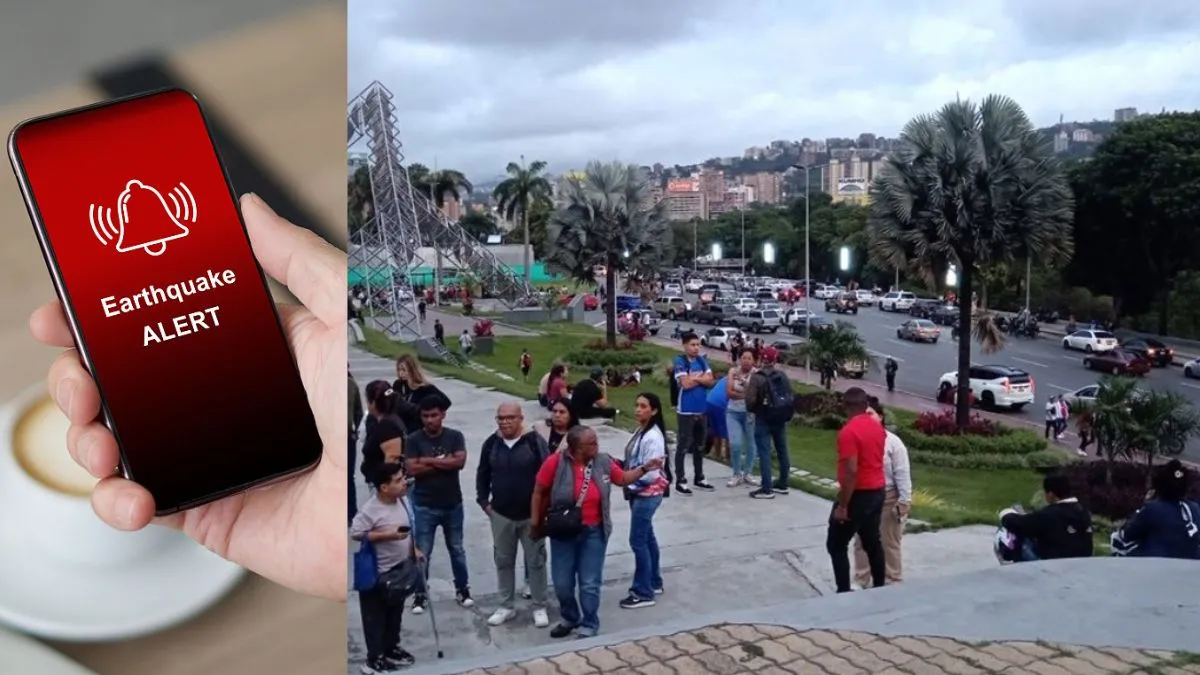
Just before two massive earthquakes struck Venezuela, people started getting alerts on their Android phones. These were not random notifications, but they were advanced warnings, which started popping up moments before the ground started shaking uncontrollably. A lot of people wondered how their phones knew what was coming.
Turns out, the secret was Google’s Android Earthquake Alerts System, which is a clever setup that uses millions of smartphones as a giant, crowdsourced network for earthquake detection.
Google’s Android Earthquake Alerts System: Details
Modern Android smartphones come with tiny accelerometers inside, which help to understand the movement, like how your phone uses these to tell if you are turning the screen, shaking it or picking it up.
But Google realised that these sensors are capable of picking up more than just a change in orientation. When a smartphone starts feeling strange, rhythmic vibrations, like the ones during an earthquake, it further sends an anonymous signal to Google, along with its location.
Now, one shake of one phone does not mean anything serious, but hundreds or thousands of phones in the same area start to send similar signals – this is certainly a different story.
Google servers work on analysing these signals in real time, and in case the pattern matches an earthquake, the system shoots out an alert to the Android devices which are available nearby.
With over two billion Android devices out there, this system forms one of the largest seismic detection networks on the planet.
How do Android phones send a warning before the earthquake hits?
It all comes down to physics, as earthquakes create different waves as they travel through the earth.
- First are the P-waves, which are around 6 kilometres per second but usually quicker, so people hardly notice them.
- Second, come the S-waves, which are slower, at about 3 to 4 kilometres per second. This means they are way more powerful than the P-waves.
These are the waves that knock things over and cause serious damage.
Android phones can catch those early, speedy P-waves. Once the phones pick up on them, they notify Google’s servers, which work at nearly the speed of light. That lets Google confirm there’s an earthquake and warn people before the destructive S-waves arrive. The epicentre could be hundreds of kilometres away, so the system buys people valuable seconds to drop, cover, and hold on.
How do the alerts work?
Android’s system puts out two types of alerts:
1. “Be Aware” alert: This alert pops up when the device detects milder shaking, which could hint that something might happen and the user must be alert.
2. “Take Action” alert: This alert means the shaking is stronger than usual. This further encourages you to act fast to take shelter – get under a table, protect your head and follow whatever safety steps you could.
Tap on the alert, and your phone shows you more info: magnitude estimates, location details, and tips on staying safe.
Earthquake Alerts in India and Beyond
Google rolled out its earthquake alert system in India back in 2023, and it works on any device with Android 5.0 or later. As long as your smartphone is online (via Wi-Fi or mobile data), you will be getting the alerts.
But, if you do not want these warnings, then you can turn them off in your device settings.
