
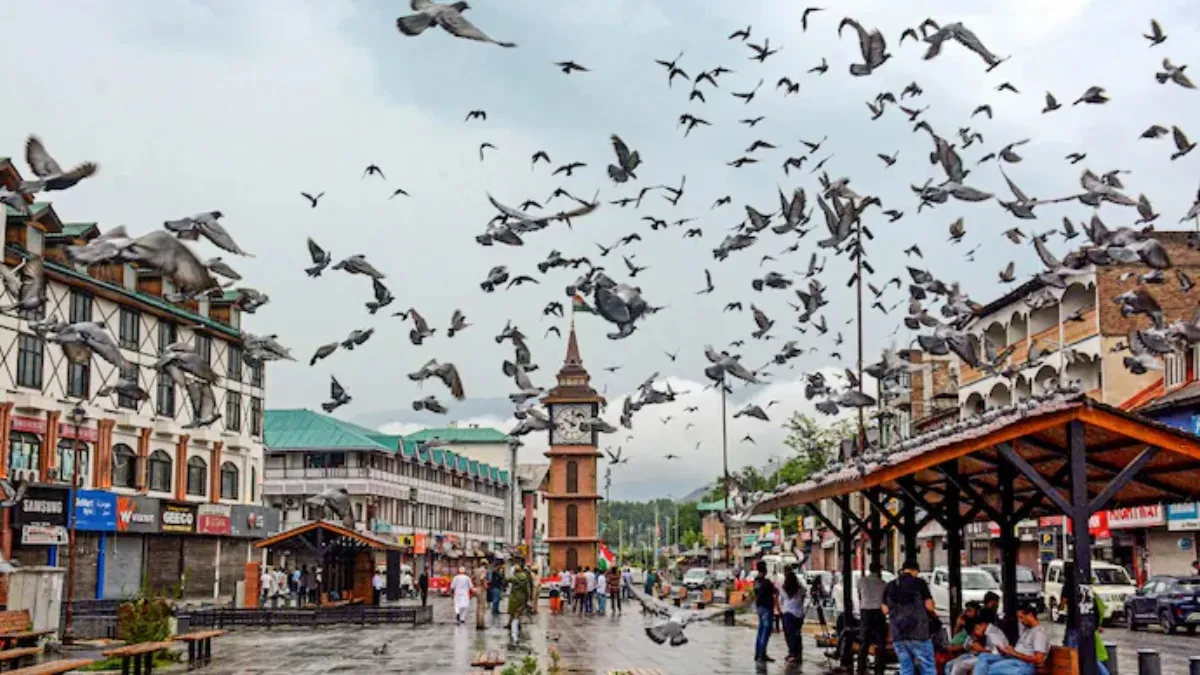
In a historic move, the Bharatiya Janata Party-led Central government revoked Article 370 on August 5, 2019, ending the special status of Jammu and Kashmir. The Modi government had also bifurcated the erstwhile state into two Union Territories of Jammu and Kashmir and Ladakh.
It has now been six years since Article 370 was abrogated. At the time, the government described it as a "turning point" that would bring peace, development, and closer integration of the Kashmir Valley with the rest of India. The move aimed to remove constitutional barriers and align Jammu and Kashmir more directly with Indian laws and policies. Since then, the region has witnessed various administrative, political, and developmental changes. Let’s now understand what Article 370 and Article 35A were all about.
What was Article 370?
Article 370, which came into effect in 1952, gave Jammu and Kashmir special autonomy. It allowed the state to have its own constitution, flag, and make laws on all matters except finance, defence, foreign affairs, and communications. This meant the state had significant control over its internal matters.
It restricted the Indian Parliament's legislative powers to legislate on matters concerning Jammu and Kashmir, requiring the state government's concurrence for applying most laws.
Article 370 was included in Part XXI of the Constitution, which deals with Temporary, Transitional, and Special Provisions. It stated that the Constituent Assembly of Jammu and Kashmir would be empowered to recommend the extent to which the Indian Constitution would apply to the state. The state assembly could also abrogate Article 370 altogether, in which case all of the Indian Constitution would have applied to the state.
Because of this special status, the state had a Sadar-e-Riyasat for governor and prime minister in place of a chief minister till 1965.
What was Article 35A?
Article 35A, added to the Constitution in 1954, gave special rights and privileges to the permanent residents of Jammu and Kashmir. It empowered the Jammu and Kashmir Legislature to decide who qualified as a 'permanent resident' of the state.
A permanent resident of the state was defined as "a person who was a state subject on 14 May 1954, or who has been a resident of the state for 10 years, and has "lawfully acquired immovable property in the state."
This article was added through a Presidential Order called The Constitution (Application to Jammu and Kashmir) Order, 1954, issued under the powers of Article 370.
The background to this was the 1952 Delhi Agreement between Jammu and Kashmir's then Prime Minister Sheikh Abdullah and India's Prime Minister Jawaharlal Nehru. The agreement extended Indian citizenship to the 'State subjects' of Jammu and Kashmir. After the Delhi agitation of 1952, the famous 'Article 35A' was added to the Constitution in 1954.
Key provisions of Article 35A were:
- It allowed the state to grant special rights to permanent residents in areas like land ownership, government jobs, and education scholarships.
- It barred non-residents from permanently settling, buying property, or accessing state benefits.
- It had a discriminatory clause against women: if a female resident married someone from outside the state, she could lose her property rights, and the same applied to her children.
- The provision mandates that no act of the state legislature coming under the ambit of Article 35A can be challenged for violating the Indian Constitution or any other law of the land.
Also Read: CM Abdullah's 'something positive for J-K' post sparks buzz amid Centre's high-level meetings
Also Read: Record voter turnout, investment and drop in violence: Tracing J-K's journey 6 yrs after Article 370
