
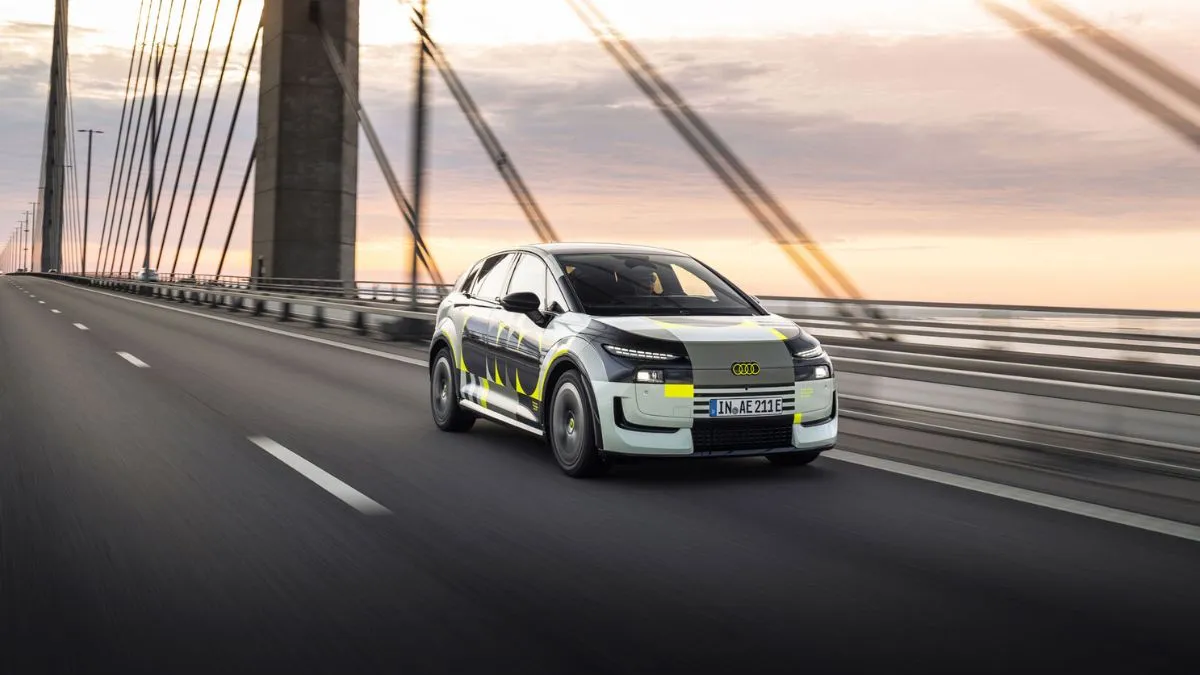
Audi’s getting ready to launch the A2 e-tron in fall 2026, and it’s already touting this model as its most efficient electric car yet. To get there, Audi’s leaned on slick aerodynamics, an upgraded powertrain, and a lithium iron phosphate (LFP) battery. The numbers tell the story: on the WLTP cycle, the A2 e-tron sips just 12.8 kWh per 100 km.
It’s clear Audi wanted to squeeze as much efficiency as possible out of a real-world car. The A2 e-tron delivers on this without cutting away at daily usability or practicality.
Best Aerodynamics in Audi's compact lineup
What makes it special is the aerodynamics. This compact EV slices through air with a drag coefficient of only 0.24—the best in Audi’s small-car lineup. You notice the difference in the details:
- A rounded nose
- A roofline that flows right into a sharply defined rear hatch
- Plenty of subtle tweaks like air curtains
- Tighter body gaps
- Smart wheel-arch airflow management
Even the front cooling intake opens only when needed. All these tweaks together cut consumption by nearly 1 kWh per 100 km.
Smarter electric drive and LFP battery
Under the skin, Audi fits a 140 kW permanently excited synchronous motor, tuned specifically for daily driving efficiency. They’ve reworked the power electronics with silicon carbide tech, made the motor laminations thinner, and updated the transmission, which all slash energy loss by about 10 per cent over the previous setups.
The 61 kWh LFP battery stands out, too. Audi’s using a cell-to-pack layout to bump up energy density and keep things safe and durable. The real-world advantage is that you can often charge all the way to 100 per cent without worrying about harming battery health over time.
On top of that, smart thermal management improves charging efficiency at the wallbox to just shy of 90 per cent.
Bidirectional charging and smart energy features
The A2 e-tron does more than just drive. With bidirectional charging, you can use the car’s battery as a backup for your home (with the right approved hardware, at least in Germany, Austria, and Switzerland to start), or to power external devices using Vehicle-to-Load (V2L).
Designed for everyday electric mobility
This is not about wild features or flashy numbers, but it is a car that is designed for day-in, day-out electric driving with low running costs and the kind of flexibility EV buyers have been waiting for. Audi has put in some serious effort into battery management, ensuring consistent performance and longevity.
Audi plans to pull the wraps off the A2 e-tron worldwide later this year. It’s positioned as their new gateway EV, for drivers who want to go electric without making life complicated.ALSO READ:
