
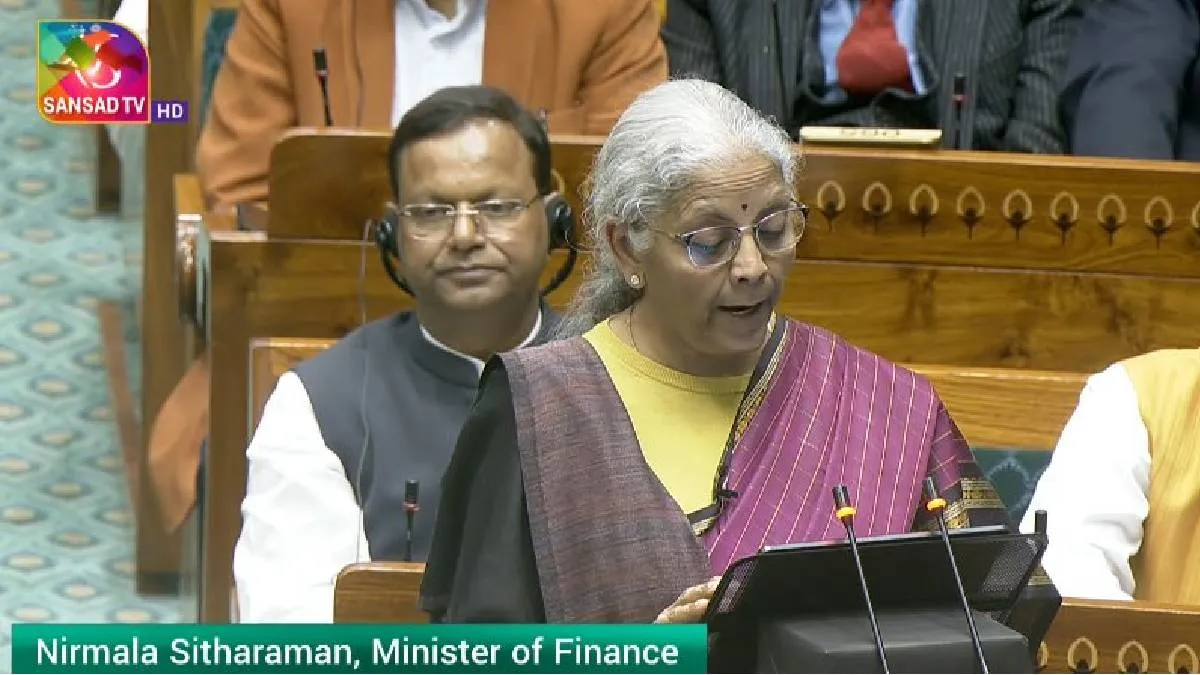
Finance Minister Nirmala Sitharaman on Sunday announced the launch of India Semiconductor Mission (ISM) 2.0, with an outlay of Rs 40,000 crore, aimed at boosting the country’s semiconductor ecosystem. The initiative will focus on producing equipment and materials, designing full-stack Indian intellectual property (IP), and strengthening semiconductor supply chains across the country.
Industry-led research and skilled workforce development
While presenting the Union Budget 2026, the Finance Minister stated that ISM 2.0 will emphasise industry-led research and training centres to develop advanced technology and a skilled workforce.
Download IT and Tech budget announcement PDF here
Electronics components manufacturing scheme gains momentum
Sitharaman also highlighted the success of the Electronics Components Manufacturing Scheme, launched in April 2025 with an outlay of Rs 22,919 crore. She said the scheme has already received investment commitments double the original targets.
“India’s Semiconductor Mission 1.0 expanded the sector’s capabilities. Building on this, we launch ISM 2.0 to produce equipment and materials, develop full-stack Indian IP, and strengthen supply chains. We will also focus on industry-led research and training centres to develop technology and a skilled workforce,” Sitharaman said.
She added that the government proposes to increase the outlay to Rs 40,000 crore to capitalise on the momentum generated by the scheme.
Expansion of AI training across universities
Earlier, the Ministry of Electronics and Information Technology (MeitY) announced a plan to expand artificial intelligence training to 500 universities across the country. The initiative aims to create a strong talent pipeline through specialised course curricula and training opportunities.
The programme follows a model already used in the semiconductor sector, where students at 315 universities are designing chips.
Plans for broader National AI Strategy
The government also plans to announce major research programmes during the summit to make the national AI strategy more comprehensive. The strategy focuses on a common compute stack to make access to technology more equitable, building on earlier digital initiatives such as UPI, DigiLocker, and the 5G rollout.
ALSO READ: Nirmala Sitharaman honours Tamil Nadu’s weaving legacy in a Kanchipuram saree on Budget Day
