
During those hot days when going out seems to be similar to walking into an oven, hydration is what one needs to focus on every day. But hydration is not just about water. What you eat can make a real difference too.
That’s where two familiar summer staples come in, cucumber and kakdi. They look similar, taste refreshing and often share the same plate. But when it comes to beating the heat, is one better than the other?
What’s the difference between cucumber and kakdi?
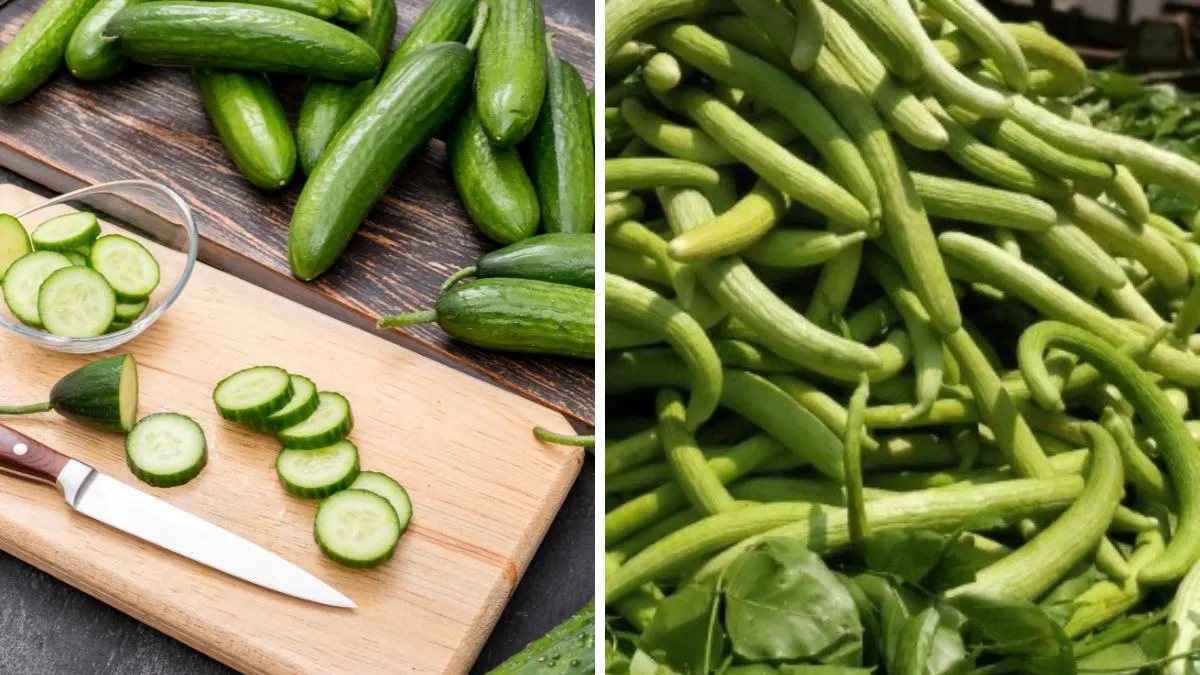
Although they appear quite similar at first sight, cucumbers and kakdi do have certain distinguishing factors. The cucumber is always darker in color, thicker and has a slight sweetness. On the contrary, kakdi is lighter in shade, elongated and crunchy with a different flavor.
They both are from the same family, and therefore share similar nutritional benefits. But how they feel in the body, especially in summer, can be slightly different.
Hydration: Do they really differ?
Both cucumber and kakdi are made up of about 95 percent water, which makes them excellent for hydration. However, kakdi is often considered more cooling and easier to digest. Many people find it lighter on the stomach, especially during peak summer when digestion tends to slow down. It also contains essential nutrients like vitamin C, vitamin K and potassium, which help maintain hydration and support overall body balance in hot weather.
Why kakdi is suddenly everywhere
Kakdi has been quietly part of Indian diets for years, but now it is getting its moment in the spotlight. Dietitian Monika summed it up in a fun way in her reel:
“Yesterday I discovered cucumber’s sister, her name is kakdi. It looks simple, but it’s packed with goodness. It has vitamins C, K, potassium and 95 percent water. Chips say, ‘I’m tasty.’ Kakdi says, ‘I’m healthy and guilt-free.’ Calories? Almost zero. Hydration? A complete winner. Weight loss? Strong support. Cucumber may be popular, but kakdi is quietly doing the real work, keeping you hydrated and your skin glowing.
If you want to eat healthy, make kakdi your daily habit.”
More than just hydration
Both cucumber and kakdi do more than just keep you hydrated. They help flush out toxins, support digestion and keep your skin feeling fresh. Their fibre content can also help with digestion, especially in summer when eating patterns tend to become irregular. Kakdi, in particular, is often preferred by people who experience bloating or acidity, as it tends to be gentler on the stomach.
So, which one should you choose?
The truth is, you do not have to choose one over the other. Both cucumber and kakdi are excellent additions to your summer diet. However, if you seek a lighter, refreshing and easily digestible option, kakdi might be a better choice.
Simpler ingredients sometimes make the best dishes in the summer season. Including moisture-filled foods such as cucumber and kakdi into your meals could aid in keeping your body cool and properly hydrated throughout the intense hot season. As proper hydration in extremely hot seasons is crucial, including foods that provide additional benefits such as crispiness becomes a cherry on top.
Also read: Beyond paneer: 8 vegetarian protein sources you should be eating
