
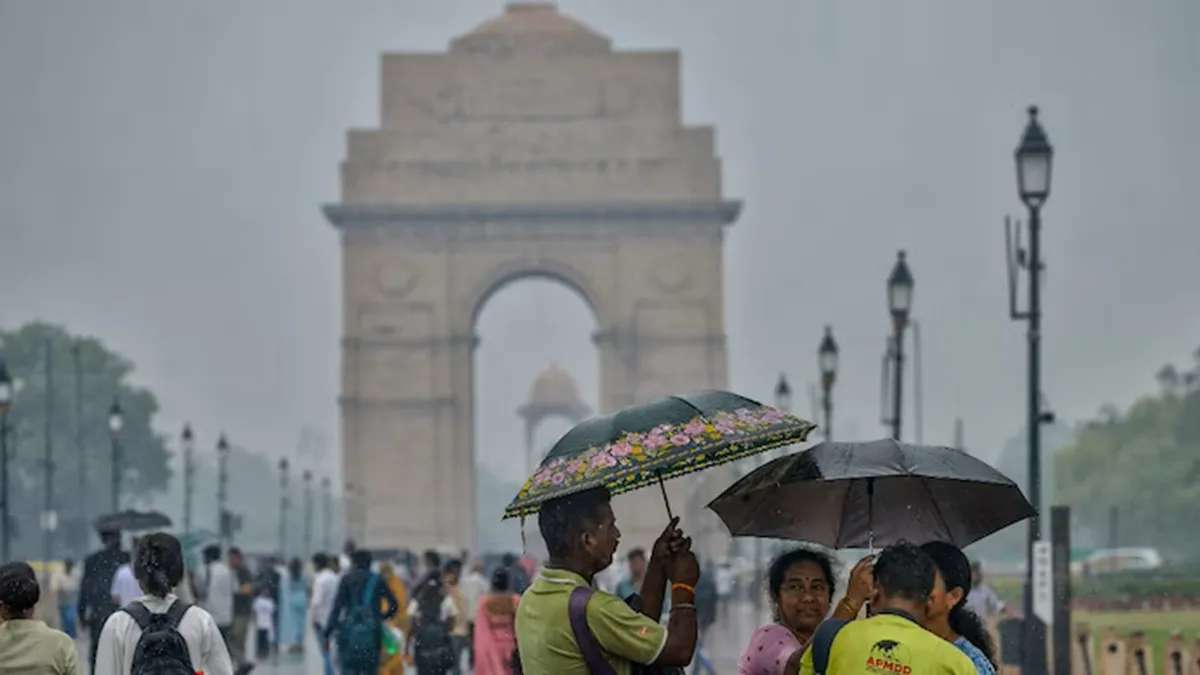
The arrival of the southwest monsoon is traditionally seen as the moment when India's scorching summer finally begins to ease. Dark clouds, widespread showers and cooler winds are expected to bring much-needed relief after months of relentless heat. Yet, for millions living in cities such as Delhi, Mumbai, Ahmedabad, Hyderabad, Bengaluru and Kolkata, the reality feels very different. Even after the rains arrive, the air often remains sticky, nights stay unusually warm and stepping outdoors can feel more exhausting than during the peak of summer.
This growing mismatch between seasonal expectations and actual weather is no coincidence. Scientists say climate change is raising temperatures across the globe, while rapid urbanisation is creating city geography that traps heat and moisture, making Indian cities hotter and far more uncomfortable than they were just a few decades ago.
Monsoon rain does not always mean cooler weather
Many people assume that rainfall automatically lowers temperatures. While rain can briefly cool the air, it also increases moisture levels in the atmosphere. When humidity rises sharply, the human body struggles to cool itself through sweating because sweat evaporates much more slowly. As a result, even when the actual air temperature drops slightly after rain, the weather can feel much hotter than what the thermometer shows. This is measured through the heat index, which combines air temperature and relative humidity to estimate how hot it actually feels to the human body.
Heat index records between 2021 and 2025 illustrate this trend clearly. In Delhi, July and August frequently witnessed heat index values crossing 46°C to 50°C despite the arrival of the monsoon. These oppressive conditions extended the use of cooling appliances, particularly air conditioners, increasing electricity demand for longer periods, according to a policy brief released by the Centre for Science and Environment (CSE) in September 2025.
Why humidity makes the body feel even hotter
The human body naturally regulates its temperature through sweating. As sweat evaporates from the skin, it removes heat from the body and keeps people cool. However, when humidity levels are high, the air is already filled with moisture, leaving little room for sweat to evaporate efficiently. Instead of cooling the body, sweat remains on the skin, making people feel hot, sticky and fatigued.
This increases the risk of dehydration, heat exhaustion and even heatstroke, especially for outdoor workers, elderly people, children and those with existing health conditions. Experts warn that humid heat can often be more dangerous than dry heat because people underestimate how much stress it places on the body.
The rise of dangerously humid heat across India
The problem is becoming increasingly visible across the country. A study released by US-based non-profit Climate Central last month found that India has witnessed a significant increase in dangerously humid heat days since the 1970s. The annual number has increased from 101 days to 141 days. Globally, the figure has more than doubled, rising from 10 days to 23 days.
The study uses wet-bulb temperature as the benchmark. Wet-bulb temperature measures how much an object can cool through evaporation. A wet-bulb temperature of 25°C or higher is considered dangerously humid because it significantly reduces the body's ability to cool itself.
Several Indian cities have recorded sharp increases over the past five decades. As per reports, Delhi has seen dangerously humid days rise from 96 to 135 annually, Ghaziabad from 99 to 137, Nagpur from 44 to 119, Raipur from 82 to 150, Ahmedabad from 137 to 162 and Jaipur from 55 to 101.
Scientists attribute much of this increase to warming oceans. The Arabian Sea and the Bay of Bengal are carrying greater amounts of moisture inland, increasing humidity levels across northern and central India.
Warm nights are becoming India's new climate challenge
One of the most worrying trends is that nights are no longer cooling down the way they once did. The Council on Energy, Environment and Water (CEEW), after analysing heat risks across 734 districts, highlighted a sharp increase in warm nights, rising humidity across the Indo-Gangetic Plain and growing heat exposure in major urban centres including Delhi, Mumbai, Ahmedabad, Hyderabad, Bhopal and Bhubaneswar.
Normally, cooler nights allow buildings, roads and the human body to release the heat accumulated during the day. But when humidity remains high and night temperatures stay elevated, cities fail to cool down.
This means the following day begins with an already warm environment, allowing daytime temperatures to rise even faster. Consecutive hot nights also increase health risks because the body receives little opportunity to recover from prolonged heat exposure.
Climate change is raising the baseline
Climate change has made heatwaves more frequent, longer-lasting and more intense across South Asia. Higher global temperatures mean the atmosphere can hold more moisture, making humid conditions more common. Rising sea surface temperatures in both the Arabian Sea and the Bay of Bengal are strengthening this effect by transporting more water vapour towards land. Scientists say this combination of higher temperatures and increased humidity is producing heat that feels much more severe than before, particularly during the monsoon season.
Urbanisation is making cities much hotter
Climate change is only one part of the story as experts increasingly argue that the design and growth of Indian cities are amplifying heat even further. A 2024 study published in Nature Cities found that urbanisation alone accounted for nearly 60 per cent of the additional warming observed in Indian cities. Rapidly expanding Tier-II cities experienced some of the fastest increases, highlighting how unplanned urban growth is intensifying local temperatures. The study suggests that climate change and urbanisation are now reinforcing each other, causing cities to warm much faster than surrounding rural areas.
When cities become giant heat reservoirs
The Urban Heat Island (UHI) effect is among the biggest reasons why cities remain hotter than nearby rural regions. As cities expand, natural landscapes are replaced with concrete buildings, asphalt roads, steel structures and glass-covered surfaces. These materials absorb large amounts of solar radiation during the day and slowly release that heat after sunset.
Instead of cooling quickly, cities continue radiating stored heat well into the night. Several other factors further intensify this warming. Air conditioners expel hot air outdoors, traffic generates constant heat, industries release additional thermal energy, closely packed buildings restrict wind movement and the steady disappearance of parks and trees removes natural cooling. These factors transform cities into massive heat reservoirs that trap warmth long after sunset.
Why trees and green spaces matter
Vegetation plays a critical role in regulating urban temperatures. Trees provide shade that prevents roads and buildings from heating excessively. They also cool the surrounding air through evapotranspiration, a process in which water released from leaves absorbs heat from the environment.
Unfortunately, rapid urban expansion often replaces parks, wetlands and open spaces with roads, residential colonies and commercial buildings. The loss of green cover not only increases temperatures but also reduces the city's ability to absorb rainwater, creating additional environmental stress.
The growing pressure on electricity and public health
Persistently hot and humid weather is creating challenges beyond discomfort. Households and offices increasingly rely on air conditioners for longer durations, pushing electricity demand to record levels during the monsoon months as well. Higher energy consumption also means greater emissions wherever electricity is generated using fossil fuels, creating a cycle that contributes further to climate change.
Health experts warn that prolonged exposure to humid heat can worsen cardiovascular diseases, respiratory illnesses and kidney-related complications. Outdoor labourers, delivery workers, street vendors and construction workers face some of the highest risks because they remain exposed to extreme weather for extended periods.
Are Indian cities prepared?
Several state governments have introduced Heat Action Plans to reduce heat-related illnesses. In Delhi, authorities have established temporary cooling centres, mobile cooling vans and dedicated cool wards in hospitals during the hottest months.
While these seasonal interventions provide immediate relief, experts argue that long-term planning is far more important. Heat Action Plans need to evolve beyond emergency responses and become year-round urban strategies.
Urban planners recommend increasing tree cover, restoring lakes and wetlands, protecting open spaces, encouraging cool roofs and reflective building materials, improving natural ventilation between buildings and integrating heat resilience into city planning from the beginning.
The road ahead
The uncomfortable heat that many Indians now experience even after the monsoon arrives is not simply a result of changing weather. It reflects the combined impact of global climate change and decades of rapid urban expansion that have fundamentally altered how cities absorb, store and release heat.
Without significant changes in urban planning, India's growing cities will continue to experience hotter days, warmer nights and increasingly dangerous humidity levels, experts say. The challenge is no longer limited to surviving summer heatwaves. It now extends into the monsoon season itself, making heat resilience an urgent priority for India's future cities.
