
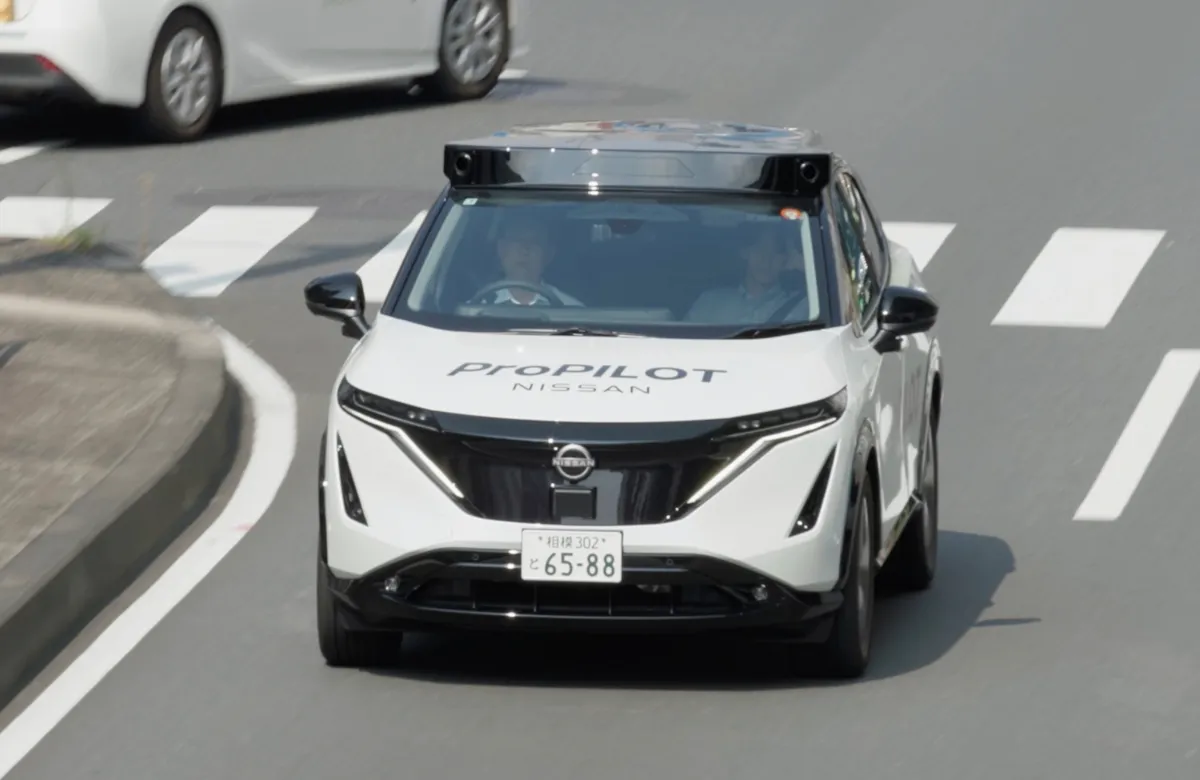
Hoping to revitalise its struggling auto business, Nissan is developing new self-driving technology. In a recent demonstration, a Nissan Ariya sedan, equipped with 11 cameras, five radars, and a next-generation sensor called LiDAR, navigated through downtown Tokyo. The vehicle, set to be available in 2027, successfully braked for red lights, pedestrians, and other cars at intersections.
Unlike its previous self-driving technology, which was designed for the clearly marked lanes of freeways, the new system is built for the challenges of congested, unpredictable city streets.
The autonomous driving market
Nissan's push comes as the autonomous driving market is becoming increasingly crowded. According to market researcher IndustryARC, this market is estimated to reach $2 trillion by 2030, driven by advances in AI, sensor technologies, and data processing.
Major players are already in the field:
- Toyota Motor Corp. has partnered with Waymo, a self-driving technology developed by Google. Waymo has also entered the Japanese market through a partnership with a cab company, though it remains in the testing phase.
- Other automakers like Honda Motor Co., General Motors, and Mercedes-Benz are also developing their own autonomous driving systems.
- Companies from outside the auto industry, such as Amazon and its subsidiary Zoox, are also significant competitors.
Nissan's challenges
Nissan's new initiative comes at a time when the broader Japanese auto market is facing significant challenges, including tariffs imposed by President Donald Trump.
Nissan, in particular, has been struggling. The company has taken drastic measures, including slashing jobs and appointing a new chief executive, Ivan Espinosa, to lead a turnaround. The automaker, known for models like the March subcompact, Leaf electric cars, and the Infiniti luxury brand, reported losses for the April-June period, continuing a trend of a fiscal year in the red.
ALSO READ: Tesla under investigation after children reportedly trapped by faulty door handles
