
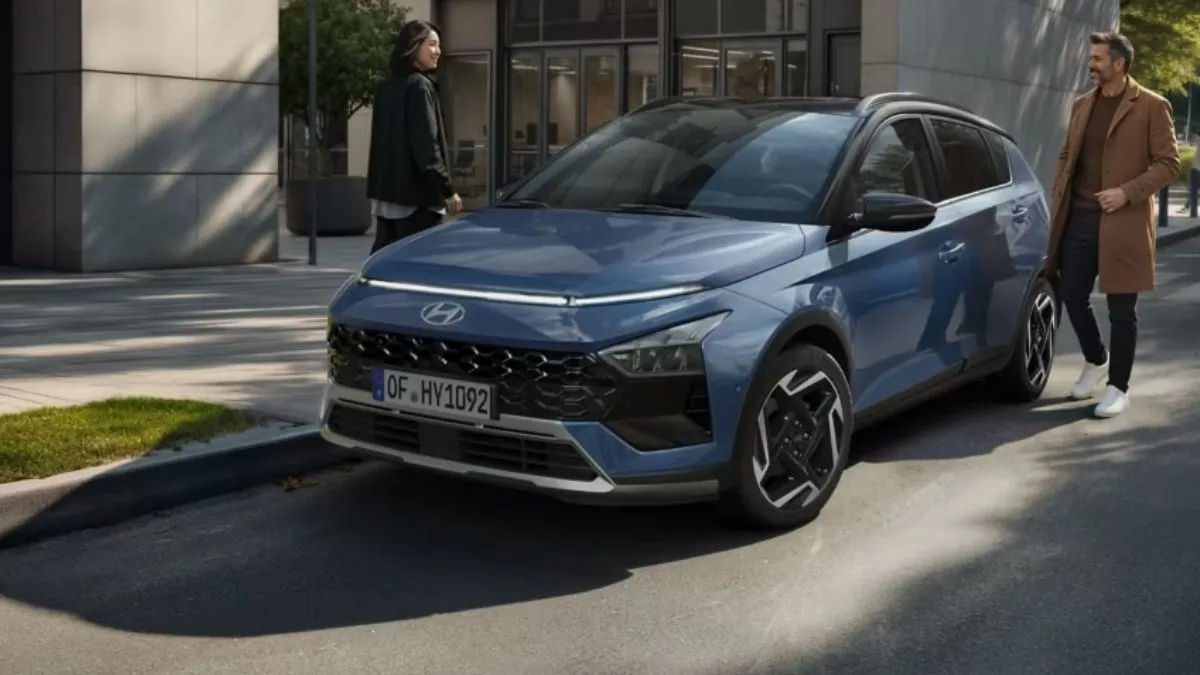
Hyundai has been gearing up to launch the next-generation Bayon, which is a compact crossover SUV set to hit showrooms in Europe, the Middle East and India. The car is already out testing on roads in India and overseas, so the pace is not slowing down.
Thanks to recent spy shots, digital artists have cooked up some renders that give us a decent idea of what’s coming. Honestly, the new Bayon looks tougher and more like an SUV than the outgoing version.
Sportier, more upscale exterior
Expect a more upright and muscular shape this time around. Reports peg its length at roughly 4,200mm, making it a bit bigger than the current European model.
Some standout exterior features include:
- Angular LED daytime running lights
- Vertical headlamps
- Large black grille with horizontal slats
- Sculpted bonnet
- Flush door handles
- Dual-tone alloy wheels
- Blacked-out roof pillars
- Extra cladding on the wheel arches and body
- A sharply rising window line
Out back, Hyundai plans to revise the LED taillamps and give the tailgate a more upright look, which should mean a bit more room for luggage.
High-tech cabin with twin 12.3-inch screens
Step inside and you will find a modern, tech-savvy cabin, even if it skips Hyundai’s latest Pleos infotainment tech. You still get plenty of premium touches.
Look out for:
- Two 12.3-inch screens up front
- A digital instrument cluster
- Wireless Android Auto and Apple CarPlay
- Over-the-Air software updates
- Wireless charging
- Ambient lighting
- A head-up display
- Keyless entry with push-button start
Hyundai’s also keeping real buttons for the stuff you use most so you do not have to fumble through menus while driving.
Focus on safety and connectivity
The Bayon probably switches to an updated K-platform, which boosts rigidity, ride comfort, and crash protection.
A safety kit should include the following:
- Level 2 Advanced Driver Assistance Systems (ADAS)
- Adaptive cruise control
- Lane-keeping assist
- Automatic emergency braking
- Blind-spot monitoring
- Plenty of airbags
Hyundai wants to beat the current Bayon’s four-star Euro NCAP rating from 2021, so expect a real focus on improving those crash test scores.
Hybrid Powertrains on deck
Here’s where things really change: the current Bayon sticks with a 1.0-litre turbo petrol (about 99hp), but the next-gen brings electrified engines.
Expected options:
- 1.2-litre turbo petrol mild-hybrid (four-cylinder with 48V tech, better efficiency, lower emissions)
- Full hybrid setup (around 140hp, 7-speed dual-clutch automatic, better performance and economy)
Going hybrid helps Hyundai stay ahead of tougher emissions rules across global markets.
India launch: Expectation
If Hyundai launches the Bayon in India, it’ll slot between the Venue and Creta in the SUV range. Looks like it targets buyers after a stylish midsize SUV with hybrid tech, more features, and tighter safety.
The global debut is set for late 2026, and you can expect the market launch sometime in early 2027.
