
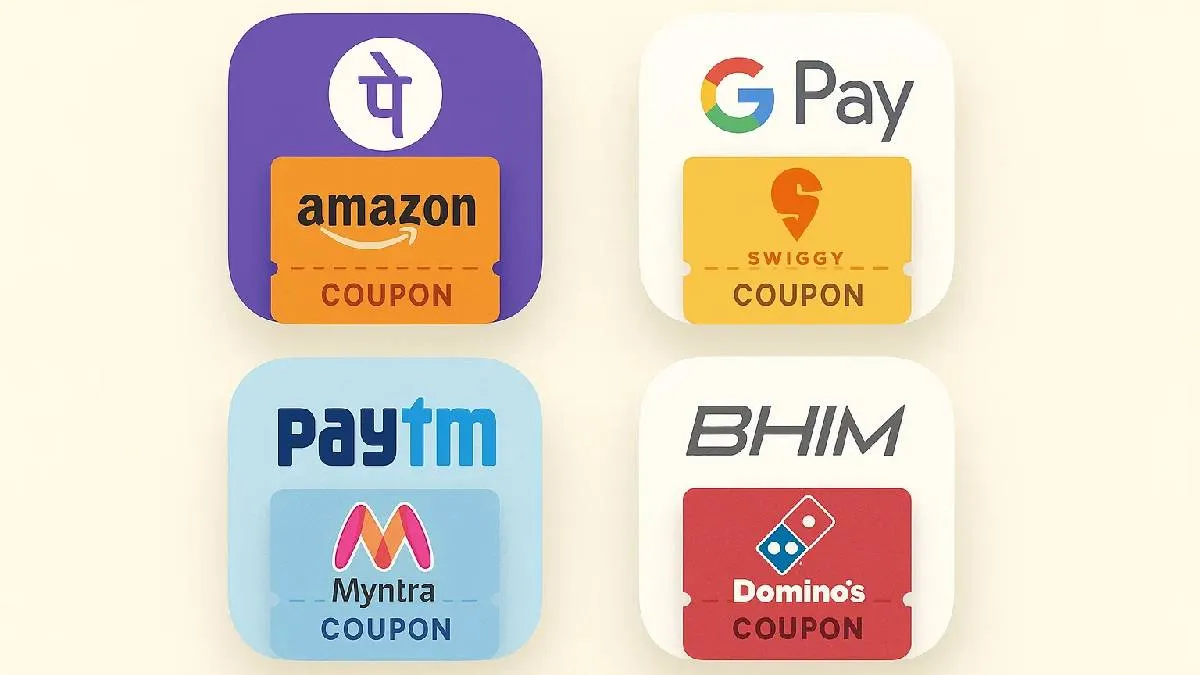
When UPI was first introduced in India, all apps offered cashbacks to their users. Google Pay gained significant popularity due to the substantial cashbacks users received on every transaction. However, now only a few platforms, such as BHIM, still offer cashbacks, even though the National Payments Corporation of India (NPCI) encourages platforms to do so to increase their market share.
Most apps switched to coupons
Most UPI platforms, including PhonePe, Google Pay, and Paytm, have now switched to coupons. If you're wondering why this change occurred, there's a clever business strategy behind it. When UPI was launched, these companies were spending heavily by offering cashbacks to acquire market share. As the system became popular and some companies gained a significant share, they stopped offering cashbacks. There are a few reasons for this shift. While UPI services are free for users, UPI apps incur huge costs on their backend infrastructure, and cashbacks only added to their operating expenses.
Here’s the real reason
Coupons have emerged as a new revenue stream for these companies. They act as advertisements for various brands, and UPI apps earn money by distributing them to users with every transaction. While generally useless for users, these coupons serve as a consistent source of revenue for the companies.
UPI-PayPal partnership
Meanwhile, Global payments firm PayPal announced a partnership with the National Payments Corporation of India (NPCI) for the integration of Unified Payments Interface (UPI) on the PayPal platform. This integration will enable Indian users to make international payments through PayPal using UPI.
The announcement is part of a broader initiative by PayPal to establish global partnerships aimed at connecting various payment systems and digital wallets on a single platform, beginning with compatibility between PayPal and Venmo. The participating partners collectively represent nearly two billion users worldwide, according to a statement from PayPal.
ALSO READ: Google, X putting Indians at risk: Unchecked ads on these platforms helping scammers
