
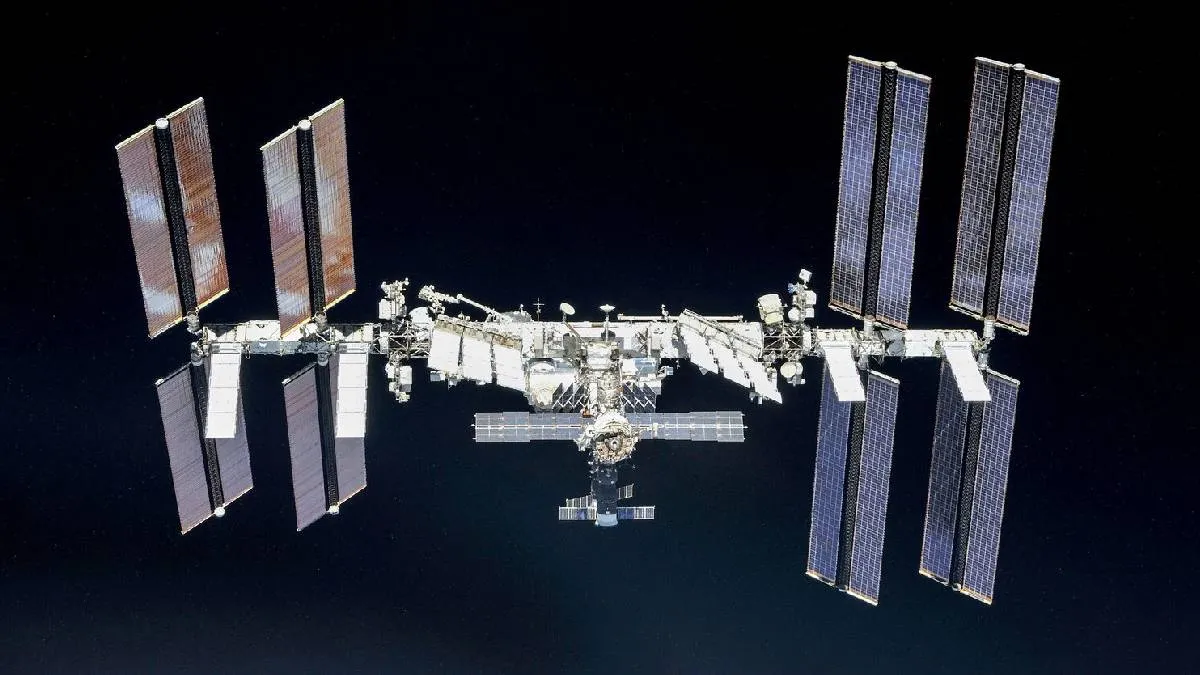
Indian astronaut Shubhanshu Shukla is preparing for his Axiom-4 mission, which is set to launch to the International Space Station today, June 25. The launch is scheduled to take place at 2:31 AM EDT (12:01 PM IST) from Launch Complex 39A at NASA’s Kennedy Space Center in Florida. NASA plans to have the Axiom-4 mission's Dragon spacecraft dock with the Harmony module of the International Space Station at 7 AM EDT (4:30 PM IST) on June 26. The Axiom-4 mission necessitates an approximate travel duration of 28.5 to 29 hours to traverse the distance from Earth to the International Space Station (ISS), despite the latter’s orbital altitude of around 400 km above the Earth's surface. This time frame is not solely attributable to the linear distance but rather to the intricate orbital mechanics that govern the process of rendezvousing with the ISS. The following factors elucidate the complexities involved:
Orbital mechanics and trajectory adjustments:
The SpaceX Dragon spacecraft, which is deployed aboard a Falcon 9 rocket, is initially positioned in a lower orbit than that of the ISS. To facilitate docking with the ISS, the spacecraft must undertake a series of trajectory adjustments and altitude modifications to synchronise its orbit with that of the ISS.
This process entails multiple orbital maneuvers, including incremental elevation of its orbit and precise alignment of its flight path to intersect with the ISS, which travels at an approximate velocity of 28,000 km/h. Such adjustments demand meticulous timing and propulsion burns to ensure a safe rendezvous, thereby extending the overall travel time.
Phasing and orbital Synchronisation:
The ISS revolves around the Earth at a high velocity, completing an orbital cycle approximately every 90 minutes. Subsequently, the Dragon spacecraft must synchronise its orbital trajectory with the current position of the ISS, which may not be situated directly above the launch site at the moment of departure.
This synchronisation process, known as phasing, necessitates that the spacecraft orbit the Earth at least twice while modifying its speed and trajectory to effectively "catch up" with the ISS. This methodical sequencing is critical for ensuring precise and secure docking with the ISS.
ALSO READ:
