
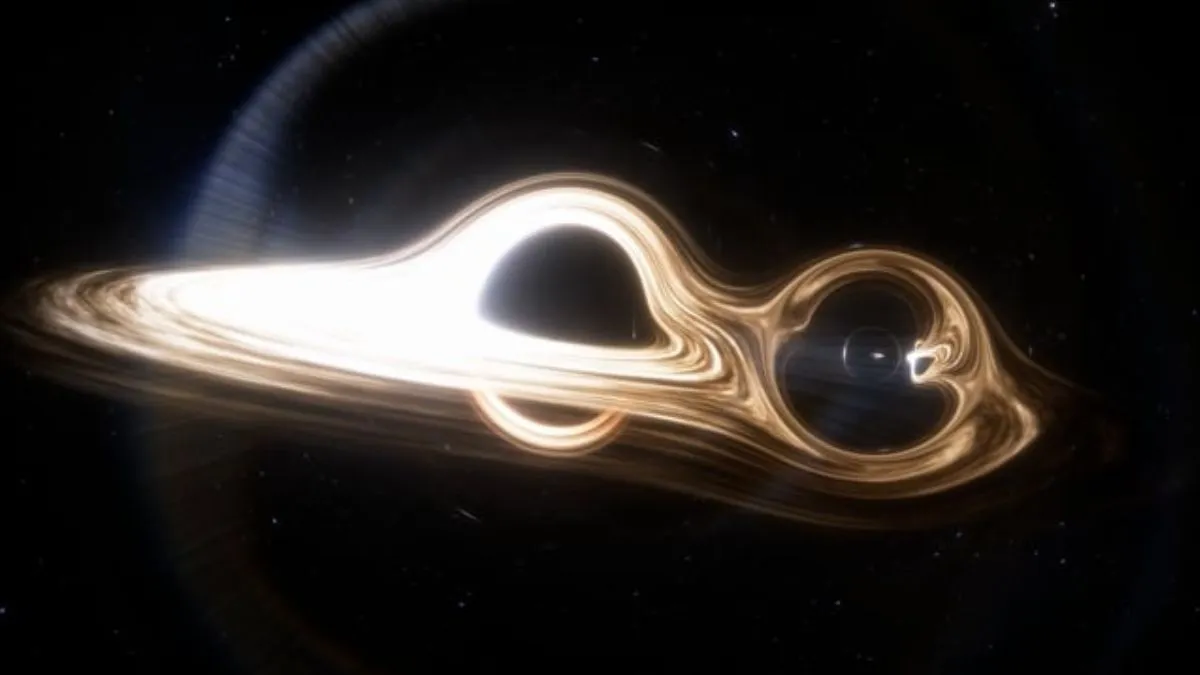
Indian scientists from Ahmedabad’s Physical Research Laboratory teamed up with Stanford to build a new kind of X-ray detector, and it’s a big deal for space science. Their detector is incredibly sensitive and built to catch hard X-rays, the kind you get from extreme objects in space like black holes, neutron stars, and pulsars. By nailing this, they’re opening up a whole new way to see what’s happening in some of the toughest environments the universe can throw at us.
Understanding the importance of X-Ray Polarisation
One of the coolest things about the new detector is its ability to measure X-ray polarisation – basically, the direction that light vibrations travel as X-rays zip through space. Tracking polarised X-rays lets astronomers dig into what’s going on around exotic objects, like mapping their magnetic fields or figuring out their physical structure. Trouble is, hard X-rays are ridiculously rare and hard to catch, so measuring them has always been a pain.

How does the new detector work?
The team built a one-dimensional, position-sensitive detector using a Sodium Iodide crystal (if you’re into chemistry, you know this material has great “scintillation” skills—it lights up when hit by X-rays). They stuck Silicon Photomultiplier sensors on either end of the crystal, which is about ten centimetres long. When an X-ray photon smacks the crystal, it gives off a tiny flash. Each sensor grabs that light, and by comparing which end got a bigger zap, they can pinpoint where the photon hit and even measure how much energy it had.
Major improvement over earlier designs
Here’s where it gets better: old-school detectors were pretty basic. They had a single sensor and used slower crystals, so they only worked well for X-rays that landed right by the sensor. The new version watches the whole length of the crystal and tracks both position and energy, all at once. In tests, they hit the detector with X-rays from a radioactive Americium source. They also used “coincidence reading”—both sensors had to see the flash at the same time—which slashed background noise by a factor of ten.
Challenges and Future Improvements
Of course, it is not perfect. They did see that the detector’s efficiency drops by up to 40 per cent near the ends of the crystal – turns out, some light sneaks away through the housing. Currently, they can spot X-rays down to 30 kiloelectron-volts. They are tweaking the electronics so it can catch even weaker X-rays, down to 20 keV, which would be a sweet spot for upcoming space missions.
A new Window into the universe
This tech is more than just a laboratory trick, and it could be deployed on satellites to map magnetic fields around black holes, analyse what pulsars are really doing, and reveal how matter behaves in extreme gravity.
This project is a real leap for India’s scientific scene. It could put it front and centre in future international space research, giving astronomers worldwide a sharper tool for unlocking the universe’s toughest mysteries.