
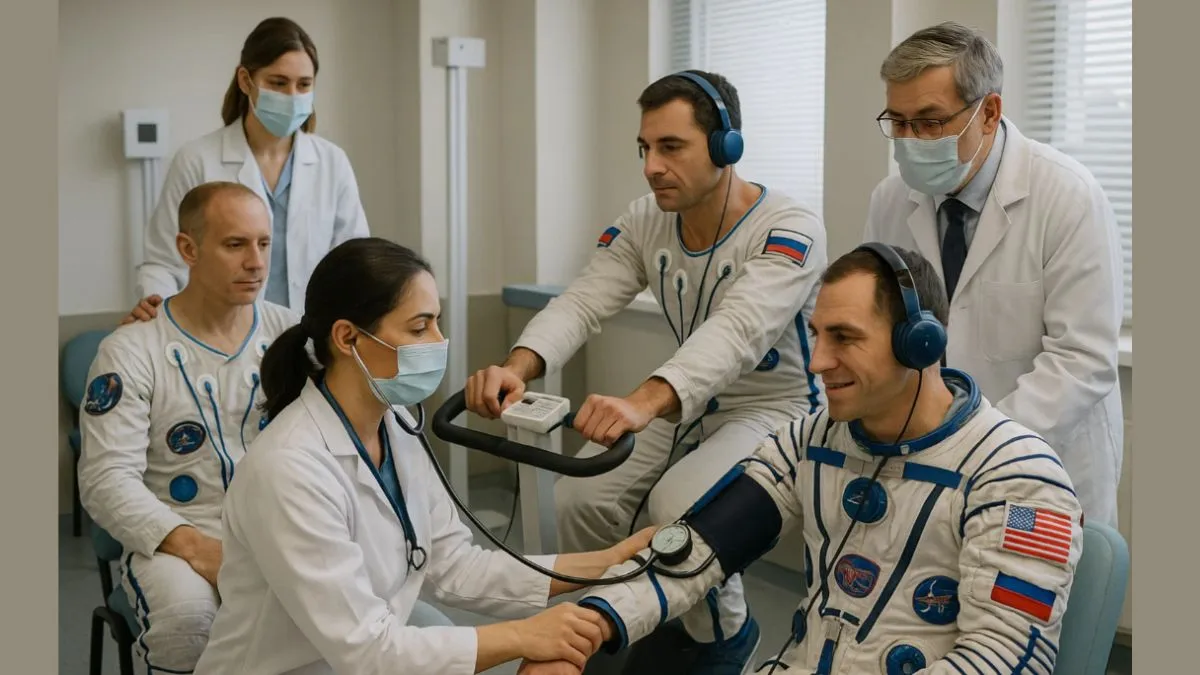
Since the return of Group Captain Shubhashu Shukla from the ISS, he has been undergoing rehabilitation to adapt to gravity and normalise his vitals. But many of you do not know exactly what happens to a human boy when he travels to space, and what happens when they comes back to Earth. In this article, we will be informing you about what exactly happens to our bodies if we travel to a no-gravity zone for days.
Physiological changes astronauts face after space missions
1. Muscle and bone weakness:
Travelling to microgravity may cause muscle atrophy and bone density loss. This happens because the human body does not bear weight like it does when it is on the Earth.
When astronauts return to Earth, they often return with weaker limbs and need strength training to regain full mobility.
2. Fluid shifts in the body:
Space travel affects the circulation, like bodily fluids that include blood moving upwards, which further leads to puffiness and cardiovascular readjustment upon the return.
3. Balance and coordination issues:
The vestibular system is a sensory system located in the inner ear, which certainly adapts to zero gravity when an astronaut stays in space for a while. This makes the human body feel unsteady once they are back on solid ground. Just like you spin, and once you stop, you get disbalanced.
4. Heart and vision impacts:
In space, the heart works less, leading to temporary inefficiency post-returning back on the Earth. Some astronauts reportedly face vision issues- this happens due to pressure change which affects the optic nerve.
What does the space agency do for the astronaut during their recovery? Post-space rehabilitation
1. Immediate medical checks:

Once the astronaut splashes down, they are given a full medical check-up, which includes eye-related tests, neurological assessments and heart tests.
2. Structured physical therapy:
Rehabilitation further includes resistance training, balance exercises and cardio workouts. This will help to restore body strength and function. NASA’s program typically spans 45 days but could vary accordingly.
3. Nutritional and mental health support:
Proper diet plans are made for the returned astronauts, which helps the mto rebuild muscle and digestive health. Also, they are aided with psychological support as well, which is crucial to manage the post-mission stress and reintegration.
4. Mental changes: The ‘Overview Effect’
Many astronauts do report a shift in their perspective after witnessing Earth from space, which is called the ‘overview effect’- giving a deeper connection with the planet and peace.