
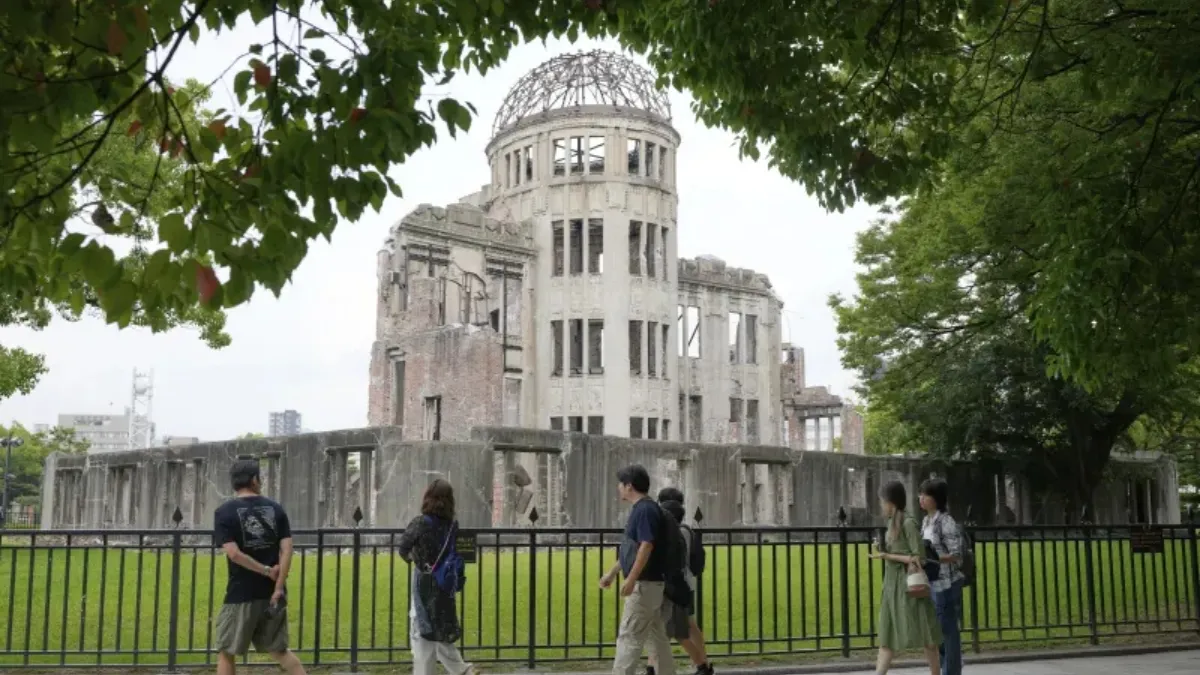
On August 6, 1945, the United States dropped the first atomic bomb in history on the Japanese city of Hiroshima. The bomb, codenamed 'Little Boy', was delivered by a B-29 bomber and claimed the lives of over 140,000 people. This year marks the 80th anniversary of that devastating event. Hiroshima Day is observed every year on this date to honour the victims of the world's first nuclear attack. Beyond remembrance, the day serves as a powerful reminder of the catastrophic humanitarian impact of nuclear warfare. It also raises an important question: why do only nine countries in the world possess nuclear weapons, and what prevents most others from developing them?
Which countries possess nuclear weapons?
There are currently nine countries in the world that have nuclear weapons: the United States, Russia, the United Kingdom, France, China, India, Pakistan, North Korea, and Israel. Among these, Russia holds the largest stockpile, with an estimated 5,580 nuclear warheads, followed by the United States with 5,044 warheads. Together, these two nations account for around 90% of the world’s total nuclear arsenal, which is estimated at 12,121 warheads globally.
What stops most nations from making nuclear weapons?
Many nations refrain from developing nuclear weapons largely due to international agreements, particularly the Nuclear Non-Proliferation Treaty (NPT). Even powerful and technologically advanced countries such as Germany, Japan, South Korea, and Australia have chosen not to pursue nuclear arms.
The NPT, established in 1968 and implemented in 1970, was created to reduce the threat of nuclear warfare. As of now, 190 countries have become parties to this treaty. Its primary goals are to stop the spread of nuclear weapons, discourage nuclear testing, and promote disarmament.
Under the treaty, only five countries, the US, Russia, the UK, France, and China, are officially recognised as nuclear-weapon states, as they had tested nuclear devices before the treaty's enforcement. Other nations are barred from developing or acquiring such weapons, making the NPT a cornerstone of global nuclear restraint.
In addition to international treaties like the NPT, several other factors deter nations from developing nuclear arsenals:
- Developing nuclear weapons is extremely expensive and technologically challenging. Countries need specialised infrastructure, capabilities for enriching uranium or producing plutonium, testing facilities, and reliable delivery systems such as missiles or bombers. For many nations, such ambitions are economically and technically unfeasible.
- States that attempt to build nuclear weapons outside accepted international frameworks risk facing severe sanctions. Examples like Iran and North Korea show how such actions can lead to global condemnation, trade restrictions, and economic hardship, making others think twice before pursuing similar paths.
- Some nations, especially within NATO, benefit from the protection of nuclear-armed allies like the United States. These "nuclear umbrellas" offer strategic security without the need for a domestic nuclear arsenal.
- The catastrophic impact of the atomic bombings of Hiroshima and Nagasaki continues to influence global attitudes. Many countries reject nuclear weapons on ethical grounds and actively support disarmament to prevent future humanitarian disasters.
- Treaties like the Comprehensive Nuclear-Test-Ban Treaty (CTBT) have made it illegal to conduct nuclear test explosions. Coupled with international monitoring systems, this makes secret weapons development exceedingly difficult.
Also Read: Paul Tibbets: The airman who piloted the USAF flight that dropped N-bomb on Hiroshima 80 years ago
Also Read: Russia exits INF Treaty, blames US missile deployments and rising nuclear tensions
