
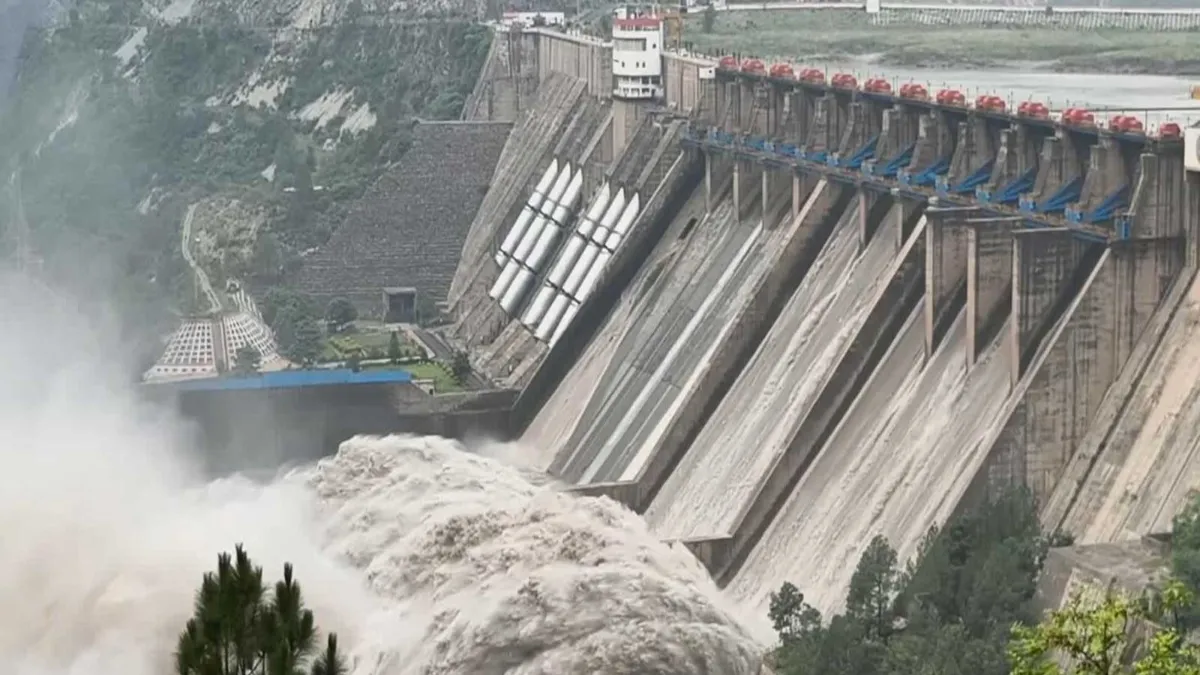
The Indus Waters Treaty (IWT) can no longer function in its current form and will remain in abeyance until Pakistan "credibly and irrevocably" stops supporting cross-border terrorism, according to top government sources. Sources said any future reconsideration of the 1960 water-sharing agreement would only be possible after Pakistan takes verifiable steps to end support for terrorism and would have to be addressed through a renegotiation process.
In the last few months, Pakistan's civilian and military leadership have stepped up their rhetoric against India on issues ranging from the use of nuclear weapons to going to war if India stops the water of cross-border rivers following the suspension of the Indus Waters Treaty.
Indus Waters Treaty will not function in its present form
According to sources, Pakistan is attempting to create a false narrative by claiming that India's decision to keep the IWT in abeyance is responsible for water shortages in the country. Sources said that a substantial amount of water received by Pakistan is lost due to inadequate storage infrastructure, widespread leakages, and ongoing water-sharing disputes between its provinces.
While India is not currently considering withdrawing from the IWT, sources emphasised that as a sovereign nation, it retains the right to terminate any treaty if it is found to be against its national interests. "It (exiting the IWT) depends on the actions that Pakistan takes going forward," said a source.
India placed the treaty in abeyance in April 2025, a day after the Pahalgam terror attack that killed 26 people, saying it would remain suspended until Pakistan takes credible action against cross-border terrorism.
"It would be accurate to say that the IWT in its present form will not function again. If provisions related to river water sharing have to be reactivated, they have to be done in a different form, not in the present form. And only if Pakistan abjures terrorism," a source said.
The sources said any decision by India to revive the IWT will primarily depend on Pakistan's actions, including stopping cross-border terrorism. "We haven't seen any evidence that they are making any effort in that direction (to end cross-border terrorism).
"On the contrary, we continue to receive reports that proscribed individuals and entities sanctioned by the UN Security Council's 1267 sanctions committee continue to appear at public events in Pakistan, continue to be able to have platforms that they can use to propagate their messages," said another source.
'Pakistan stores only 10% of its water share': Sources
Government sources said the Indus Waters Treaty was framed according to the conditions and technology available in the 1950s, which are no longer relevant in the present context.
Sources said the 1960 agreement was based on mutual goodwill and did not factor in situations such as cross-border terrorism. They alleged that Pakistan has failed to take credible steps against terrorism, with banned terrorist organisations continuing to issue anti-India statements.
According to sources, Pakistan has not constructed any major new dam in the past six decades and has been unable to effectively manage its existing water resources. They claimed that only around 10% of the water it receives is stored, while nearly 50% flows into the Arabian Sea.
Sources further alleged that Pakistan has repeatedly objected to India's water projects with the intention of delaying their implementation. They cited the Tulbul Navigation Project as an example, saying the project, which could have benefited Jammu and Kashmir, was also delayed due to Pakistan's objections.
India will now accelerate work on new water projects, with surveys being conducted at multiple locations as part of the effort, sources said.
Also Read: Owaisi warns Pakistan PM Shehbaz Sharif over Indus Waters Treaty remarks: 'BrahMos hai humare paas'
