
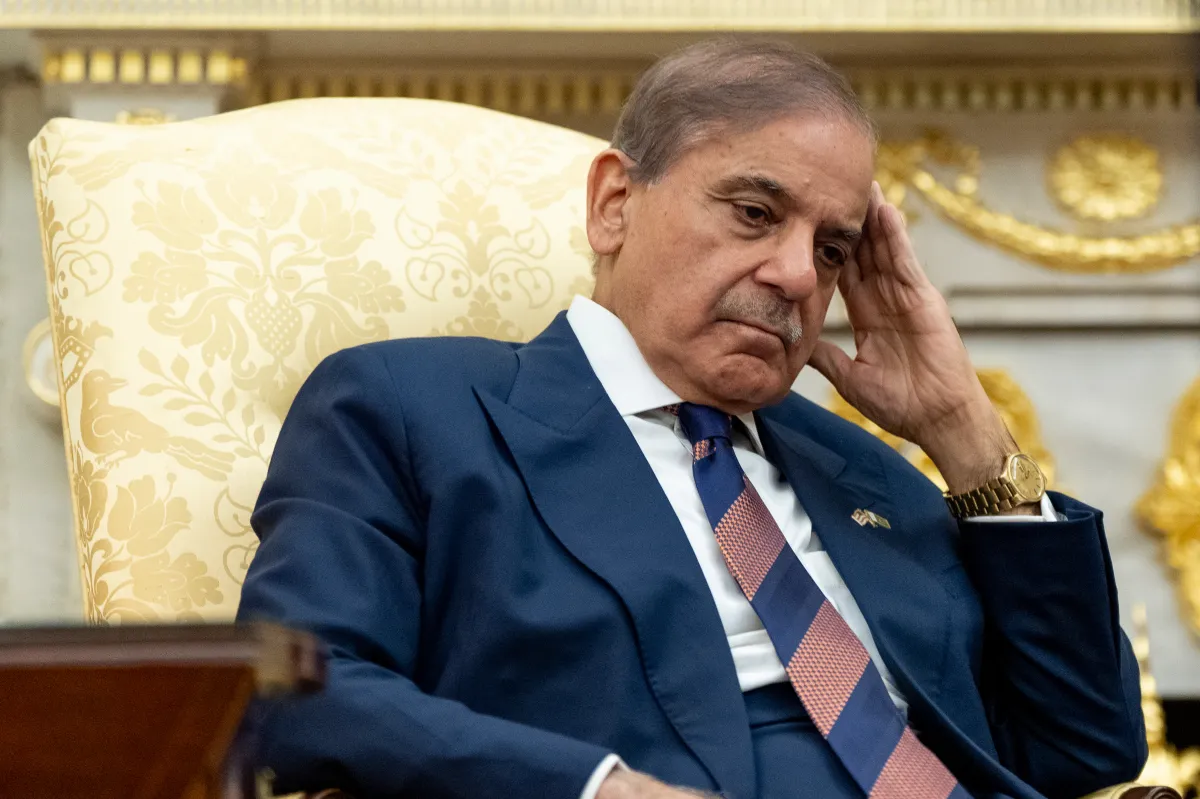
Pakistan's Prime Minister Shehbaz Sharif labeled India’s move to suspend the Indus Water Treaty as a blatant violation of international law. The treaty, brokered by the World Bank in 1960, has governed the distribution of water from the Indus River system, with Pakistan controlling the western rivers (Indus, Jhelum, and Chenab) and India controlling the eastern rivers (Ravi, Beas, and Sutlej).
Sharif described India's actions as an "unilateral and illegal attempt" that "defies the provisions of the treaty itself," asserting that such actions would not go unchallenged. "To us, any violation of the treaty represents an act of war," he said, underscoring the severity of the situation for Pakistan, which views its water rights as an inseparable national concern.
India’s justification: A countermeasure against terrrorism
India’s decision to put the treaty on hold follows a wave of tensions after the terrorist attack in Pahalgam on April 22, 2023, which left 26 people dead. New Delhi argues that Pakistan’s continued support for cross-border terrorism justifies their decision to suspend the agreement temporarily. The Indian government views the treaty as leverage in its broader counter-terrorism efforts.
"India has exercised its sovereign right under international law to place the treaty in abeyance, linking its reinstatement to Pakistan’s verifiable cessation of cross-border terrorism support," said an Indian official, reinforcing India's stance on the matter.
Pakistan’s call for dialouge on Kashmir
While addressing the UNGA, Prime Minister Sharif also called for a resumption of comprehensive dialogue between India and Pakistan to resolve all outstanding issues, with a particular emphasis on the region of Kashmir, which remains a contentious and highly sensitive issue between the two nations. Sharif described the situation in Kashmir as one of “tyranny,” drawing attention to the ongoing humanitarian crisis in the disputed territory.
“Pakistan stands ready for a composite, comprehensive, and result-oriented dialogue with India on all outstanding issues,” Sharif declared, signaling Pakistan’s willingness to pursue peace talks despite the current stalemate over the treaty.
Prime Minister Sharif also used the platform to address Pakistan's role in combating terrorism. He claimed that Pakistan has suffered over $150 billion in economic losses due to the impact of terrorist activities, many of which, according to Pakistan, stem from the region's complex geopolitics. Sharif framed Pakistan's sacrifices as some of the "biggest around the globe.”
The Indus Water Treaty
The Indus Waters Treaty, signed under the auspices of the World Bank in 1960, has withstood multiple wars between India and Pakistan, serving as a rare example of cooperation in an otherwise hostile bilateral relationship. However, the treaty has also been a source of frequent tension, with India accusing Pakistan of misusing the treaty for political leverage and Pakistan asserting that the agreement is unfair, particularly in light of India's alleged misuse of its allocated water resources.
Over the years, the treaty has been frequently scrutinized by various political factions in both countries. In India, there is a vocal section of the public that believes the treaty grants Pakistan an inequitable share of water resources.
However, third-party mediation remains a contentious issue. While US President Donald Trump has repeatedly claimed his role in brokering ceasefire talks between the two nations, India has continuously denied any external intervention, with it asserting that the ceasefire agreement was reached through direct military talks.
|
'India is defeating you': Shehbaz Sharif schooled by Indian reporter on terrorism at UNGA | Watch |
