
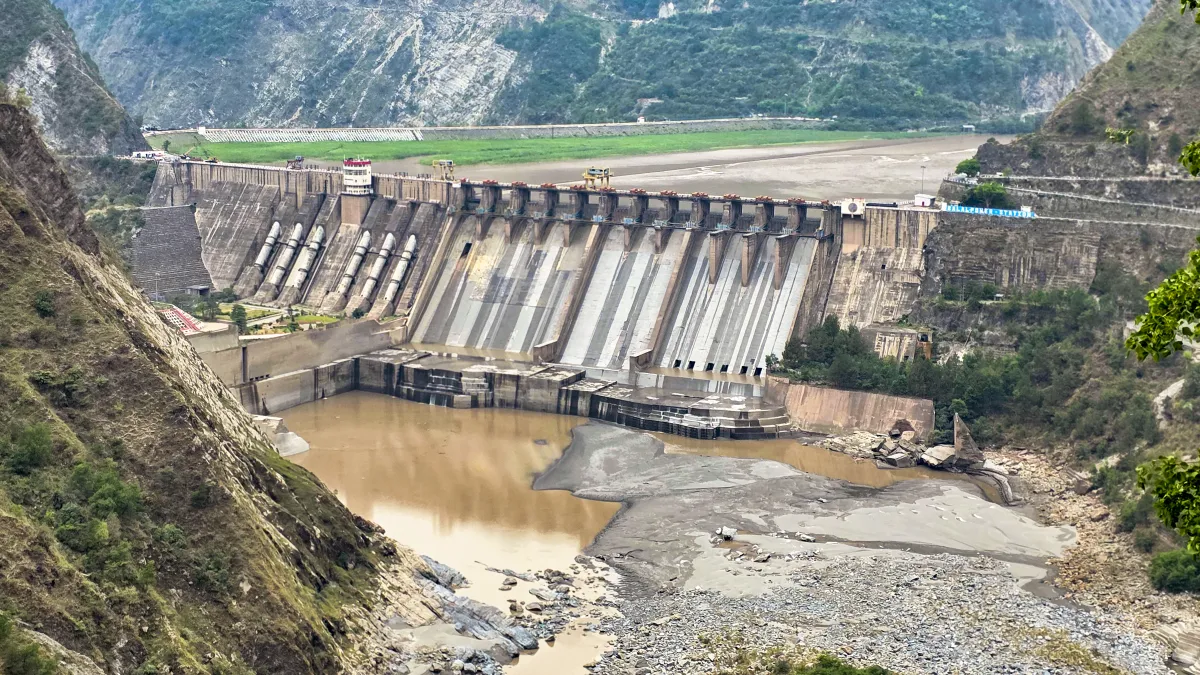
Utilising the suspension of the Indus Waters Treaty with Pakistan, the Indian government has moved further to control the flow of water to the neighbouring country in the wake of Operation Sindoor in May. The Centre has now sought tenders to revive a long-dormant project - building the 1,856 MW Sawalkote Hydroelectric Project on the Chenab river in Jammu and Kashmir's Ramban district, ANI reported.
Pakistan's rising woes
Pakistan's challenges continue to mount as India intensifies its response following the Pahalgam terror attack. Among the key developments is the suspension of the Indus Water Treaty, a significant diplomatic and water-sharing accord between the two countries.
NHPC invites bids for Sawalkote dam project
The National Hydroelectric Power Corporation (NHPC) has issued an official notification inviting e-tenders for the Sawalkote Hydroelectric Project, a plan initially conceived in the 1960s. The last date for submission of online bids is 10 September. The project is located near Sidhu village in Ramban district, approximately 120 km from Jammu and 130 km from Srinagar. The project, envisioned around 60 years ago lay dormant due to the same Indus Waters Treaty.
Strategic move to optimise Indus waters
The construction of the Sawalkote project is being viewed as a major strategic step in India's efforts to optimise its use of the Indus River system, particularly as the Indus Water Treaty remains in abeyance. The suspension of the treaty is one of India's stern responses to Pakistan in the aftermath of the Pahalgam attack.
External Affairs Minister S Jaishankar, addressing the issue yesterday, underscored the uniqueness of the Indus Water Treaty and criticised the Congress party's historical approach to negotiations with Pakistan.
"The Indus Water Treaty, in many ways, is a very unique agreement. I cannot think of any agreement in the world where a country has allowed its major rivers to flow to the next country without having rights on that river," Jaishankar remarked.
He also cited former Prime Minister Jawaharlal Nehru's statement in Parliament in 1960 as an example of misplaced priorities.
What is the Indus Waters Treaty
Signed in 1960 and brokered by the World Bank, the Indus Waters Treaty governs the distribution of water from the Indus River system between India and Pakistan. Despite surviving wars and prolonged diplomatic tensions, recent developments have brought its future into question.
The treaty allocates the eastern rivers, Beas, Ravi, and Sutlej, to India, and the western rivers, Indus, Chenab, and Jhelum, to Pakistan. India is permitted limited use of the western rivers for non-consumptive purposes such as power generation and irrigation.
