
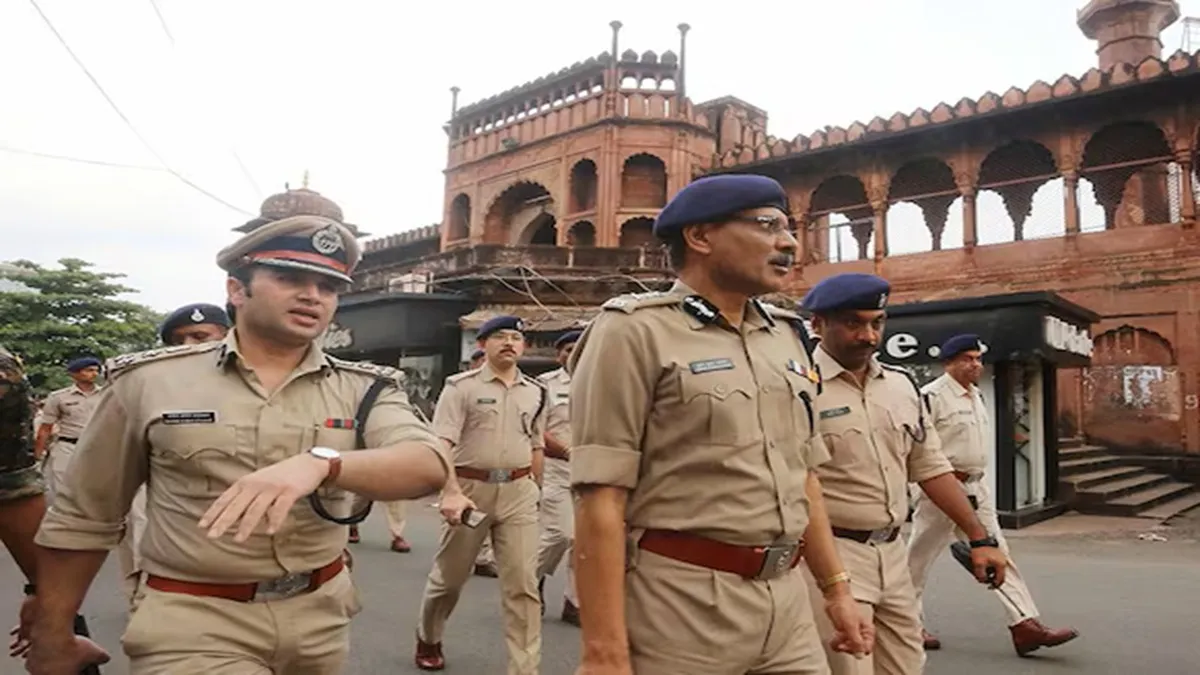
In the age of social media, police personnel are also increasingly seen creating reels, photos and videos for platforms such as Instagram, Facebook and YouTube. However, content posted by police personnel, particularly while wearing the uniform, can sometimes affect the image and dignity of the police force. To prevent such instances, Madhya Pradesh Director General of Police Kailash Makwana has issued detailed guidelines for the use of social media by personnel of the Madhya Pradesh Police. The guidelines cover everything from posting reels in uniform and sharing sensitive information to using AI tools such as ChatGPT and Gemini. Police personnel who fail to follow the directions may face disciplinary action.
These are guidelines to be followed:
No reels or videos in uniform
Police personnel have been directed not to upload reels, photographs, videos or audio clips on Facebook, WhatsApp, Twitter, Instagram, YouTube or other social media platforms while on duty or after duty hours if they are wearing the police uniform or any other inappropriate attire.
Any such inappropriate content already uploaded on social media has been ordered to be removed immediately. Personnel have also been instructed to strictly follow these directions in the future.
Sensitive documents cannot be shared or uploaded on AI tools
Police personnel have been prohibited from scanning, screenshotting or sharing government documents on social media if the information is confidential under government rules or sensitive from a security perspective. The guidelines also specifically state that such confidential or sensitive government information must not be uploaded on AI tools such as ChatGPT and Gemini.
No disclosure of sensitive duty details
Personnel deployed on sensitive assignments have been instructed not to disclose details about their duties, the nature of their work or the locations where they are posted on social media. They have also been directed to keep location and geotagging features switched off while using social media at sensitive locations to prevent any possibility of misuse.
Paid promotions and monetisation banned without approval
Police personnel cannot create social media profiles in their own name, in the name of their dependants or family members, or under a pseudonym for paid promotions or monetisation without prior government approval. Similarly, promoting any personal business, company, product or service through official or personal social media platforms has been prohibited.
According to the guidelines, such conduct will be treated as a violation of Rule 16 of the Madhya Pradesh Civil Services Conduct Rules. If any police personnel or their dependants or family members have received income through social media platforms, either in bank accounts or through any other means, they have been directed to submit complete details to the department within 30 days from the date of issuance of the guidelines.
Ban on offensive and discriminatory content
Police personnel have been told not to post or react to any comment, photograph, AI-generated material or other content that is malicious, obscene or reflects discrimination against any group based on caste, religion, gender or any other ground.
Security details and operations cannot be posted
During security duties involving special or very important persons, officers and personnel have been barred from posting photographs, selfies or other details of important locations on social media.
The guidelines also prohibit posting or livestreaming photographs and videos related to weapons training, drills, firing practice, raids and other sensitive operations.
No unverified information or unauthorised reactions
Police personnel have been instructed not to post any response on social media groups containing incorrect, unauthorised or unverified facts.
The guidelines further state that achievements of the department should be presented as achievements of the police force rather than as the personal efforts or accomplishments of an individual officer.
Privacy of victims, witnesses and accused must be protected
Photographs or videos of victims, witnesses, applicants, respondents and accused persons taken during complaint inquiries, investigations or public hearings must not be posted or livestreamed on social media. The guidelines describe such posting as a violation of the right to privacy. Where it is necessary to share such material, faces must be blurred and permission must be obtained before posting.
No posts that can affect investigations or prosecution
Police personnel have been barred from posting information related to crimes that are under investigation or pending before a court if the content could adversely affect the investigation or prosecution.
The photographs, videos and other identifying information of women and girls who are victims of sexual violence must also not be posted on social media. Similarly, the identities of children covered under the Juvenile Justice framework, including children in conflict with law and children in need of care and protection, must not be disclosed.
Caution against comments on court matters
Police personnel have also been directed not to post comments or reactions concerning court directions, judgments or other judicial matters that could result in contempt of court.
No association with people with criminal backgrounds
Police personnel have been advised not to accept friend requests from people whose conduct is suspicious, who have an anti-social image or who have a criminal record. They have also been prohibited from following or collaborating with such individuals. Police personnel must not use their official or personal social media accounts to post or share photographs, videos or other content with people who are involved or have previously been involved in criminal or anti-social activities.
Family members cannot misuse police uniform or equipment
Family members or friends of police officers and personnel have been barred from posting photographs or videos on their personal social media accounts in which police uniforms, police vehicles or government weapons are used. Police personnel themselves have also been told not to share posts from family functions while wearing the uniform if such content is against the dignity of the police uniform.
No political party symbols or protest signs in profile pictures
The guidelines prohibit police personnel from using symbols or signs associated with any form of symbolic protest as their social media profile picture or display picture. They have also been directed not to use the logos or symbols of any organisation or political party as their profile picture or display picture.
No unauthorised participation in online polls
Police personnel will not be permitted to participate in online voting or polls circulating on social media platforms through any government social media account without prior permission.
Restrictions on comments about government and national security
Police personnel have been instructed not to make comments through official or personal social media accounts concerning the government machinery, national security, government directions, policy arrangements or other sensitive issues. They have also been prohibited from making comments that criticise government decisions, policies or departmental functioning, or comments against a senior officer or colleague that are inconsistent with the dignity of their position.
Govt internet and email cannot be used for personal accounts
While creating personal social media accounts, police personnel cannot use government CUG SIM cards, internet, Wi-Fi, IP addresses or official email IDs. They have also been instructed not to log in to government social media accounts from personal mobile devices.
Seized material must not be posted without proper sealing
During any police inquiry or investigation, photographs or videos of seized material, including weapons, cannot be posted on official or personal social media platforms without the material being properly sealed.
Personal social media use during duty restricted
The guidelines state that personal use of social media during official working hours can affect government work and result in the wastage of valuable official time. Therefore, unnecessary use of social media during duty hours has been prohibited in the interest of the department and the police force.
No posts that create discontent within the force
Police personnel have also been directed not to share any post or material through official or personal social media platforms that could spread discontent or create hostility within the department. They cannot share information about police tactics, field craft, investigative technology or methods used in crime investigation without permission from the competent authority.
Service grievances should not be raised on social media
The guidelines state that using social media as a platform for complaints related to service matters is against discipline. Personnel have instead been directed to raise their problems or grievances before their senior officers. The department has also stated that posting reels on social media by police officers and employees falls under misconduct and is against discipline.
Earlier video of drunk constable had gone viral
It is to be noted here that the guidelines come against the backdrop of incidents involving police personnel whose social media activity has attracted attention. Earlier, a video of a constable from Madhya Pradesh allegedly under the influence of alcohol had gone viral. Following the incident, the concerned Superintendent of Police took strict action against the constable.
Also Read:
