
More than five decades after banning supersonic flights over land, the United States is preparing for a major shift in aviation policy. The US Department of Transportation has proposed replacing the decades-old blanket ban with noise-based regulations that could allow supersonic aircraft to fly over land, provided they meet strict sound limits. If implemented, the move could pave the way for a new era of faster commercial air travel while addressing long-standing concerns over noise pollution. The proposal marks one of the most significant policy changes in American aviation in decades and comes at a time when advances in aircraft technology are making quieter supersonic travel increasingly feasible.
What are supersonic flights?
A supersonic flight refers to an aircraft travelling faster than the speed of sound. The speed of sound, known as Mach 1, is approximately 767 miles per hour or 1,235 kilometres per hour. Any aircraft flying beyond this speed is classified as supersonic. Such aircraft can significantly reduce travel time on long-haul routes which makes them an attractive option for future commercial aviation.
What is the current rule in the US?
At present, supersonic flights over land remain prohibited across the United States. Aircraft wishing to exceed the speed of sound must obtain special permission from the US Federal Aviation Administration (FAA). These permissions are generally limited to research and testing purposes and are granted only in sparsely populated or remote areas to minimise the impact of sonic booms on residents.
What changes has the US proposed?
The US Department of Transportation and the FAA have proposed replacing the 1973 ban with a noise-based regulatory framework. Under the proposal, aircraft flying faster than the speed of sound could be allowed to operate over land if they remain within prescribed noise limits. Instead of banning supersonic flights altogether, the new rules would focus on how much noise the aircraft produces. The FAA also plans to introduce separate standards governing noise generated during take-off and landing later this year. Both sets of regulations are expected to be finalised by the middle of 2027.
Why is the US considering this change now?
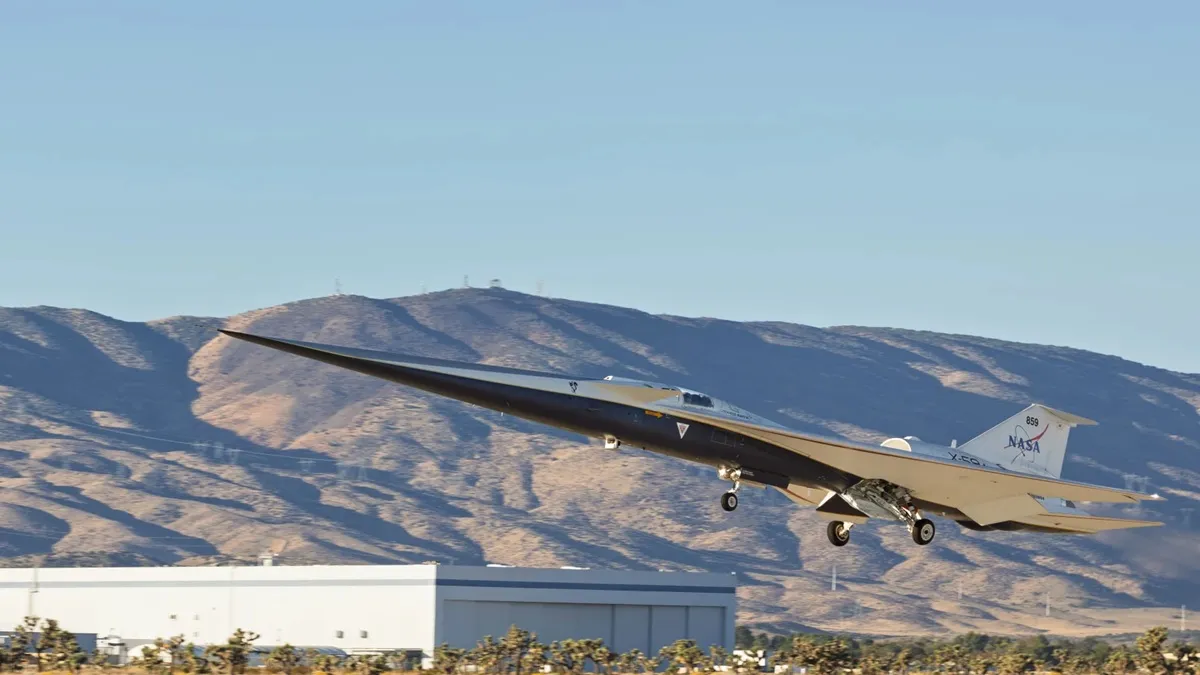
The biggest reason behind the proposed policy shift is NASA's experimental X-59 aircraft, which has been designed to dramatically reduce the loud sonic boom traditionally associated with supersonic flight. During a test conducted on June 5, the aircraft reached a speed of 713 miles per hour, or around 1,148 kilometres per hour, while flying at an altitude of 43,400 feet.
Unlike conventional supersonic aircraft that generate a powerful sonic boom capable of startling people on the ground, NASA says the X-59 produces only a soft "thump". According to the space agency, the aircraft's innovative design could solve one of the biggest obstacles that has prevented the return of supersonic travel over land.
What are US officials saying?
FAA Administrator Bryan Bedford said advances in aerospace engineering, new materials, noise reduction technology and improved operational methods have made it possible to address the sonic boom issue that led to the original ban.
According to Bedford, these technological improvements could allow the decades-old restriction to be lifted while ensuring that communities experience significantly lower noise levels. US Transportation Secretary Sean P. Duffy described the proposal as more than just an effort to make air travel faster. "The return of overland supersonic flight is not just about faster travel. It is about advancing American innovation and ushering in a new era of aviation," he said. Duffy added that under President Donald Trump's leadership, the administration is working to safely bring this technology closer to commercial use.
Michael Kratsios, Director of the White House Office of Science and Technology Policy, said outdated regulations had held back engineers and aircraft manufacturers for decades. According to him, modernising these rules could strengthen the US aviation industry, generate new employment opportunities and encourage the development of next-generation aerospace technology within the country.
Why was the ban imposed in 1973?
The United States prohibited supersonic flights over land in 1973 because aircraft at the time generated extremely loud sonic booms. The powerful shockwaves often sounded like explosions, rattled homes, caused windows to shake and, in some cases, reportedly cracked glass. The persistent noise was also considered disruptive to communities and raised concerns over its environmental impact. To protect public safety and minimise disturbance, the government imposed a nationwide ban on overland supersonic operations.
Have supersonic passenger aircraft flown before?
The world's most famous supersonic passenger aircraft was the Concorde, operated by Air France and British Airways. The aircraft flew at around Mach 2, nearly twice the speed of sound, allowing it to cross the Atlantic Ocean in about three and a half hours. However, Concorde was permitted to fly at supersonic speeds only over the ocean. While flying over land, it had to reduce its speed because of restrictions related to sonic booms. Despite its engineering success, the aircraft was retired in 2003 due to high operating costs and declining commercial viability.
Which companies are developing the next generation of supersonic aircraft?
Apart from NASA, several private aerospace companies are working to revive supersonic passenger travel. American firms including Boom Supersonic and Spike Aerospace are developing next-generation aircraft designed to fly faster while producing significantly less noise than earlier models.
Their long-term objective is to reduce transatlantic flight times to under four hours. If the proposed US regulations are approved, these companies could move a step closer to bringing quieter and faster commercial supersonic flights into service.
What could this mean for the future of air travel?
If the new rules are implemented as planned, they could mark the beginning of a new chapter in commercial aviation. Rather than lifting restrictions entirely, the proposed framework aims to balance technological innovation with public safety by allowing only those aircraft that meet strict noise standards. Aviation experts believe this approach could encourage investment in quieter aircraft while making high-speed travel more practical for future generations.
ALSO READ: Supersonic flights returning soon: NASA successfully tests new low-noise jet
