
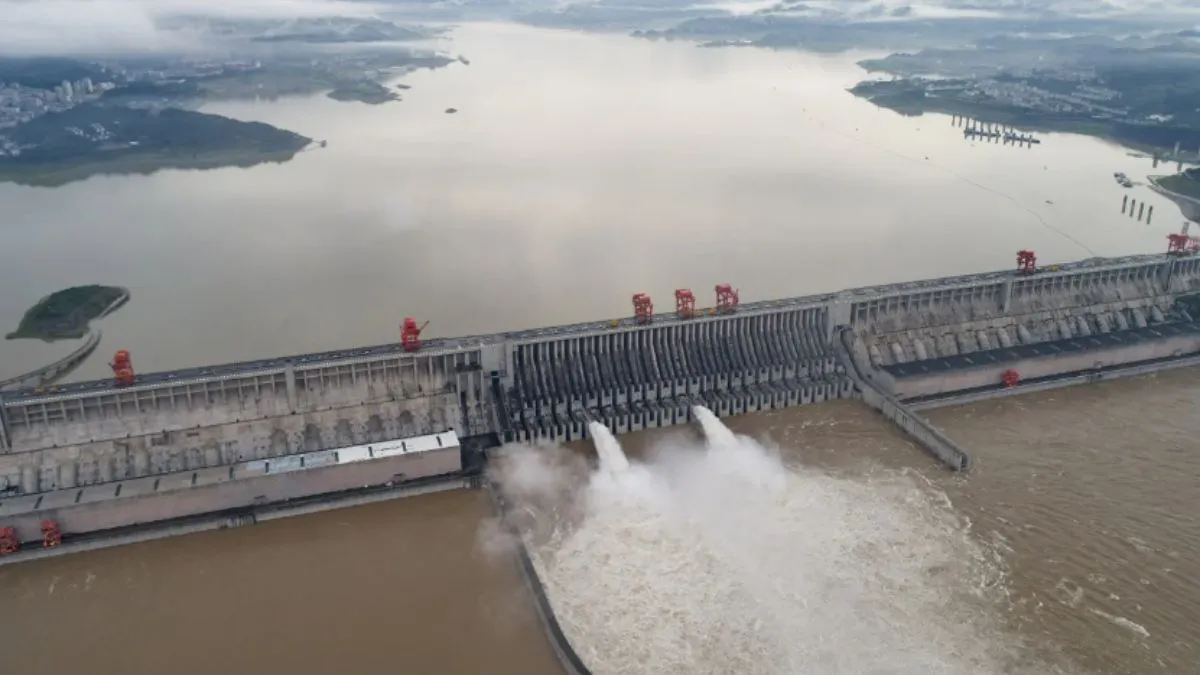
China has invested a substantial amount into its mega hydropower project on the Tsangpo river, called the Brahmaputra in India, in Tibet, but its geologists have warned that the proposed site is atop an 'active fault line', which could trigger earthquakes and landslides, ultimately affecting the infrastructure's 'integrity'.
Citing a paper published in Chinese-language journal Sedimentary Geology and Tethyan Geology, South China Morning Post said the 'active fault line' has fractured the surrounding rocks, which could alter the project's mechanical properties and make it more "susceptible to damage".
A joint study conducted by geologists from the Chengdu University of Technology, the Civil-Military Integration Centre of the China Geological Survey, and the Middle Yarlung Zangbo River Natural Resources Observation and Research Station conducted the student and recommended that the slope's stability must be strengthened to minimize the risk.
"The Paizhen Fault, which has been highly active since the Pleistocene [also known as the Ice Age], will have a major impact on the structural stability and construction of nearby structures, including dams, roads, bridges and tunnels, as well as the reservoir area," the team said in their research published last month.
Earthquakes, landslides could threaten dam personnel's safety
The team pointed out that the Paizhen area, which is located within the reservoir area of the Yarlung Tsangpo downstream hydropower station, has a "loose structure and weak cohesion", warning that fault activity and earthquakes could easily trigger instability of slopes on both sides of the dam.
"Under regional seismic action, landslides and collapses can easily be induced, threatening the safety of engineering facilities and personnel," the research paper read, while referring to the 6.9 magnitude earthquake in Tibet's Milin. "During construction, structural stability safeguards must be strengthened. Implementing strategies such as slope reinforcement and retaining barriers is essential to mitigate the risks of landslides and collapse to construction and operation."
India's concern over the Tsangpo project
China's hydropower project has raised concerns in India as well, and New Delhi has said that it has taken a note of it. In a written replay in the Rajya Sabha last year, the government said it is carefully monitoring the project and taken all necessary measures to protect India's interests, "including preventive and corrective measures to safeguard life and livelihood of Indian citizens residing in downstream areas."
India also raised this issue during in January 2025, with both countries agreeing hold an early meeting of the Expert Level Mechanism to discuss resumption of provision of hydrological data and other cooperation pertaining to trans-border rivers.
"As a lower riparian state with considerable established user rights to the waters of the trans-border rivers, Government has consistently conveyed its views and concerns to the Chinese authorities, and has urged them to ensure that the interests of downstream states are not harmed by any activities in upstream areas," the government said in its reply.
ALSO READ - Why Israel's Netanyahu is irked with US signalling sale of F-35s to Turkey | EXPLAINED
