
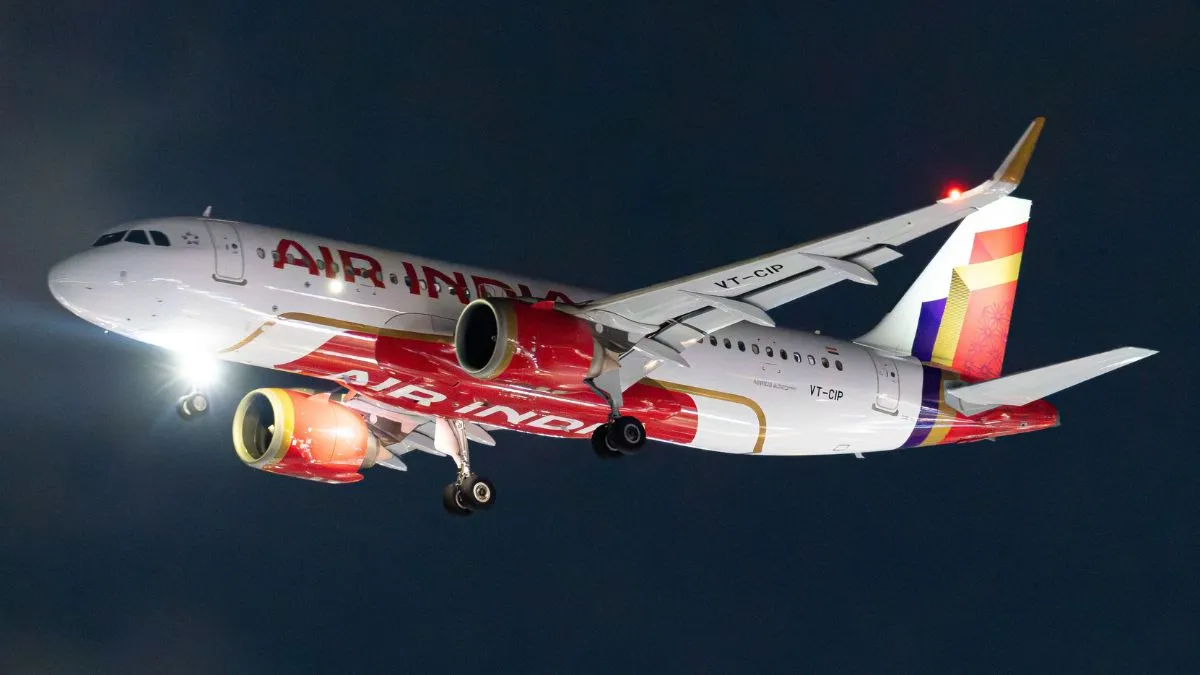
A recent incident involving Air India flight AI2379, operating from Phuket to Delhi, has once again put the spotlight on one of aviation's most misunderstood phenomena: in-flight turbulence. The aircraft faced a turbulence episode during the cruising phase and underwent an altitude change before landing in Delhi.
While there were no serious injuries, a few passengers and crew members were taken for precautionary medical assessment. For many travellers, turbulence is one of the most nerve-racking parts of flying. But does turbulence mean a plane is unsafe? Can it cause a crash? And why does it seem to happen more often during the monsoon? Here's everything you need to know.
What is in-flight turbulence?
Turbulence refers to the chaotic or irregular movement of air, which causes an aeroplane to jolt or experience an abrupt change in altitude. In simple words, imagine driving your car through a bumpy road or over speed bumps. Unlike what people believe, turbulence doesn't necessarily mean that the aircraft is plummeting from the sky; rather, it means that the aircraft is travelling through zones of air instability. Commercial aeroplanes have been manufactured in such a way that they can handle even severe turbulence.
Why does turbulence happen?
Turbulence can occur for several reasons, and not every flight experiences the same type.
1. Thunderstorm or convective turbulence
It is the most frequent type, particularly in the monsoon period. Warmer air moves upward and cooler air downward to form a strong vertical air flow. An aeroplane flying through a thunderstorm, cumulus clouds, or rainfall can experience such types of turbulence.
2. Clear-air turbulence (CAT)
This type is among the most unpredictable ones because it arises without any clouds or storms. It is formed at the location of jet streams due to abrupt changes in wind speed and direction. There are no storm clouds; therefore, pilots are unable to notice clear-air turbulence on the radar screen. Some scientists have claimed that this kind of turbulence is expected to increase as the Earth warms up.
3. Mountain wave turbulence
Strong winds blowing through mountain ranges, like the Himalayan range, cause the formation of air waves that could stretch to thousands of feet into the sky. Aircraft flying over such regions would encounter moderate to severe turbulence.
4. Wake turbulence
Every time an aeroplane flies, there is always turbulent air left behind by the wings of the plane. When another plane follows too close behind, it would be exposed to the power of such air waves. Air traffic controllers maintain strict separation between aircraft to minimise this risk.
Can turbulence bring down a plane?
This is perhaps the biggest fear among passengers. The answer is almost always no. Commercial aircraft are engineered to withstand forces much greater than those produced by turbulence. Pilots receive continuous weather updates before and during flights and can often change altitude or reroute to avoid unstable weather. While turbulence may feel dramatic inside the cabin, aviation experts say accidents caused solely by turbulence are extremely rare.
Why are seat belts so important?
Most turbulence-related injuries happen inside the cabin, not because of damage to the aircraft. Passengers are more likely to get injured if they are:
- Walking in the aisle
- Standing near the lavatory
- Not wearing a seat belt
- Struck by loose cabin baggage or objects
For this reason, airlines recommend keeping your seat belt loosely fastened throughout the flight, even when the seat belt sign is switched off.
Major turbulence incidents involving Indian flights
Air India Phuket-Delhi flight (2026)
On August 4, 2026, there was a short experience of turbulence on board Air India flight AI2379 that led to a brief change in altitude of the plane. The plane landed safely in Delhi without any serious injuries. A few people were examined by doctors out of precaution.
IndiGo Delhi-Srinagar flight (2025)
In 2025, an IndiGo Airbus A321 carrying over 220 passengers met with turbulence and a hailstorm when heading towards Srinagar. The nose cone of the plane got damaged, yet the pilots managed to land the plane safely. A subsequent DGCA investigation cited severe weather and delayed rerouting as the probable causes.
Air India Delhi-Sydney (May 2023)
Air India flight AI302 from Delhi to Sydney hit severe turbulence during the journey, injuring seven passengers. Medical assistance was arranged upon landing in Sydney, although none of the injured required hospitalisation.
What should you do if your flight encounters turbulence?
In case you encounter turbulence during your flight:
- Do not panic and remain calm
- Put on your seatbelt straightaway
- Obey all directions from the cabin crew
- Try not to move around the cabin unless it is completely necessary
- Secure all your belongings
- Ensure that all children are seated with their seatbelts tightened
Remember that the pilots have been trained to handle any form of turbulence, and they will act in the best way to protect you. Even though it might be frightening, turbulence is a natural occurrence that happens when flying. Aircraft today have been made to withstand such weather conditions, and pilots have undergone training for situations like these. Although there might be more occurrences of turbulence as a result of weather changes and climatic changes, aviation experts still insist that commercial air flights are among the safest modes of transport. Understanding what turbulence is, and what it isn't, can help make your next flight a little less stressful.
Also read:
Investigators find no abnormality in fuel control switch of Air India AI-171: Centre in Parliament
