
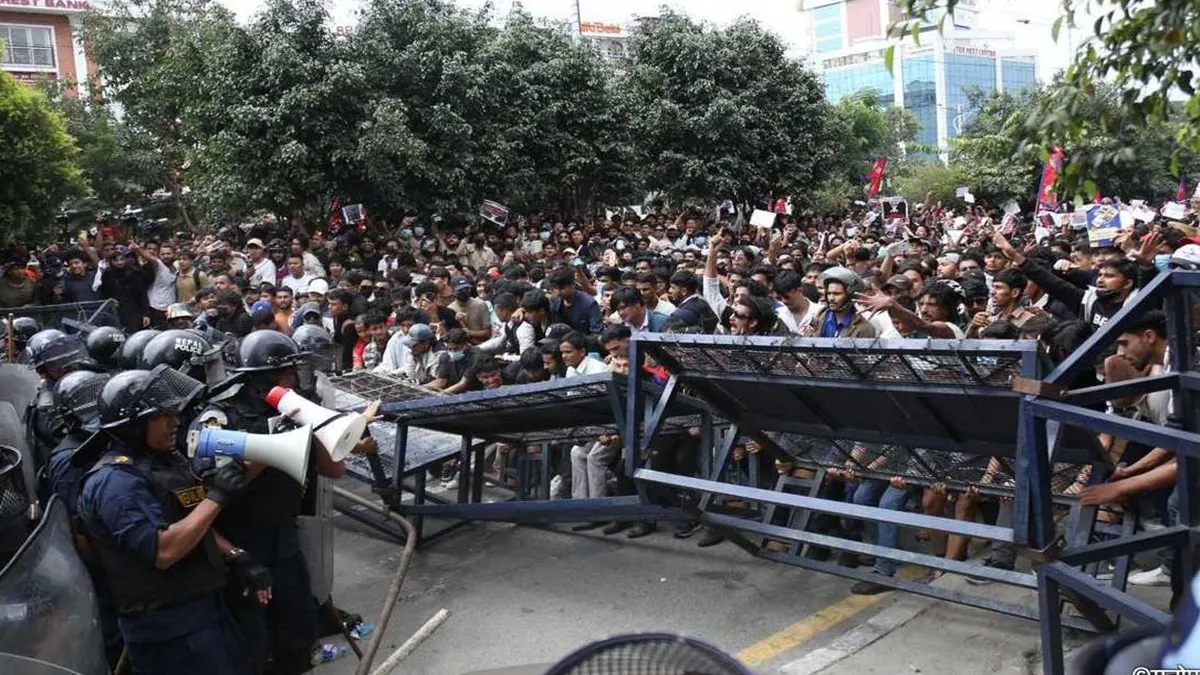
Thousands of Gen Z protesters on Monday took to the streets in Kathmandu to vent their anger against a decision by authorities to block most social media platforms including Facebook, X and YouTube, stating that the companies had failed to register and submit to government oversight. One died and several others were injured int he violent protest.
During the violent agitation, the Gen Z protesters pushed through barbed wires and forced police to retreat as they surrounded the Parliament building. However, to bring the situation under control, police fired tear gas and water cannon but were outnumbered and sought safety inside the Parliament complex.
As the situation remained tense, the government imposed a curfew for Monday around Parliament, the government secretariat, presidential house and key parts of the city.
“Stop the ban on social media, stop corruption not social media,” the crowds chanted, waving the red and blue national flags. Monday’s rally was called the protest of Gen Z, generally referring to people born between 1995 and 2010.
What led to massive protest in Nepal?
What began as a peaceful march escalated when protesters broke through barricades and entered restricted zones near Parliament.
Police responded with water cannons, teargas, and rubber bullets after demonstrators threw tree branches and water bottles and shouted anti-government slogans, with some protesters reportedly managing to enter the Parliament compound, intensifying the situation.
The development comes as about two dozen social network platforms that are widely used in Nepal were repeatedly given notices to register their companies officially in the country, the government said. Those which failed to register have been blocked since last week.
The move of the government has been widely criticised as a tool for censorship and punishing government opponents who voice their protests online. Several rights groups have called it an attempt by the government to curb freedom of expression and violate fundamental rights.
Why did Nepal ban social media platforms?
Nepal on Thursday banned social media sites such as Facebook, Instagram and YouTube among others for failing to register with the Ministry of Communication and Information Technology within the given deadline.
According to the notice issued by the ministry, the social media companies were given seven days from August 28 to register.
Not just this time, Nepal in 2023 had also banned video-sharing app TikTok in November for disrupting “social harmony, goodwill and diffusing indecent materials.” The ban was lifted last year after TikTok after its executives pledged to comply with local laws. They include a ban of pornographic sites that was passed in 2018.
What are their demands?
The protesters are demanding restoration of all social media platforms and peace in the country as they are vandalising the parliament gate and police has fired dozens of rounds. Many people have been injured in the protests and massive casualties are expected.
According to The Kathmandu Post, the protests quickly turned violent, prompting authorities to extend a curfew across key parts of the capital.
Curfew imposed in Baneshwar area
In response to the unrest, the Kathmandu District Administration Office extended the curfew initially imposed in the capital's Baneshwar area. The new curfew now includes several high-security zones, such as the President's residence (Shital Niwas), the vice-president's residence in Lainchaur, Maharajgunj, all sides of Singha Durbar, the prime minister's residence in Baluwatar, and adjacent areas, as reported by The Kathmandu Post.
Also Read:
