
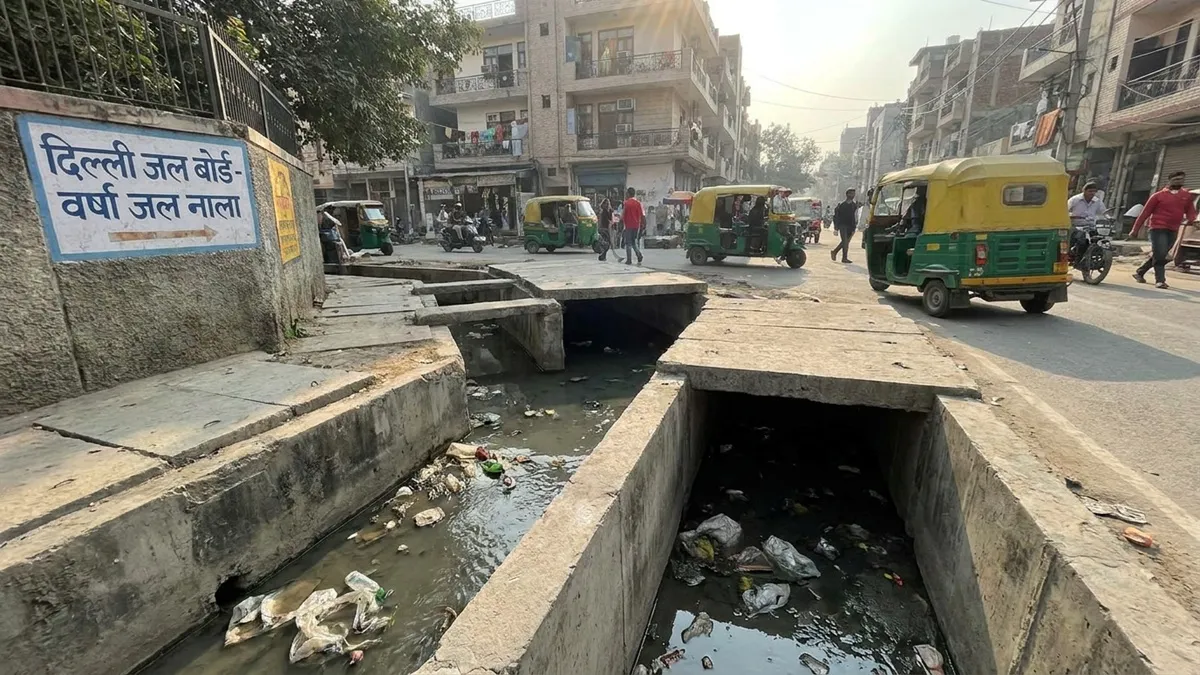
Amid waterlogging in the city during rain season, the Delhi authorities on Saturday identified eight 'troublesome' drains for the first time, which are particularly difficult to clean due to encroachments, sewage discharge, and waste dumping, which complicate flood management in those areas. There are eight drains labelled 'troublesome', which are detailed in the service plan report shared by the Irrigation and Flood Control (I-FC) Department.
After identifying the problems and proposed corrective measures flagged in the recently approved Master Plan of Delhi 2047, where the Delhi IFC Department and others have highlighted the problems. The issues vary across the drains, but a common concern is the inability of maintenance by several agencies like the Municipal Corporation of Delhi (MCD), IFC, Delhi Development Authority (DDA) and Delhi Jal Board (DJB).
Take a look at the eight new 'troublesome drains'
Escape Drain No. 1: Two water pipelines running through Escape Drain No. 1 are obstructing the flow of water. Furthermore, the problem is exacerbated by heavy silt from the water treatment plant and the lack of sufficient space to accommodate cleaning machinery. To address this, it has been suggested to remove both water pipelines from the drain and relocate them. This will be followed by desilting.
Biharipur Drain: The Biharipur Drain in Northeast Delhi is surrounded by densely populated areas and residential areas on both sides, making it difficult for cleaning machinery to reach the drain. A large amount of municipal waste and cow dung is also dumped into the drain. To address this problem, it is proposed to build a road parallel to the drain to facilitate the movement of cleaning machinery. If necessary, it has also been suggested to demolish unplanned or illegal buildings on both sides of the drain. The drain channel should also be remodeled.
Bund Drain: The Bund Drain faces a similar situation. Houses are built too close together, preventing space for cleaning. The problem is exacerbated by the dumping of garbage and dung into the drain. According to the report, a bar screen has already been installed in the drain, and a bypass drain has been constructed to drain the water. Removal of remaining obstructions is proposed. It also recommends constructing a road parallel to the drain to facilitate cleaning and removing illegal constructions as needed.
Kirari Suleman Nagar Drain: The Kirari Suleman Nagar drain faces one of the most complex sewer and waste management problems. According to reports, domestic waste, sewage, and municipal waste from 106 illegal and unsewered colonies flow into the drain. During floods, treated wastewater also flows into the drain, causing additional silt accumulation and impacting the drain's capacity. To address this problem, the DDA has been advised to divert sewage from the drain at two locations through the main DDA road drain to other nearby drains. It is also proposed to remove three culverts along the drain. They will be replaced with adequately sized Hume pipes, providing more space for water flow and allowing sewerage to drain easily.
Pankha Road Drain: The Pankha Road Drain is facing numerous problems due to garbage dumping, encroachment, and high-tension power lines passing overhead. Officials have recommended building concrete walls on both sides of the drain. The DJB and power distribution companies will work together to address the problems associated with the high-tension wires above the drain.
Relief Drain: The Relief Drain also lacks sufficient space for cleaning machinery. Local residents dump municipal waste, as well as street vendors, into the drain daily. To address this problem, the National Highways Authority of India (NHAI) has planned to redesign the entire drain and create a proper outfall for proper drainage.
Nasirpur Drain: Residents in the vicinity of West Delhi's Nasirpur Drain dump large amounts of municipal solid waste. A major reason for this is the lack of proper garbage collection points nearby. The Master Plan recommends that the MCD establish proper garbage collection points for nearby homes and markets. It also calls for installing a steel mesh over the drain to prevent waste from falling directly into it.
Asola Drain: South Delhi's Asola Drain is also grappling with the problem of large amounts of municipal waste dumped by residents living nearby. Here, too, the lack of adequate garbage collection systems nearby is considered a major cause of the problem. The master plan recommends establishing proper garbage collection points for homes and markets and installing steel mesh along the drain to prevent waste from entering the drain.
In the meantime, the Delhi officials have also been instructed to install steel mesh over the drains to prevent waste from entering. Overall, the proposed interventions aim to restore the capacity of these drains and facilitate regular maintenance, especially ahead of periods of heavy rainfall and flooding.
With inputs from PTI
Also Read:
