
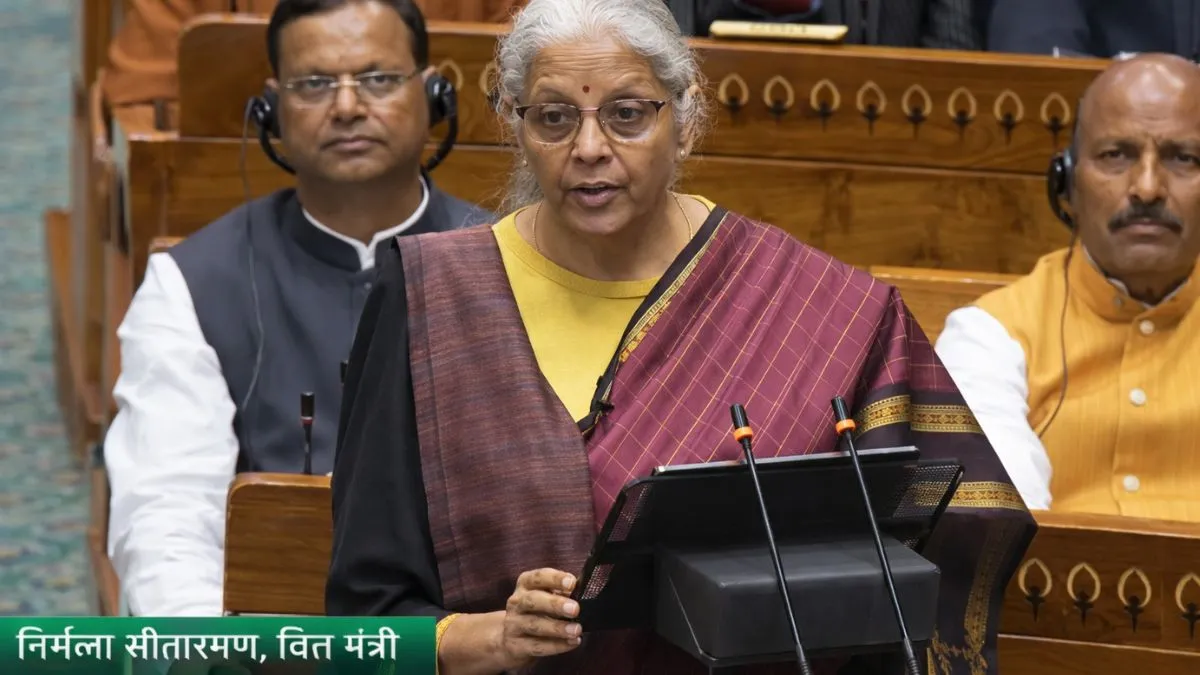
In Budget 2026, Finance Minister Nirmala Sitharaman has placed the spotlight firmly on India’s textile sector, announcing the creation of mega textile parks to drive manufacturing growth and employment. Rooted in the Mahatma Gandhi Swaraj Scheme, the initiative seeks to strengthen khadi, handlooms, and handicrafts by improving production capacity and building stronger global market linkages.
The Budget outlines an integrated programme with five key components, spanning the National Fibre Scheme, man-made and new-age fibres, a Textile Expansion and Employment Scheme, the National Handloom and Handicrafts Programme, and the TEX-ECO initiative, alongside SAMARTH 2.0 for modernised skilling. Together, these measures aim to make India’s labour-intensive textile industry competitive, sustainable, and globally relevant, proving that heritage and scale can, in fact, share the same loom.
Budget 2026 positions textiles as a strategic lever
Beyond domestic revival, Budget 2026 positions textiles as a strategic lever in India’s global trade playbook. The scale and speed of the proposed mega textile parks signal a clear intent: move aggressively up the value chain, expand export-ready manufacturing, and challenge long-dominant players in the region, particularly Bangladesh, whose garment industry has traditionally commanded global sourcing markets. This is less incremental reform, more competitive recalibration.
The Budget’s architecture supports this ambition. Mega Textile Parks are designed as integrated, challenge-mode clusters to enable large-scale manufacturing, technical textiles, and higher value addition. SAMARTH 2.0 aims to modernise textile skilling through deeper collaboration between industry and academia, ensuring a future-ready workforce. Meanwhile, the Mahatma Gandhi Gram Swaraj Initiative brings khadi, handlooms, and handicrafts into the global conversation through branding, market linkage, and streamlined training, quality, and production, turning heritage sectors into export contenders, not just cultural symbols.
Nirmala Sitharaman stated, "A textile expansion and employment scheme to modernise textile clusters. Aim for Samarth 2.0 to promote skilling in the textile sector. Propose to set up mega textile parks in challenge mode. To launch the Mahatma Gandhi Gram Samaj initiative to support Khadi and handicrafts."
At the grassroots end of the spectrum, the launch of the Mahatma Gandhi Gram Samaj initiative underscores the government’s intent to anchor growth in heritage-led livelihoods. The initiative aims to strengthen khadi and handicrafts by supporting village-level institutions, artisans and producer groups, blending Gandhian principles of self-reliance with contemporary market access and design sensibilities.
Also read: Union Budget 2026: How to download Budget's PDF and other documents? Check step-by-step guide
