
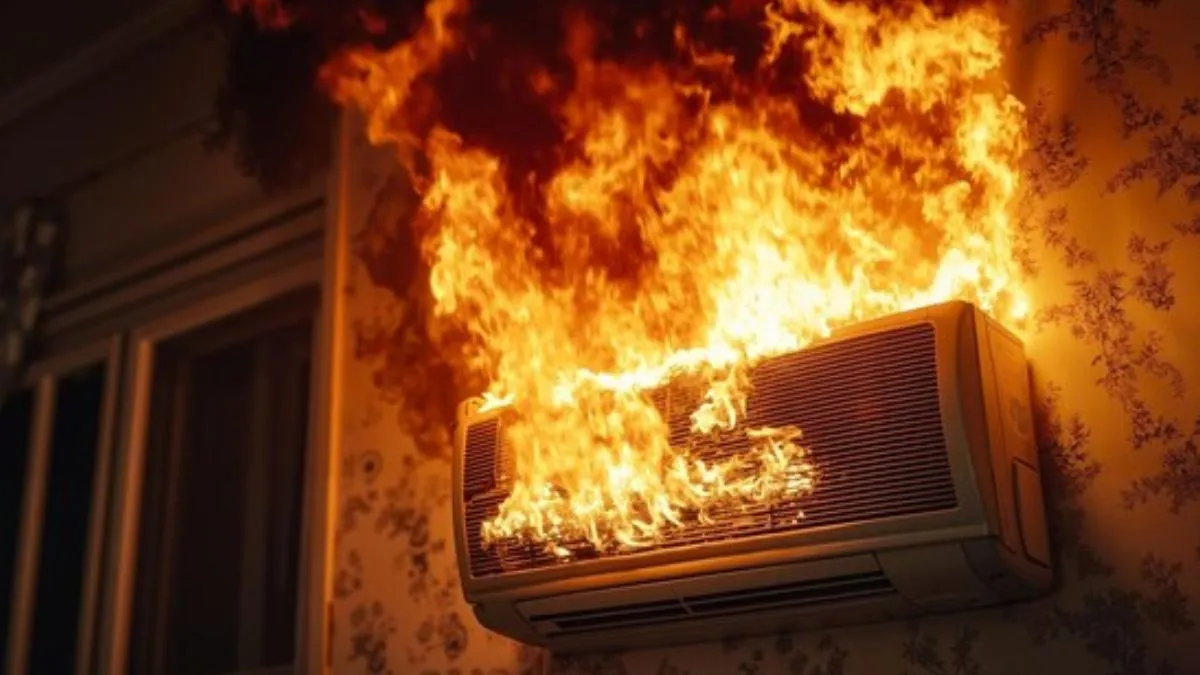
Across India, as the temperature rises, ACs go from being a luxury to a necessity. But the more we run them, the more chance something can go wrong—especially if you are not maintaining them properly. Electrical faults, forgotten servicing, or just using the wrong parts can turn your AC into a fire hazard. The Vivek Vihar incident is a sharp reminder: safety in the home starts with the basics.
Main reasons ACs catch fire
ACs draw a heavy electrical load and are packed with complicated parts. If you ignore maintenance, you set yourself up for trouble.
1. Electrical faults: Bad or loose wiring causes sparks. That’s how short circuits happen, and yes, fires too.
2. Overheating of the machine: If the dust chokes your AC’s outer unit (filters and coils), which blocks the airflow, it could cause some serious trouble. The system has to work harder, heating up and risking failure.
3. Gas Leakage or Less Gas: Your ACs use refrigerant gas to cool your house, which is considered to be highly flammable. If it leaks and, by any chance, if it hits a spark, then you need to get this fixed, or it could be life-threatening.
Risk management: Do not ignore the following
You might be using an AC at home, which could be a window or split, but everyone needs to follow some rules for any machine usage:
- Never skip your regular AC service
- Never repair your AC with cheap or fake spare parts, which may cause more harm
- Using AC Turbo mode for hours could harm the machine, by giving it more stress
- Keep a check on the wiring now and then
- Keep cleaning the dust pile which accumulates on the outer unit of your machine
Although the above fixes may sound small enough, they can lead to major problems.

How to keep your AC safe at home?
- Routine servicing: You must always get your AC filters and coils cleaned regularly (monthly or quarterly). This will help you to check all the internal parts.
- Quality parts replacement: Saving a little money could lead to bigger harm. Never go for cheaper spare parts; rather, get used to certified or original spare parts only.
- Do not overload your machine: Do not use Turbo mode for hours. Although it is tempting, running it for a longer stretch could strain the compressor, which may lead to major issues over time.
- Check wiring: Look for damage or loose connections; fix them before they turn dangerous.
- Clean filters and coils regularly: Better airflow means cooler rooms and much less risk of overheating.
Pay attention to warning signs
If you hear any weird noises, smell something burning, or notice the cooling not working properly, call the technician immediately.
Overall, ACs have been designed to keep us all comfortable inside a closed door when the temperature is insanely hot outside. But all the machines do need proper care and must not be ignored. Remember, most AC accidents could be prevented with a little attention.