
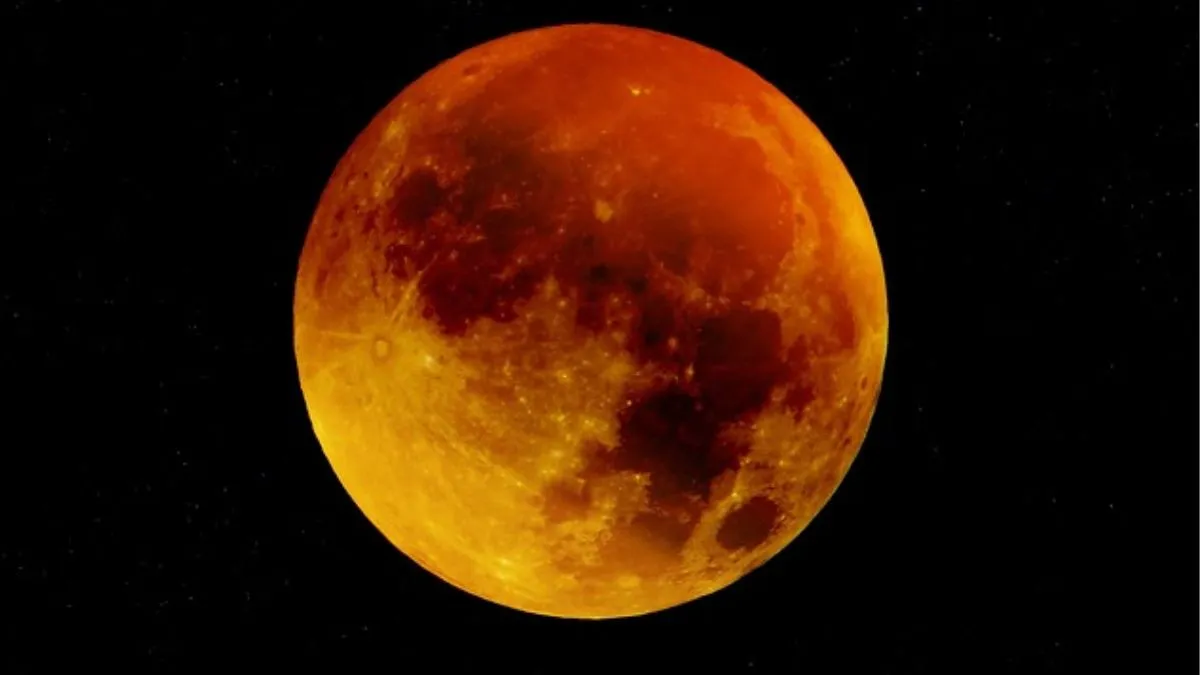
Get ready for a stunning sight: a total lunar eclipse is coming on March 3-4, 2026. If you’re out under the night sky, you’ll see the Earth slide right between the Sun and the Moon, casting a deep shadow and turning the Moon an unforgettable copper-red. People call this a “Blood Moon” for good reason. And here’s the catch — you will not see another total lunar eclipse until late 2028, so this is one you don’t want to miss if you’re into astronomy or just love a bit of cosmic drama.
So, what’s a Blood Moon anyway?
A total lunar eclipse gets the “Blood Moon” nickname because of its colour. It only happens during a full moon, when the Earth blocks sunlight from hitting the Moon. But instead of going totally dark, the Moon glows red. That’s because Earth’s atmosphere scatters away the blue part of sunlight and bends the red light around, sending it onto the Moon—the same reason sunsets look so fiery. Unlike solar eclipses, you don’t need special glasses or gear. Just step outside and look up.
When and how to watch in India
If you are in India, set an early alarm for March 4, 2026. Here’s when things happen (all times IST, give or take a few minutes):
- Penumbral eclipse starts: About 3:20 AM
- Partial eclipse: Around 4:30 AM
- Maximum eclipse: Between 5:10 and 5:30 AM
- Eclipse ends: Shortly after sunrise
But there is a catch, as the time the eclipse is peaking, the Moon will be low in the west and starting to set in many places. Folks in northern and western India have the best shot at seeing it before it dips below the horizon. You’ll want clear weather and an open view to the west, with as little city light as possible.
Where’s the best view?
The full eclipse will be easiest to see from eastern Asia, New Zealand, Australia, Japan, and across North and Central America just before dawn. A lot of Europe and Africa will miss the main show.
Planning to watch from India?
Here’s what to do:

- Find a place with a clear, wide-open view to the west.
- Check the weather—clouds will ruin it.
- Stay away from city lights if you can.
- Binoculars or a telescope is great, but you do not need them.
- No special eye protection required—just your eyes
What makes this eclipse stand out?
It’s all about rarity. After this, you won’t get another total lunar eclipse for more than two years. If you are up before sunrise and the skies are clear, you’ll catch a glimpse of something truly beautiful—right before the day begins.