
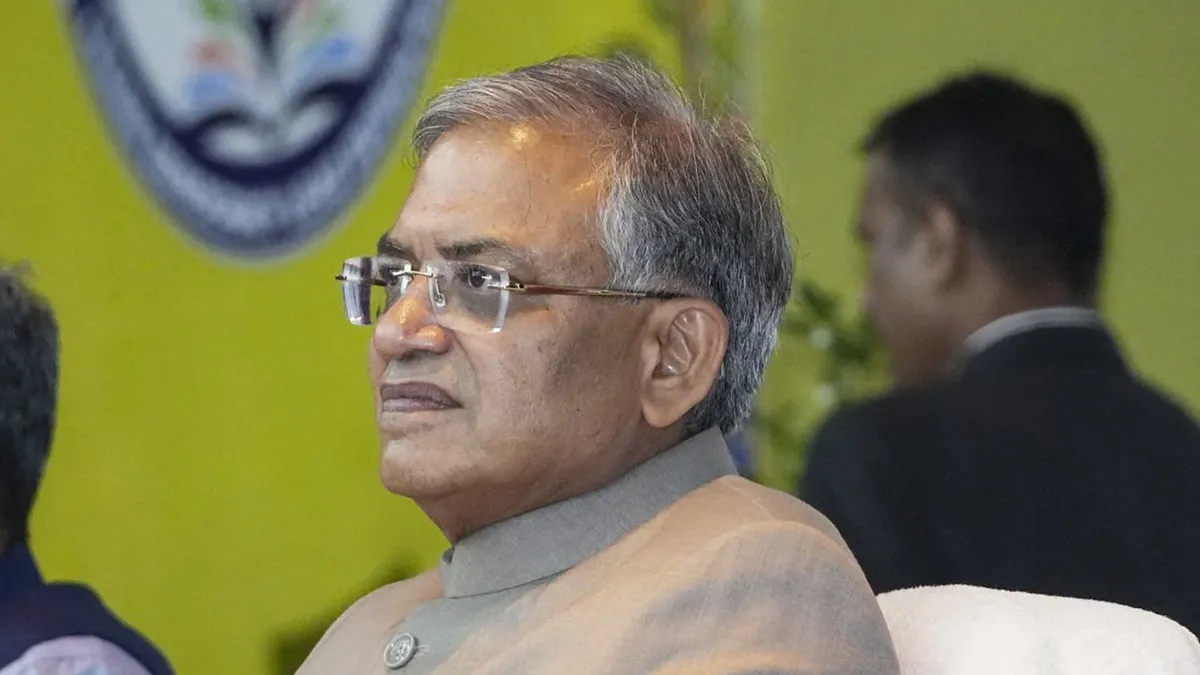
Amid reports of internal differences within the Election Commission of India (ECI), Leader of the Opposition in the Lok Sabha Rahul Gandhi launched a scathing attack on the country's top electoral leadership, categorically calling those involved in alleged vote theft "traitors." Media reports revealed that two Election Commissioners, Sukhbir Singh Sandhu and Vivek Joshi, had formally lodged written objections on 14 separate occasions with the Chief Election Commissioner Gyan Kumar over the working methods and data management of the voter list.
Amid this controversy, the opposition has now vowed to introduce a motion of impeachment in both houses of Parliament to remove Chief Election Commissioner (CEC) Gyanesh Kumar. It is being reported that a draft of the impeachment motion is being prepared with the help of legal experts, and a notice will soon be submitted by the united opposition in both houses. This could pose a significant threat to the Election Commissioner in the future.
How are Election Commissioners appointed?
• The Election Commission of India has a big responsibility to conduct free and fair elections in the country.
• The President of the country appoints the Chief Election Commissioner and Election Commissioners, on the recommendation of a three-member selection committee.
• This committee consists of the Prime Minister, the Leader of the Opposition in the Lok Sabha and a member of the Union Cabinet.
• According to the 2023 law, those appointed as Election Commissioners must have prior experience working in secretary-level positions in the government.
• They should have knowledge and experience in managing and conducting elections.
• Commissioners are appointed for a six-year term or until they reach the age of 65, whichever is earlier.
• The Chief Election Commissioner gets the same facilities and financial benefits as the Supreme Court judges.
How can a CEC be removed?
• According to Article 324(5) of the Constitution, the Chief Election Commissioner can be removed from his office in the same manner and on the same grounds as a judge of the Supreme Court.
• This is also stated in Section 11(2) of the 2023 Act.
• They can be removed only on the grounds of "proven misbehaviour or incapability".
• Misconduct may include any corrupt practice or misuse of position.
• Incapability refers to a situation where an officer is unable to perform his duties.
• No other Election Commissioner or Regional Commissioner shall be removed from his office except on the recommendation of the Chief Election Commissioner.
• To protect the Election Commission of India from political pressure, the process of removal of the Chief Election Commissioner has been made very difficult.
What happens after an impeachment motion is introduced?
To initiate the process of removing the Chief Election Commissioner, members of both Houses must move a notice of motion, called an impeachment motion, clearly alleging misbehavior or incapability. For an impeachment motion to be accepted, it must have the signatures of at least 100 MPs in the Lok Sabha and 50 MPs in the Rajya Sabha. If the motion is accepted, an inquiry is conducted to determine the veracity of the allegations.
Next, a motion for removal from office must be passed by a two-thirds majority of the members present and voting in both houses of Parliament. Once the motion is passed, the President orders the removal of the Chief Election Commissioner. Once the constitutional requirements are met, the President has no choice but to act on the advice of Parliament in this matter.
When was the impeachment motion rejected?
In April, the Chairman of the Rajya Sabha and the Speaker of the Lok Sabha rejected the impeachment motions moved by the opposition in both houses to remove Chief Election Commissioner Gyanesh Kumar. On March 12 this year, Mamata Banerjee's Trinamool Congress led the opposition in moving the impeachment motions in the Lok Sabha and Rajya Sabha, with 130 MPs signing the Lok Sabha motion and 63 MPs signing the Rajya Sabha motion. At that time, the Chief Election Commissioner was accused of biased and discriminatory behaviour and of obstructing the investigation of election fraud and the SIR.
Also Read:
Opposition to bring impeachment motion against CEC Gyanesh Kumar again as SIR row heats up: Sources
