
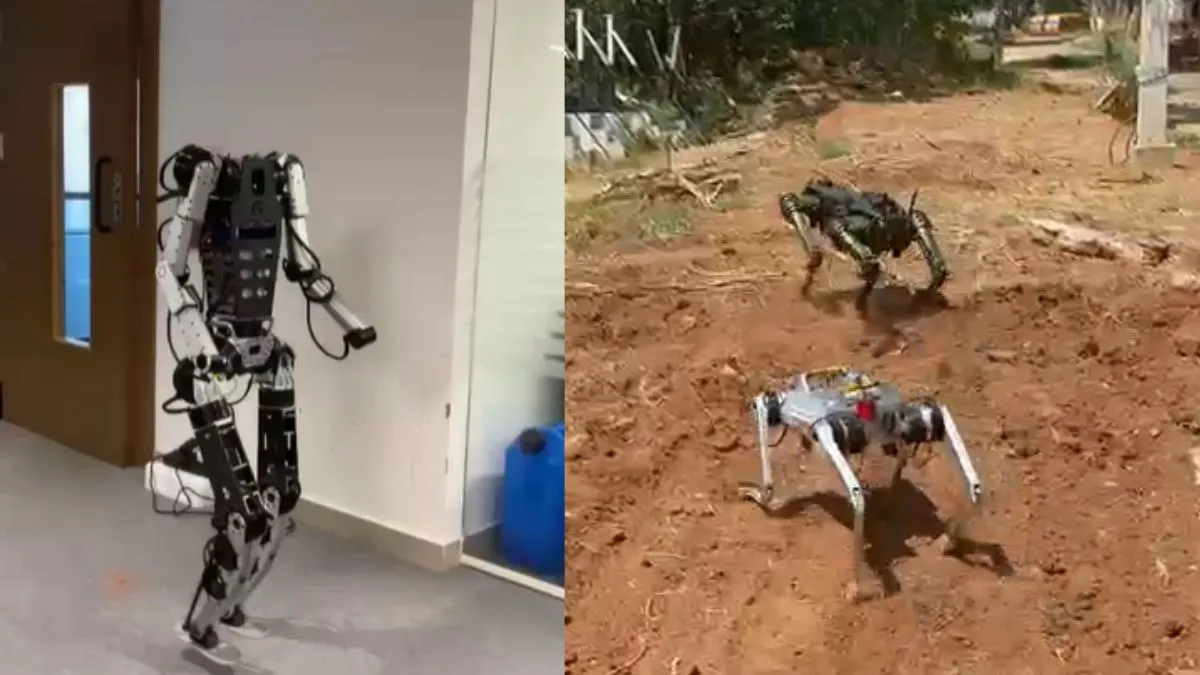
The Indian Army is currently carrying out field trials of an indigenous robotic system named “Param”, designed to assist soldiers in difficult and high-altitude regions. The machine has been developed to help reduce the physical load on troops operating in forward and remote areas. A Bengaluru-based startup, General Autonomy, has developed the robot, describing it as a completely indigenous system built in India.
Param is built to transport essential military supplies such as ammunition, weapons, and surveillance gear. It is intended to support soldiers by taking over heavy carrying tasks, especially in challenging terrain where movement is slow and exhausting.
“Sovereign Robotics. Strategic Advantage. It was an honor to present our work to the CoAS @adgpi today at Manekshaw Centre New Delhi,” Founder and CEO of General Autonomy posted on X.
The robotic mule is capable of moving across steep slopes, rocky paths, and narrow mountain tracks. It can function either autonomously or under remote control, making it suitable for use in complex battlefield conditions. Its role is expected to improve logistics support, assist in casualty evacuation, and enhance overall mobility during operations, particularly along border areas and in counter-insurgency zones.
At present, the Army is testing Param under real operational conditions. The trials are focused on assessing its endurance, carrying capacity, ability to handle difficult terrain, communication systems, and performance in harsh weather. If the system performs well, it may become an important asset for the Indian Army in future operations.
Key capabilities of robotic mule Param:
- Automatic obstacle detection for real-time environment awareness
- Ability to negotiate stairs up to 30 cm height
- “Crab walk” movement mode for navigating low-height or constrained spaces
- Fully autonomous navigation without human intervention
- Automatic fall detection and self-recovery mechanisms
- Autonomous target tracking for following moving objects or subjects
- Capability to jump up to 1 metre in height for enhanced mobility and terrain handling
