
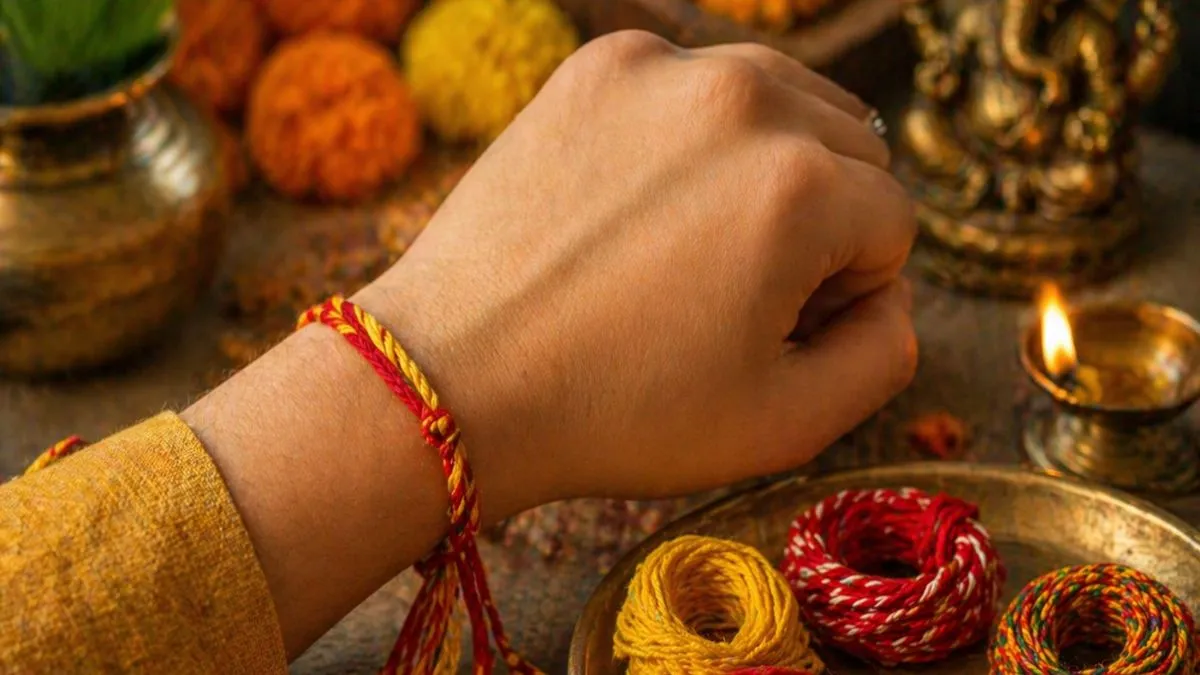
For many, tying a kalawa around the wrist is a simple ritual. It’s worn after a puja, a temple visit, or during important occasions, often kept on for weeks without much thought. But according to spiritual guide and astrologer Dr Jai Madaan, how long you wear it, and how you dispose of it, matters more than most people realise.
In a recent YouTube video, she explained that kalawa is not just symbolic, it is believed to carry energy that interacts with your aura.
Why you shouldn’t wear kalawa for too long
One of the most common habits people have is holding on to the thread long after it has served its purpose. Dr Madaan points out that most kalawa is cotton-based, which naturally weakens over time. “After 21 days, the life of a cotton-based kalawa begins to diminish. As its energy reduces, it can also weaken your aura,” she said.
Instead of keeping it on indefinitely, she advises replacing it regularly to maintain its intended spiritual significance.
What to do with old kalawa
Another question many people have is what to do once they remove it. Throwing it away casually is not recommended. Dr Madaan suggests a more mindful approach rooted in tradition and sustainability. “Make sure you use cotton-based kalawa and return the old one to the earth. Place it at the root of a tree at home. Give it back to Mother Earth. It will naturally recycle,” she explained.
The meaning behind different kalawa colours
Not all kalawa threads are the same. According to Dr Madaan, different colour combinations are associated with different energies and planetary influences. “Red and yellow represent Mars and Jupiter, and this combination is believed to boost prosperity,” she said. She further explained that:
Yellow kalawa is linked to protection and upliftment
Red and white together form a Chandra-Mangal combination, associated with wealth and growth. A hint of green is believed to strengthen communication “Choose your kalawa thoughtfully and change it at the right time so it supports your aura, not reduces it,” she added.
Tying Kalawa is a ritual with great meaning attached to it. Sometimes, it is the little rituals that hold deep significance.
Also read: Charanamrit rules: Are you drinking it the right way? Spiritual expert explains
