
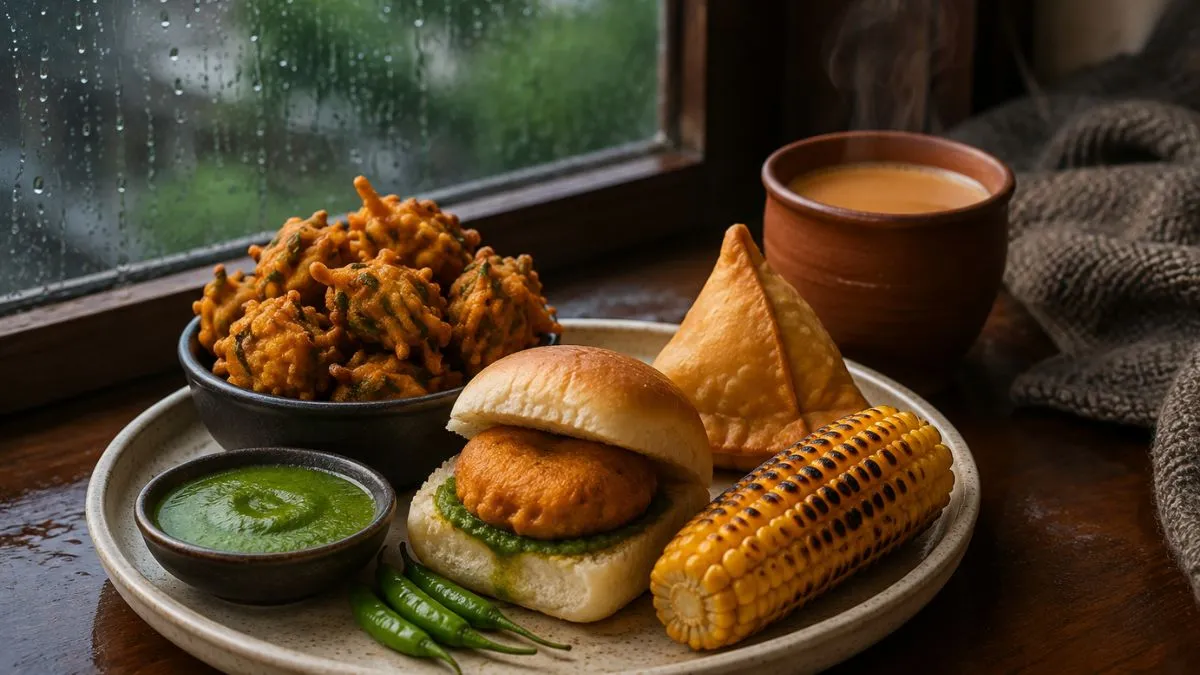
Rainy days, grey skies and the craving for something hot and fried often go hand in hand. From pakoras with chai to vada pav and samosas, monsoon has its own comfort-food menu. But trying to completely avoid these foods may not always be realistic.
Dr Ridhima Khamesra, a nutritionist and health coach, suggests taking a more practical approach. Instead of fighting every craving, the idea is to change how you prepare or eat the food. As she puts it, “The more useful approach is changing how the craving gets answered rather than refusing to answer it at all.” Here are seven simple swaps that can help you enjoy some of your favourite monsoon foods without making every rainy-day craving a calorie-heavy affair.
Swap deep-fried pakoras for air-fried ones
Pakoras are perhaps the first food that comes to mind when it starts raining. Rather than giving them up completely, try making them in an air fryer.
According to Dr Khamesra, the besan coating can still turn crisp in an air fryer, while the amount of fat can be significantly lower than with deep frying. The chutney can still be added afterwards, keeping the familiar taste and texture of the snack.
Give vada pav a lighter makeover
Vada pav can also stay on the monsoon menu with a couple of small changes. Dr Khamesra recommends swapping the fried vada for a baked version and choosing a smaller pav.
The idea is not to remove the dish altogether. As she notes, “the chutney and spice were always doing most of the work anyway.”
Cut down on the extra cups of chai
For many people, chai is an essential part of a rainy evening. There is no need to completely give it up, but the snacks that automatically accompany every cup can quietly add up.
Dr Khamesra suggests cutting down to two well-made cups a day and avoiding the routine biscuit that comes with the later cups. She says this can remove more sugar from the day's intake than people may realise.
Turn Maggi into a proper meal
A bowl of Maggi may be one of the easiest comfort foods to reach for when the weather turns gloomy. But eating it on its own and finishing it quickly may leave you hungry again soon.
A simple solution is to add an egg, some vegetables or a spoonful of paneer. Dr Khamesra explains that these additions can turn Maggi into a more complete meal and may help prevent the second round of snacking that often follows.
Choose smaller homemade samosas
Samosas do not necessarily have to disappear from your monsoon food list either. The smarter adjustment is to control the size and the pastry.
Dr Khamesra recommends making smaller samosas at home with a thinner crust. According to her, what can add up over the season is less about the potato filling and more about the size of the pastry and the amount of maida surrounding it.
Have roasted bhutta instead of butter-heavy corn
Monsoon and bhutta are almost inseparable, but you can enjoy the smoky, spicy flavour without covering the corn in a thick layer of butter.
Roasted bhutta with lime and chilli can provide the same combination of smoky and spicy flavours. Dr Khamesra points out that the heavy layer of butter may not be adding as much flavour as people think.
Blot excess oil from fried food
If you are buying fried snacks from outside, there is another small step you can take before eating them. Dr Khamesra recommends blotting the food with tissue paper for a few seconds to remove some of the surface oil.
She notes that this can be particularly useful for fried foods bought from stalls where oil may have been reused throughout the day.
You don't have to give up monsoon comfort food
The point of these swaps is not to turn the monsoon into a season of restriction. You can still enjoy the foods that make rainy days feel comforting, but small changes in preparation, portions and accompaniments can make a difference.
As Dr Khamesra puts it, “None of this asks anyone to sit out the season with a salad while everyone else enjoys garam chai and pakoras.” The idea is to keep the same familiar foods while handling them slightly differently.
That may make the approach easier to sustain throughout the season, rather than trying to be overly strict for a few days and abandoning the plan altogether.
Also read:
7 everyday foods a nutritionist swears by for better digestion during the monsoon
