
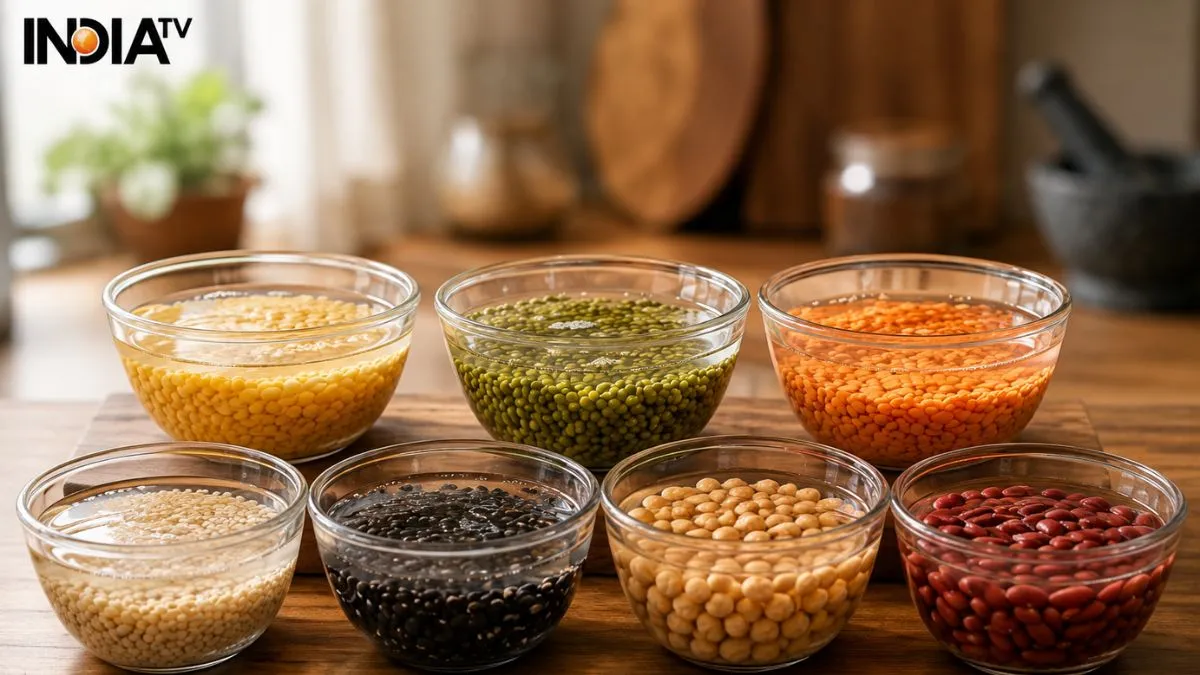
Soaking dal and pulses before cooking is a usual procedure in Indian households; however, have you ever thought about why certain dals require only a few minutes of soaking, and others need overnight soaking?
Nutritionist Ryan Fernando believes that soaking will help pulses to hydrate better and even decrease the presence of antinutrients in them. However, the time of soaking depends entirely on the size of the pulse.
Why should you soak dal before cooking?
As the pulses become soaked, they get hydrated before cooking. As a result, they get softer, and the cooking process becomes faster. It may even help to eliminate some antinutrients found in pulses. Nevertheless, one cannot claim that all dals require a particular time of soaking. The general principle is: the larger and more solid the pulse is, the longer soaking is required.
15-30 minutes: Yellow Moong Dal and Masoor Dal
Small or split dals usually tend to absorb water fast. Yellow moong dal and masoor dal should be soaked for about 15-30 minutes before preparation. These small and split dals take less time to absorb water.
2-4 hours: Chana dal and whole masoor
Some larger or whole dals need a longer time to soak. Chana dal and whole masoor can be soaked for 2-4 hours. This is because these dals need extra time to absorb water before cooking.
6-8 hours or overnight: Whole moong, whole urad, kala chana, kabuli chana and rajma
Larger and harder pulses need considerably more time. However, whole moong, whole urad, kala chana, kabuli chana, and rajma can usually be soaked for 6 to 8 hours or overnight. These pulses are denser and hence need more time to soak up water.
Why soaking time differs from dal to dal
All these factors, including size, hardness, and whether the pulse is whole, split or dehulled, contribute to how fast they hydrate. Smaller, split, and dehulled dals hydrate faster, whereas larger and denser whole pulses take some time to hydrate. Therefore, rather than using one standard method of soaking for all dals, we should consider the type of pulse we are dealing with.
The simple soaking rule to remember
If you are unsure how long to soak a particular pulse, remember this basic principle: small, split and dehulled pulses hydrate faster, while bigger and harder whole pulses need longer soaking. The timings are practical ranges and may vary depending on the variety of pulse and the cooking method.
Also read:
Should you eat fermented foods every day? Functional medicine expert explains
