
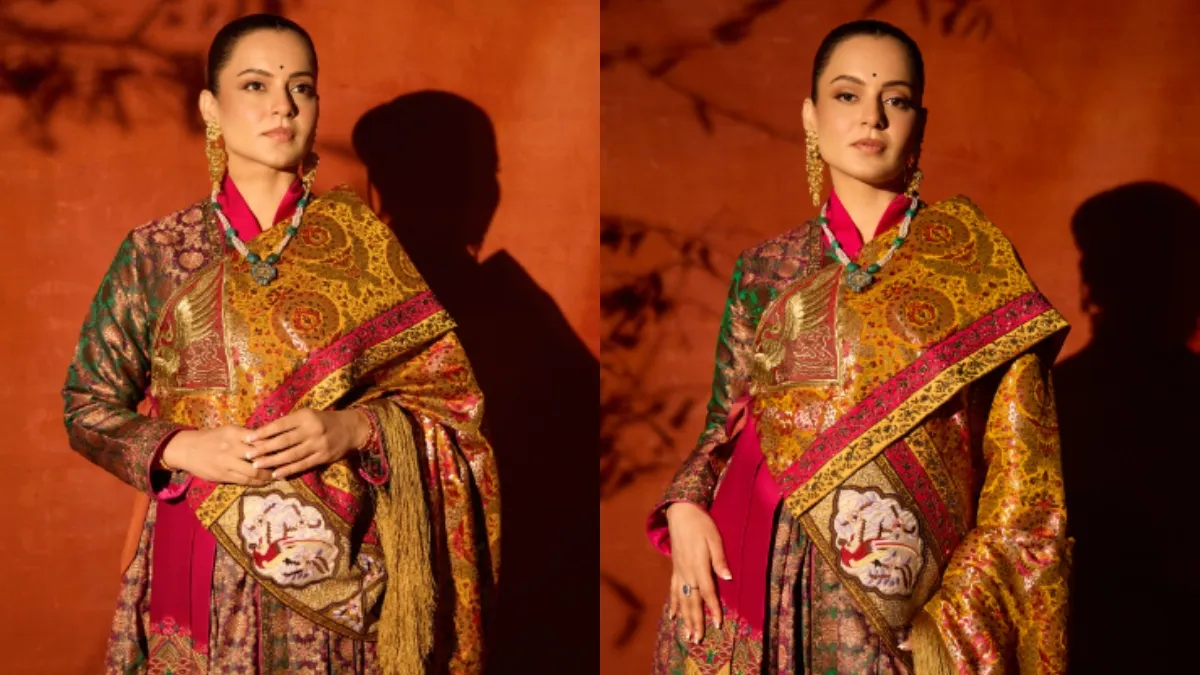
Kangana Ranaut was excited to showcase the beauty and dignity of the traditional Goncha for a winter wedding that required elegance and warmth. Instead of the typical glitz often associated with weddings, her outfit represents the heritage of India and the connection between people who live in the mountains.
Namza Couture designed this stunning ensemble, which is truly a representation of India’s mountain culture.
Kangana Ranaut’s winter wedding look celebrates Himalayan heritage
In her Instagram post, Kangana wrote beautifully about why she chose this outfit. She wrote, "Wedding season in India is also an opportunity to indulge in our traditions and culture. For a winter wedding that I attended last night, here’s a mountain story created by @namzacouture."
Details of Kangana’s Ladakhi-inspired outfit
What she wore wasn’t ordinary. The gown was a vibrant green “mogos” version of Goncha, layered with a mustard “bok” shawl, and adorned with traditional Ladakhi jewellery. From bold statement earrings to a stylised hairpiece, every element echoed Ladakh’s rich sartorial heritage.
Her makeup was understated, earthy tones, minimal glamour, letting the outfit and its story shine. A bun hairstyle, a subtle black bindi, soft lips and kohled eyes completed the look.
Why Kangana chose a traditional Goncha
Kangana's outfit selection communicated more than just a visual marker; it stated that she was not only taking a stand against globalised brands that promote superficiality through glitz and glamour, but instead choosing something that had intrinsic meaning for her as an Indian woman. The Goncha is primarily used for protection against the frigid climate of High Altitude Himalayan Communities; however, it possesses deeper cultural significance to the people who wear it.
Worn by Kangana at a Wedding during Winter, confirmed positive responses from fans as well as millions of other people worldwide, who appreciated the manner in which she drew attention to a Regional Garment in an elegant way. Several key words used in conjunction with this celebration of Kangana's Cultural Heritage included: "Regal", "True to Myself" and "Proudly Represents My Society's Mountain Tradition".
In earlier instances, too, Kangana has been vocal about promoting traditional Indian and Himalayan outfits. She believes attires like Goncha aren’t just clothes, they are stories, heritage, and identity.
