
Little children are not always able to say whether they have problems with visual acuity. Eyesight issues in children may not be noticeable, yet they might interfere with learning, attention at school, and even self-confidence. That is why professionals suggest regular eye check-ups at an early age, as minor problems can become larger problems if they are ignored.
Around one out of five children has refractive errors, which are a common cause of vision problems like short-sightedness, long-sightedness or astigmatism. Such conditions may impair vision and thus need to be treated properly to enhance vision and prevent complications such as lazy eye (amblyopia), according to the American Academy of Ophthalmology. Early diagnosis makes vision problems easier to treat and cure.
Also read: From screens to sleep: These everyday habits could be damaging your eyesight
Signs your child may need glasses
Children do not always show or voice out that they have difficulty seeing, but some behaviours may be used as indicators. When your child squints a lot, sits too far in front of the television or even reads books very close to the face, a sign of being short-sighted might show up. Also, headache complaints, constant eye rubbing, or a lack of concentration when reading could be a vision problem.
Children might at times tilt their head to do so or turn away from activities that need concentration, such as puzzles and board games. Educators also observe that they are unable to repeat what was written on the blackboard or to follow the lesson.
Also read: Cataract: Expert shares common eye problems faced by urban professionals
When to schedule the first eye test
Even in cases where there are no symptoms, doctors suggest the first comprehensive eye check when people are aged between three and five. Subsequently, children are supposed to receive regular check-ups on a yearly basis or twice a year in case symptoms of vision (or eye) problems show up.
Early and more frequent screening is more important in cases of lazy eye, squint, and severe near-sightedness in cases of a family history of eye conditions.
Making the experience easy for kids
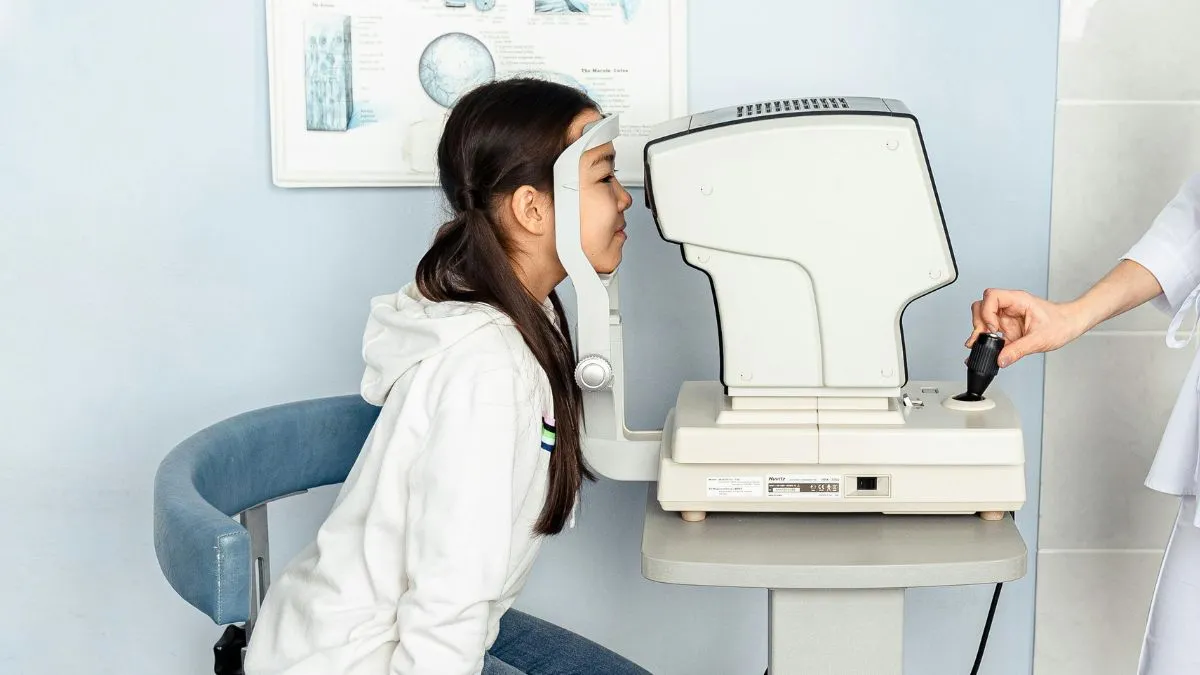
Eye tests for children are designed to be simple and stress-free. Instead of letters, doctors may use pictures, symbols, or interactive games to check vision. Encouraging your child and explaining the process can make it feel less intimidating.
Good vision is key to your child’s growth, learning, and confidence. If you notice signs like squinting or sitting too close to the TV, don’t delay an eye check. Even if everything seems fine, a routine exam before school age is a smart step to ensure their world stays sharp and bright.
Also read: Natural ways to improve eyesight: Daily eye exercises you can start today
