
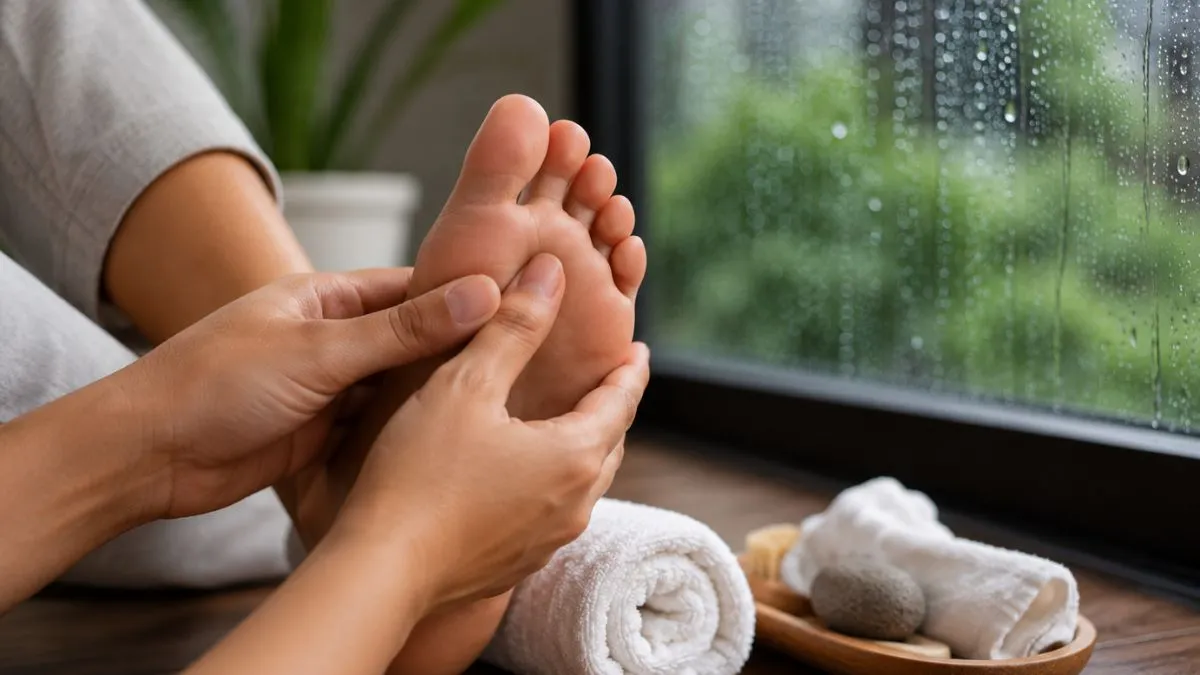
The monsoon season may bring relief from the heat, but it also creates the perfect conditions for fungal and bacterial infections. For people living with diabetes, even a small cut or blister can quickly become a serious concern because of slower healing and reduced sensation in the feet.
According to Dr Honey, Consultant Diabetologist, Dr Mohan's Diabetes Specialities Centre (DMDSC), simple daily foot care habits can significantly reduce the risk of infections during the rainy season. "The good news is that most of this is preventable. It just takes a bit of daily discipline," she says.
"Start with clean, dry feet every single day"
Dr Honey advises washing your feet with mild soap and lukewarm water after returning home, especially if you have walked through rainwater. "Rainwater on city roads is rarely clean; it carries dust, waste and bacteria that you don't want sitting on broken or softened skin," she explains.
After washing, dry your feet thoroughly, paying particular attention to the spaces between the toes. "Pat gently between each toe. That's where moisture likes to hide, and it's exactly where fungal infections like athlete's foot tend to start," she adds.
"Moisturise, but skip the web spaces"
While people with diabetes often have dry skin, Dr Honey says proper moisturising is essential to prevent cracks that can become entry points for infection. "Apply a light, fragrance-free moisturiser to the soles and tops of your feet after drying them. Just avoid the areas between the toes. Keeping that region slightly dry actually helps ward off fungal growth," she says.
"Inspect your feet like it's part of your routine"
Daily foot checks are one of the most important habits for people with diabetes. "This is the step people skip most often, usually because nothing feels wrong. But diabetic neuropathy means you may not feel a blister, a thorn or a small cut forming," says Dr Honey. She recommends examining your feet every evening, including the soles, using a mirror if needed. "Watch for redness, swelling, blisters, discolouration or any break in the skin. Catching something on day one instead of day five makes all the difference."
"Rethink your footwear for the season"
Choosing the right footwear is equally important during the monsoon. "Closed footwear that traps water is worse than no footwear at all," Dr Honey says. She recommends wearing shoes or sandals that drain and dry quickly while avoiding walking barefoot, even indoors.
"If your footwear gets wet, don't put it back on the next day without drying it out completely. Damp shoes are a breeding ground for fungus," she warns.
Other simple habits that make a big difference
Dr Honey also recommends changing out of wet socks immediately and never reusing damp socks. Toenails should be trimmed straight across to reduce the risk of ingrown nails. "If you notice a cut, blister or unusual soreness, don't wait it out. Get it looked at early rather than hoping it settles on its own," she advises.
She concludes, "None of these steps takes more than a few minutes a day. But for people with diabetes, those few minutes are often what stands between a minor scrape and a complication that takes weeks to heal. This monsoon, let your feet be one less thing to worry about."
Disclaimer: Tips and suggestions mentioned in the article are for general information purposes only and should not be construed as professional medical advice.
Also read:
The hidden link between diabetes and fatty liver, gastroenterologist explains
