
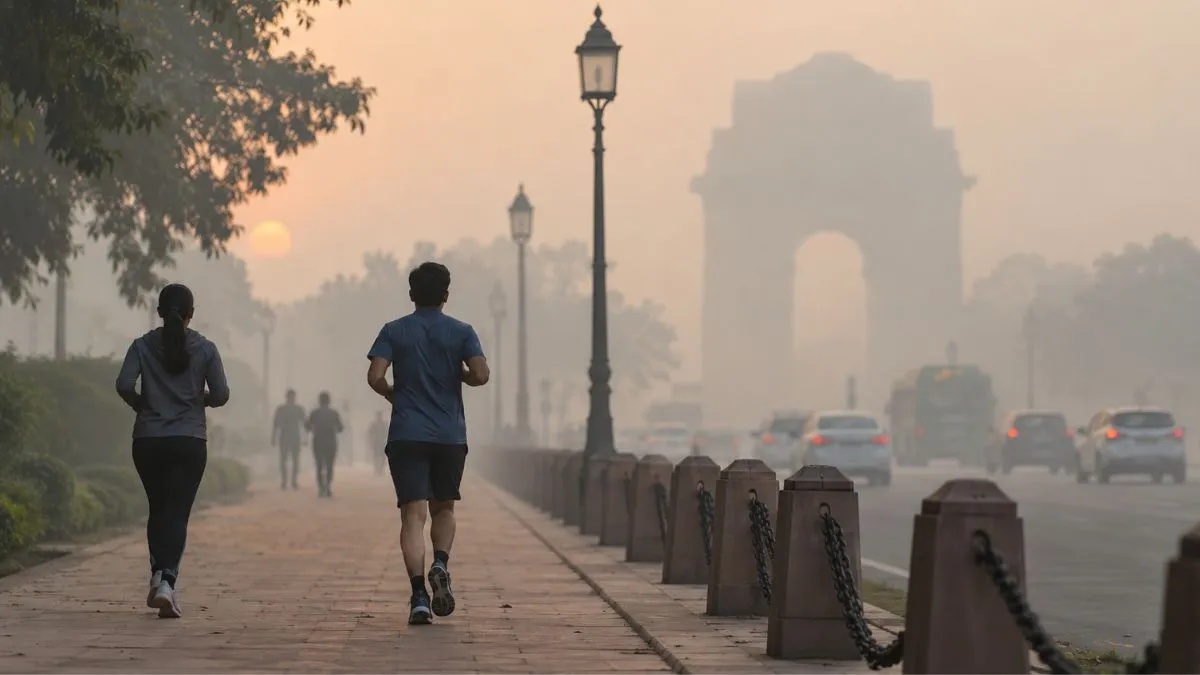
With Delhi's Air Quality Index (AQI) entering the 'poor' category, people who go for morning walks, jogs or outdoor workouts may need to reconsider their routine. Exposure to polluted air can trigger coughing, throat irritation, wheezing and breathing discomfort. Even people without pre-existing medical conditions may experience health problems after repeated exposure.
Fine particulate matter, particularly PM2.5, can penetrate deep into the lungs, while some pollutants can contribute to inflammation and affect the cardiovascular system. Dr Rahul Roshan, Director of the Centre for Chest and Respiratory Diseases at BLK-Max Hospital, advises people to limit exposure during periods of poor air quality, particularly those with existing respiratory or cardiovascular conditions.
Should you avoid morning walks when pollution levels are high?
Residents should check the AQI before planning outdoor activities and avoid prolonged exertion, jogging or exercising near busy roads and construction sites when pollution levels are high. Morning walks should be avoided, as AQI is usually very high at that time. Outdoor activities should be rescheduled or moved indoors wherever possible.
Dr Roshan said air pollution should not be considered merely a seasonal inconvenience. According to him, fine particulate matter can irritate the respiratory tract, aggravate existing lung conditions and increase the strain on the cardiovascular system. Even healthy individuals may develop coughing, throat irritation, wheezing or breathlessness after repeated exposure.
He added that the severity of symptoms depends on pollution levels, the duration of exposure and individual susceptibility.
Who should be extra careful?
Children, older adults, pregnant women and people with asthma, chronic obstructive pulmonary disease (COPD) or heart disease are particularly vulnerable to poor air quality. Children's developing lungs make them more susceptible to pollutants, while older people and those with underlying illnesses may experience worsening symptoms. Pregnant women should also minimise exposure, as air pollution has been associated with adverse pregnancy outcomes.
Dr Roshan advised people with existing respiratory or cardiovascular conditions to be especially cautious during periods of poor air quality. Children should avoid strenuous outdoor activities, while older adults and pregnant women should minimise unnecessary exposure. Any noticeable worsening of an existing condition should be addressed promptly rather than ignored.
How can you exercise more safely?
- Check the AQI: Check air quality before planning outdoor activities and avoid strenuous exercise when pollution levels are high.
- Move workouts indoors: Reschedule outdoor activities or exercise indoors wherever possible.
- Avoid polluted locations: Stay away from busy roads and construction sites when pollution levels are high.
- Use a well-fitted N95 or N99 mask: These masks can help reduce exposure to fine airborne particles. They should cover both the nose and mouth and fit snugly against the face. Cloth masks, scarves and handkerchiefs do not provide equivalent protection against fine particulate pollution. Masks reduce particle exposure but cannot eliminate all risks.
- Reduce indoor pollution: Keep windows and doors closed as far as practical when outdoor air quality is poor. Avoid smoking indoors, burning incense or candles, and other sources that generate smoke.
When should you seek medical help?
Persistent coughing, wheezing, breathlessness, chest discomfort or symptoms that interfere with sleep and daily activities warrant medical assessment. People with existing lung or heart conditions should seek advice sooner if their symptoms worsen.
Severe breathlessness, intense or persistent chest pain, bluish lips, confusion, fainting or difficulty speaking because of breathing problems require immediate medical attention. Individuals should not wait for symptoms to resolve on their own or self-medicate with antibiotics, steroids or inhalers without appropriate medical advice.
Dr Roshan emphasised that people should reduce their exposure to polluted air, follow medical advice and recognise warning signs early to protect their health during periods of poor air quality.
Disclaimer: Tips and suggestions mentioned in the article are for general information purposes only and should not be construed as professional medical advice.
ALSO READ:
Do you really need an air purifier to tackle Delhi's poor air quality? Chest specialist explains
