
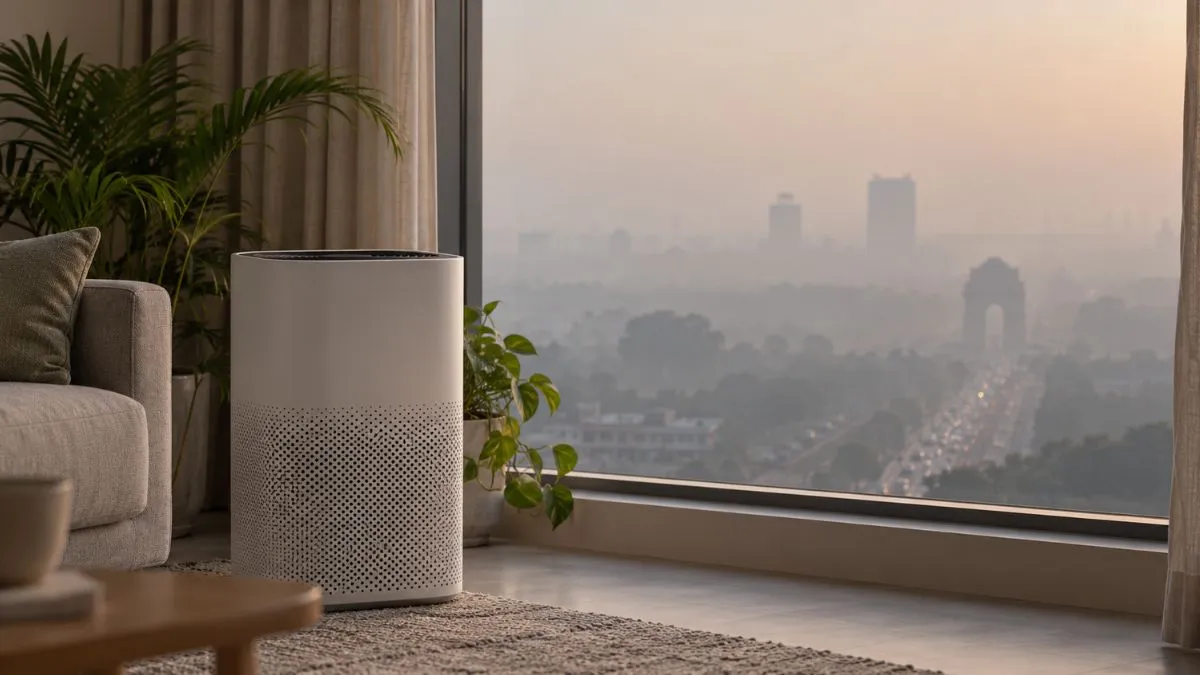
With Delhi's air quality entering the 'poor' category, air purifiers are becoming a consideration for people looking to reduce their exposure to pollution at home. But how effective are these devices, and what can people do to improve indoor air quality if they cannot afford one? Dr Rahul Roshan, Director - Centre For Chest & Respiratory Diseases, BLK-Max Hospital, explains how HEPA-based air purifiers can help reduce airborne particles and outlines the precautions people can take at home without one.
Do air purifiers actually help reduce pollution indoors?
Dr Roshan explains that staying indoors does not automatically mean being protected from pollution, as outdoor pollutants can enter homes through doors, windows and ventilation systems. HEPA-based air purifiers can help reduce airborne particles, provided they are appropriately sized for the room and their filters are replaced on time.
Dr Roshan also points out that air conditioners with a suitable filtration system and a recirculation setting may help limit the entry of outdoor air, depending on the system's design. Choosing equipment suited to the space and maintaining it properly are important considerations when trying to manage indoor air quality.
What can you do at home without an air purifier?
Dr Roshan advises people who cannot afford an air purifier to take these practical steps to reduce indoor pollution:
- Keep doors and windows closed: During periods of high pollution, keep doors and windows closed as far as practical, particularly when outdoor air quality is poor.
- Ventilate when outdoor pollution improves: Open windows when outdoor pollution levels improve to allow ventilation.
- Avoid indoor sources of smoke: Avoid smoking indoors, burning incense or candles, and other activities that generate smoke.
- Reduce dust: Damp-mop floors and wipe surfaces to help reduce dust.
- Consider indoor plants: Air-purifying indoor plants can also be used.
- Use air conditioning where suitable: Air conditioners with a suitable filtration system and a recirculation setting may help limit the entry of outdoor air, depending on the system's design.
Dr Roshan's advice highlights practical ways to manage indoor air quality without an air purifier, while recognising that keeping polluted outdoor air out and allowing ventilation when conditions improve are both important considerations.
ALSO READ:
