
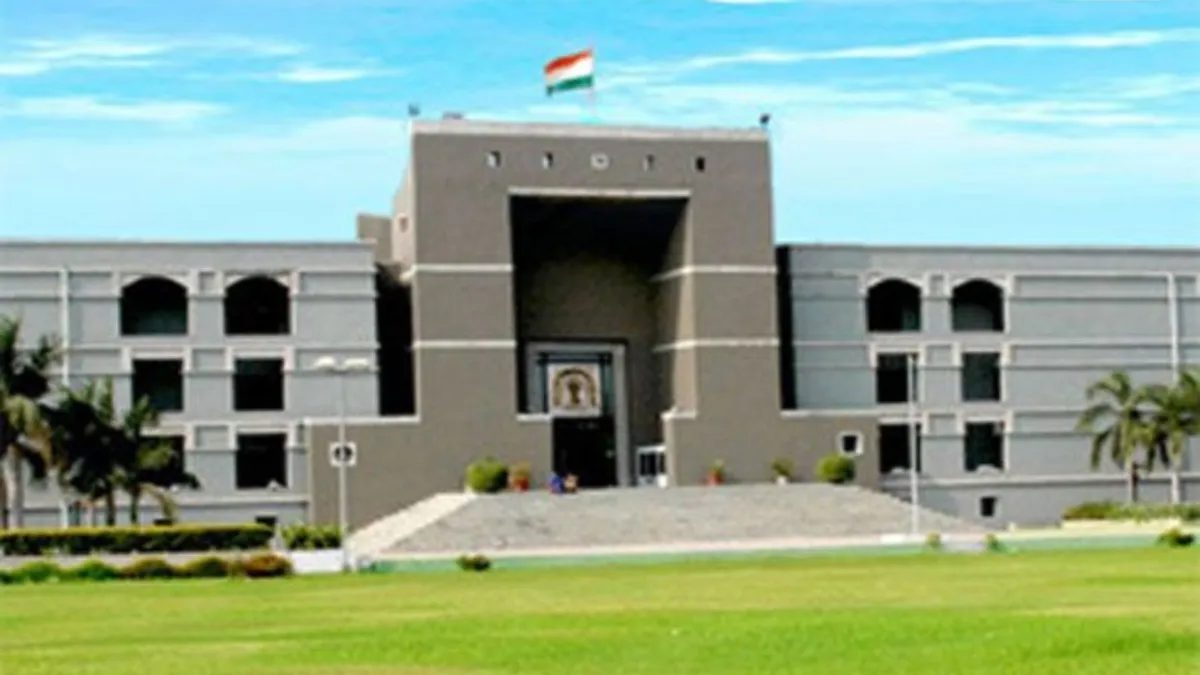
The Gujarat High Court has upheld a sessions court’s verdict acquitting six men accused of killing three British nationals during the 2002 Gujarat riots. The division bench of Justices A Y Kogje and Samir J Dave delivered the judgment on March 6, which was made public recently.
HC cites lack of strong evidence
The court found no compelling reason to overturn the acquittal by the Principal District and Sessions Judge at Sabarkantha, Himmatnagar, issued on February 27, 2015. It noted that the sessions court had carefully assessed the evidence, including the First Information Report (FIR), and found the witness descriptions of the accused—based only on height, clothing, and approximate age—insufficient for conviction.
“Even in the FIR itself, no description of the accused was given. Therefore, the sessions court has rightly concluded that such dock identification cannot be the sole basis for conviction,” the HC observed.
Additionally, the forensic science laboratory (FSL) report did not implicate any of the accused, and the investigation was triggered by an anonymous fax rather than direct eyewitness accounts, further weakening the case.
Background of the case
The case dates back to February 28, 2002, when a mob attacked a car carrying three British nationals—Saeed Safik Dawood, Sakil Abdul Hai Dawood, and Mohamad Nallabhai Abdulbhai Aswar—along with their driver Yusuf. The group was returning from a trip to Agra and Jaipur when they were intercepted and assaulted. The attackers set their vehicle on fire, killing the driver on the spot, while Aswar succumbed to injuries later. The complainant, Imran Mohamad Salim Dawood, managed to escape.
Following an anonymous fax naming an alleged perpetrator, the British Deputy High Commissioner urged the Gujarat police to investigate. This case was among nine riot-related cases re-examined by a Supreme Court-appointed Special Investigation Team (SIT) in 2003.
In 2009, the sessions court framed charges under sections of the Indian Penal Code (IPC), including murder, rioting, and unlawful assembly, against six accused—Mithanbhai Chandu alias Prahlad Patel, Ramesh Patel, Manoj Patel, Rajesh Patel, and Kalabhai Patel. However, the court later acquitted them due to insufficient evidence.
With the Gujarat HC’s ruling, the legal battle in this case appears to have reached its conclusion, reaffirming the lower court’s findings.
