
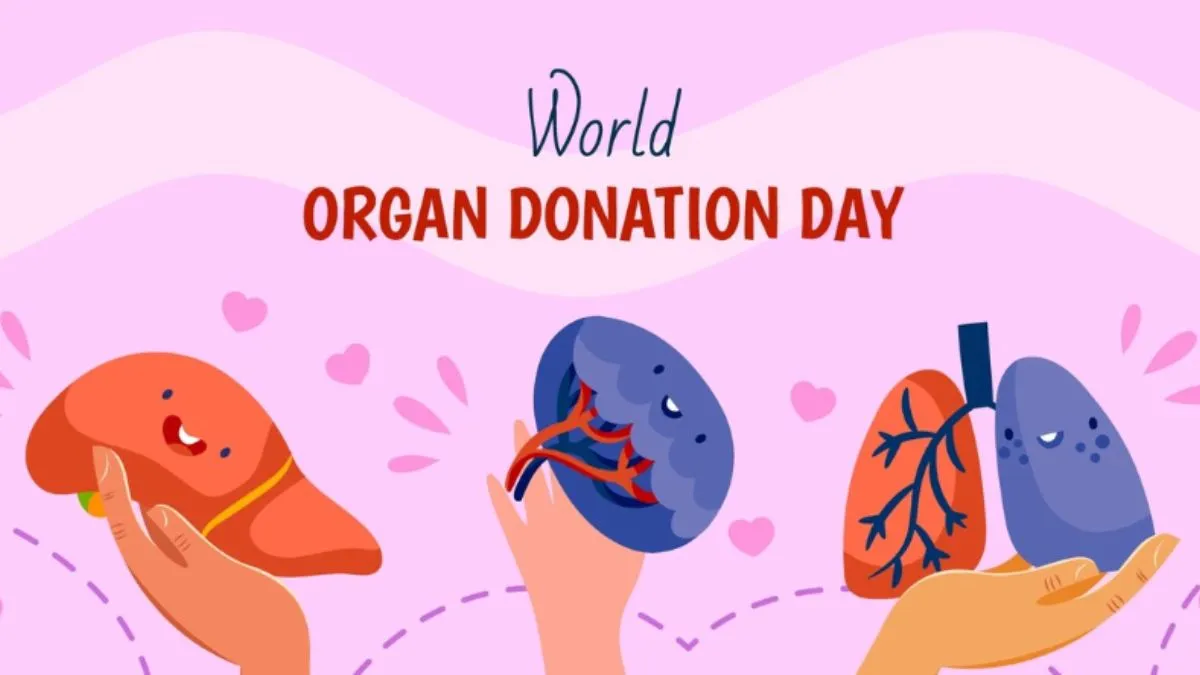
World Organ Donation Day is observed on August 13 every year to raise awareness about organ donation and bust the myths around it. It is also observed to honour those who donate their organs for their services to the world.
World Organ Donation Day: History and Significance
World Organ Donation Day is observed on August 13 to commemorate the first successful organ transplant. In 1931, Ronald Lee Herrick became the first person to donate his organ when he donated one of his kidneys to his twin brother Richard.
The surgery was conducted by Joseph Murray and John Merrill, and the two won the Nobel Prize in Physiology or Medicine in 1990 for this. Thus, World Organ Donation Day is observed every year on August 13 to encourage people to donate their organs.
World Organ Donation Day in India
The first successful donation of an organ took place in India on August 3, 1994. According to a media report, India ranks third in the world in the total number of organ transplants after the United States (US) and China.
What organs can a person donate when he or she is alive?
- A kidney
- A lung
- A part of the pancreas
- A part of the intestine
- A part of the liver
What organs can a person donate before he or she dies?
A person can donate his or her kidneys, pancreas, heart, liver, intestines, and lungs before he or she dies.
How can I donate my organs?
According to the Organ Retrieval Banking Organization (ORBO) of the AIIMS, a person can donate his or her organs either by pledging when he or she is alive or if his or her family gives consent after their death. For the first step, the person needs to fill out the organ donor form in the presence of a couple of witnesses, including a family member.
The person can download the ORBO form by visiting its website at orbo.org. ORBO will issue an organ donor card and a registration number for this.
