
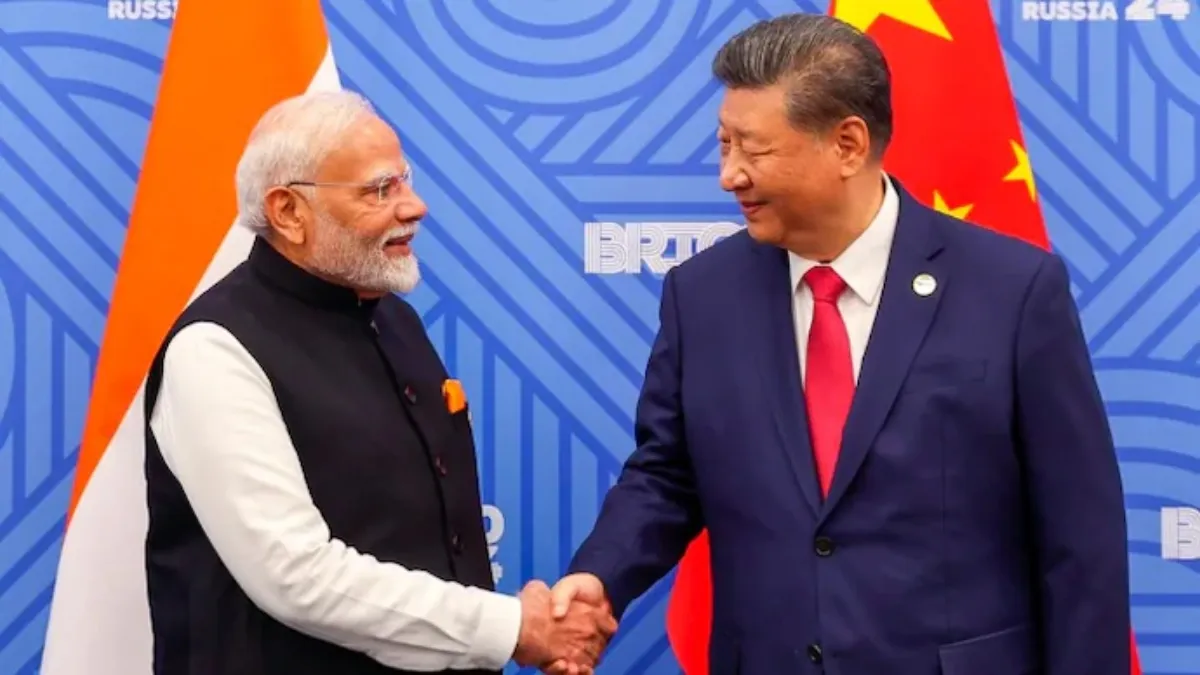
India and China are preparing for a series of high-level talks aimed at mending ties that have been under severe strain since the deadly Galwan Valley clashes in June 2020. Prime Minister Narendra Modi is set to travel to China later this month to attend the Shanghai Cooperation Organisation (SCO) summit, where he will also hold a meeting with President Xi Jinping. Ahead of this, Chinese Foreign Minister Wang Yi is visiting India for two days starting today (August 18) to discuss border issues with National Security Advisor Ajit Doval, and also meet External Affairs Minister S Jaishankar and PM Modi.
The talks scheduled for Tuesday are seen as particularly significant, coming just days before PM Modi's visit to China for the SCO summit. The Chinese foreign minister's visit is largely seen as part of ongoing efforts by the two neighbours to rebuild their relationship after it came under severe strain following the deadly Galwan Valley clashes in 2020. The military standoff in eastern Ladakh began in May 2020, and the clashes at the Galwan Valley in June that year resulted in a severe strain in bilateral ties. Let's find out what India and China did to normalise relations after the clash.
Here are the steps India and China took to normalise relations
To slowly stabilise ties, both sides took a series of diplomatic steps. Here are the key steps:
India-China Corps Commander Level Meeting
India and China had held more than 21 rounds of Corps Commander Level talks, the high-level military talks between senior officers of the Indian Army and the Chinese People's Liberation Army (PLA) to address issues along the Line of Actual Control (LAC). These meetings began after the June 2020 Galwan Valley clashes, which plunged bilateral ties into their worst crisis in decades.
The main agenda of these talks is to reduce tension at the border, move soldiers back from risky positions, and bring peace to the area. So far, India and China have managed to pull back troops from some spots like Pangong Lake, Galwan, and Gogra-Hot Springs. But there are still disagreements in other areas, especially Depsang Plains and Demchok, where the issue has not been fully resolved yet.
India and China have completely pulled back their troops from two face-off points at Demchok and Depsang in eastern Ladakh.
Diplomatic engagements
India and China continued to hold a Working Mechanism for Consultation and Coordination (WMCC) meeting. WMCC is a platform for India and China to discuss and manage border-related issue, which was established in 2012, it aims to maintain peace and tranquility along the LAC through regular dialogue and information exchange.
Foreign Ministers' Talks:
External Affairs Minister S Jaishankar and Chinese Foreign Minister held multiple meetings on the sidelines of global events (SCO, G20, BRICS) to push for de-escalation. It is pertinent to mention that in 2020, Wang Yi was the Foreign Minister, but later in 2023, Li Qiang was appointed as the new Foreign Minister. However, Qin Gang's tenure was short-lived, and by July 2023, he was removed from the post. Wang Yi once again assumed the role of Foreign Minister.
National Security Advisor Ajit Doval and Chinese officials have also engaged multiple times on border issues under the framework of the Special Representatives' dialogue.
High-level talks: PM Modi and Xi Jinping:
After the Galwan clashes in 2020, PM Modi and President Xi Jinping met twice. First, in November 2022, they exchanged greetings on the sidelines of the G20 Summit in Bali. However, in October 2024, during the BRICS Summit in Kazan, Russia, for the first time, both leaders held their first formal talks in five years.
Despite the tension, both nations continued to work together in platforms like BRICS, SCO, and G20.
Trade and tourism
Even amid border tensions, bilateral trade actually continues to grow. India and China bilateral trade continued to boom, crossing USD 100 billion in 2022 while India's trade deficit climbed to over USD 75 billion, according to trade data released by Chinese customs. The total bilateral trade, amidst the military standoff in eastern Ladakh, went up to USD 103.63 billion, registering a 14.6 per cent increase compared to last year during the same period.
India's imports from China include: Electronics items like smartphones and LED TVs, pharmaceuticals and chemicals, industrial machinery, plastic products and packaging materials, agricultural fertilizers among others.
India's exports to China include: Cotton yarn, organic synthetic substances, iron metal, fish, gems and jewellery, iron and steel, salts, and electrical apparatus.
However, several Chinese apps (like TikTok, WeChat, and UC Browser) were banned, citing data security and sovereignty concerns.
Earlier in April 2025, India and China decided to resume the Kailash Mansarovar Yatra as part of efforts to improve ties after the two countries completed disengagement of troops at the two remaining friction points of Demchok and Depsang under the framework of a pact sealed in October last year.
The countries have also agreed in-principle to resume flight services between the two sides as well and that relevant modalities are being worked out.
Also Read: Chinese Foreign Minister Wang Yi to meet PM Modi on August 19 during 3-day India visit
