
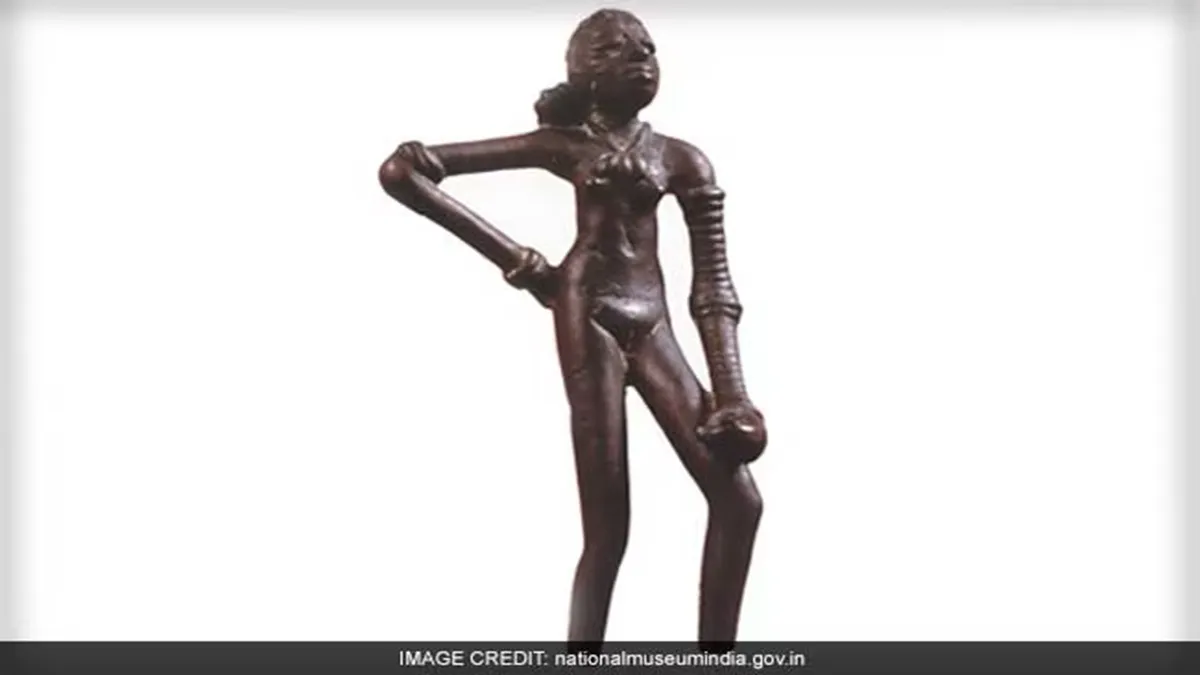
A 45-year-old professor from Ashoka University, Sonipat, has been arrested for attempting to steal a replica of the famous "Dancing Girl" statue from the National Museum in Delhi. The theft, which took place on September 20, was foiled by the museum’s security personnel, who caught the professor during an exit check. The stolen replica was recovered, and the professor was later granted bail. Authorities have initiated a probe to determine the motive behind the theft.
The police have registered a case under Sections 305 (e)(theft in a dwelling house or place of worship) and 317 (2) (receiving stolen property) of the Indian Penal Code. Mukherjee was granted bail but is required to appear before investigators as the inquiry progresses.
Historical significance of the dancing girl statue
The "Dancing Girl" is one of the most significant artefacts from the Harappan/Indus Valley Civilization, dating back over 4,500 years. The small bronze statuette, which stands at just 10.5 cm tall, was excavated from Mohenjo-Daro in 1926 and is now housed in the National Museum’s Harappan Gallery. It depicts a young girl in a dance pose, wearing bangles and a necklace.
The statue symbolises the advanced artistry and metallurgy skills of the ancient Harappan civilization and has become an iconic representation of the era. The replica that was nearly stolen is displayed in the Anubhav Gallery for differently-abled visitors, along with 21 other items from the museum's collection.
Past controversies surrounding the dancing girl
The Mohenjo-Daro Dancing Girl statue has been the subject of several controversies in the past. In 2016, a petition was filed in the Lahore High Court, demanding the return of the statue to Pakistan. Some scholars and political figures have claimed that the statue rightfully belongs to Pakistan, as Mohenjo-Daro is located in present-day Sindh, Pakistan.
Moreover, in 2016, a professor from Banaras Hindu University, Thakur Prasad Verma, suggested that the statue might represent the Hindu goddess Parvati, further fueling debates about its historical and cultural significance.
