
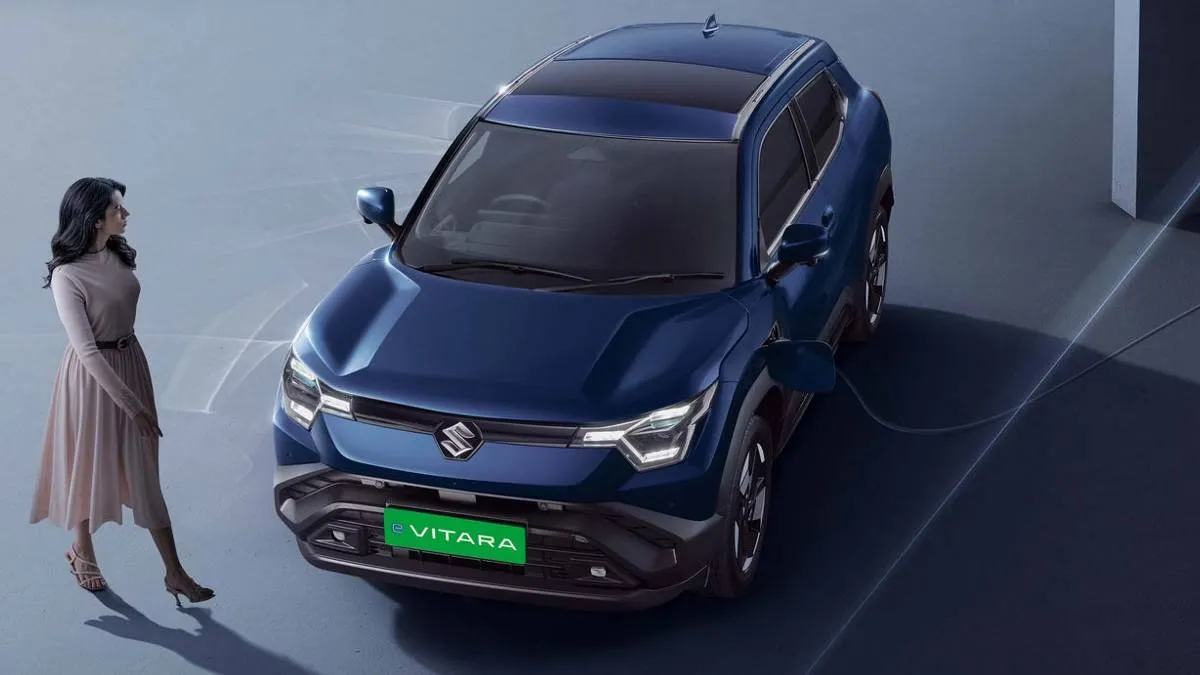
Maruti Suzuki India, the country's largest carmaker, is reportedly recalibrating the production of its upcoming model, the e VITARA, due to a shortage of rare earth magnets, according to industry sources. The company is now aiming to produce about 8,000 units by September, a significant reduction from the previously stated plan to roll out over 26,000 units during the same period. Despite this dip in production, Maruti Suzuki is hopeful of compensating in the following months, setting an ambitious target of around 67,000 units for the fiscal year. However, the company has chosen not to comment officially on the situation.
Earlier in the week, R C Bhargava, Chairman of Maruti Suzuki India, mentioned that there is currently no impact on the company’s production due to the rare earth magnet shortage. Domestic car manufacturers are facing challenges since the Chinese government imposed restrictions on April 4 regarding the export of rare earth elements and their related magnets. The new regulations require special export licenses for seven key rare earth elements.
China, which controls over 90 percent of the global processing capacity for these magnets, is crucial to several sectors, including automobiles, home appliances, and clean energy. In light of the situation, the domestic automobile industry has sought government assistance to expedite the approval process from the Chinese government for the import of rare earth magnets utilised in various applications, especially in passenger cars.
Industry sources have indicated that several domestic suppliers have already pursued approval through their local vendors in China, but as of now, no approvals have been granted. The critical materials affected include samarium, gadolinium, terbium, dysprosium, and lutetium, all essential for components in electric motors, braking systems, smartphones, and even missile technology.
What are Rare earth magnets
Rare earth magnets are integral to permanent magnet synchronous motors (PMSMs) used in electric vehicles (EVs) due to their high torque, energy efficiency, and compact size. Hybrids also rely on these magnets for effective propulsion, while their use in internal combustion engine vehicles is largely confined to electric power steering and other motorised systems.
ALSO READ: Maruti Suzuki rolls out finance scheme for Grand Vitara upgrades
Inputs from PTI
