
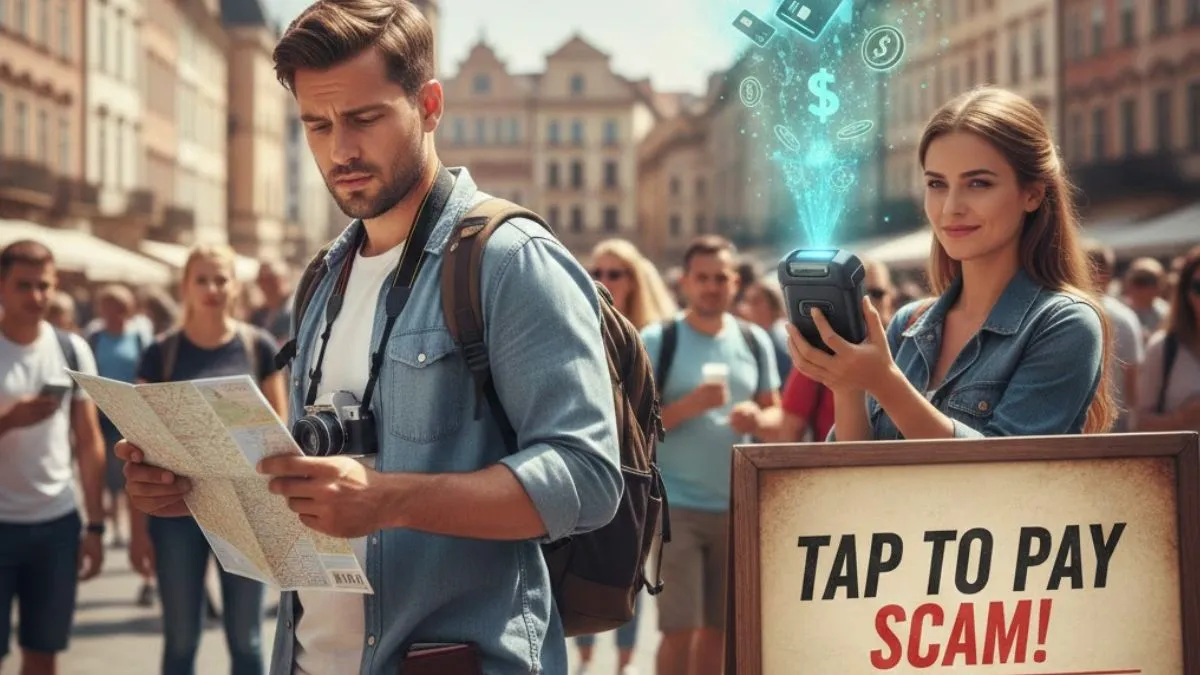
If you love to travel and shop a lot with your credit or debit cards, then here is something you must pay attention to. A new digital payment scam has taken place worldwide, which is termed ‘ghost tapping’ and is majorly escalating at tourist destinations (in many countries). This new digital payment scam is misusing tap-to-pay (NFC) technology on debit or credit cards and smartphones. The scammers are mainly targeting travellers, attempting to steal their account balance/money while being around crowded areas like airports, festival gatherings and busy markets.
Here is everything you need to know about the scam and how it's bothering the unbothered and happy traveller. Also will share how to keep safe while travelling.
What is ‘Ghost Tapping’?
As contactless payments have become a popular way of making payments, scammers have figured out a way to adapt to it fast and use the opportunity. Ghost tapping is a process where a fraudster uses an NFC-enabled device to trigger contactless payments – silently, while the victim is unaware.
There are a number of reports that state the new scamming trend, where scammers do not need any card details or OTP. If your credit card or phone has tap-to-pay enabled, then the scammers could simply stand close to you and may capture payment data or initiate a transaction by using a similar wireless technology.
How the scam works
- Ghost tapping relies on Near Field Communication (NFC) technology – the same advanced tech which is being used in contactless cards, Apple Pay, Google Pay and Samsung Wallet.
- Scammers are operating this fraud very smartly, without letting the traveller even notice it:
- Scammers carry portable NFC readers or smartphones which are modified
- They stay with their target victims in crowded tourist places, at airports or at any celebration gathering
- Fake vendors may ask you to ‘tap to pay’ for small purchases
- Victims may be charged more than shown, or charged without noticing
- One thing one should keep an eye on is that the scammers often require the fraudster to stay near the target for a short period for the transaction to go through.
Where is Ghost Tapping being reported the most?
While no country-specific data has been revealed and become official yet (by the time of writing), cybersecurity experts have said that Ghost Tapping incidents have grown in high-tourism regions, including:
- United States (around the festivals and large gatherings)
- The United Kingdom and some parts of Western Europe
- France
- Spain
- Italy
- Thailand
- Indonesia
- Some popular international airports and transit hubs
Why travellers and tourists easy targets?
- During travel, especially in an international destination, tourists are vulnerable because they often rely heavily on the technology of tap-to-pay for speed and convenience.
- Crowded environments reduce awareness.
- Tourists may not check transaction alerts immediately
- Fake vendors blend easily into markets and events
- Foreign currency confusion hides overcharging
How to protect yourself from Ghost Tapping during your next international trip
Here are some steps to follow while travelling:
- Turn off NFC on your smartphone when not in use- Be alert!
- Use RFID-blocking wallets or card sleeves – those wallets which have a shied which hold your card for any payments when they are in it.
- Avoid tapping cards at unverified stalls or vendors – unbranded stores, street-side shops and more.
- Have instant transaction alerts enabled from your bank applications
- Use mobile wallets with biometric authentication – a major security feature
Is Tap-to-Pay still safe?
Yes! As per the experts, tap-to-pay remains safer than swiping or inserting cards, as transactions are encrypted and harder to clone. The risk is low but increases in crowded or unfamiliar environments.
