
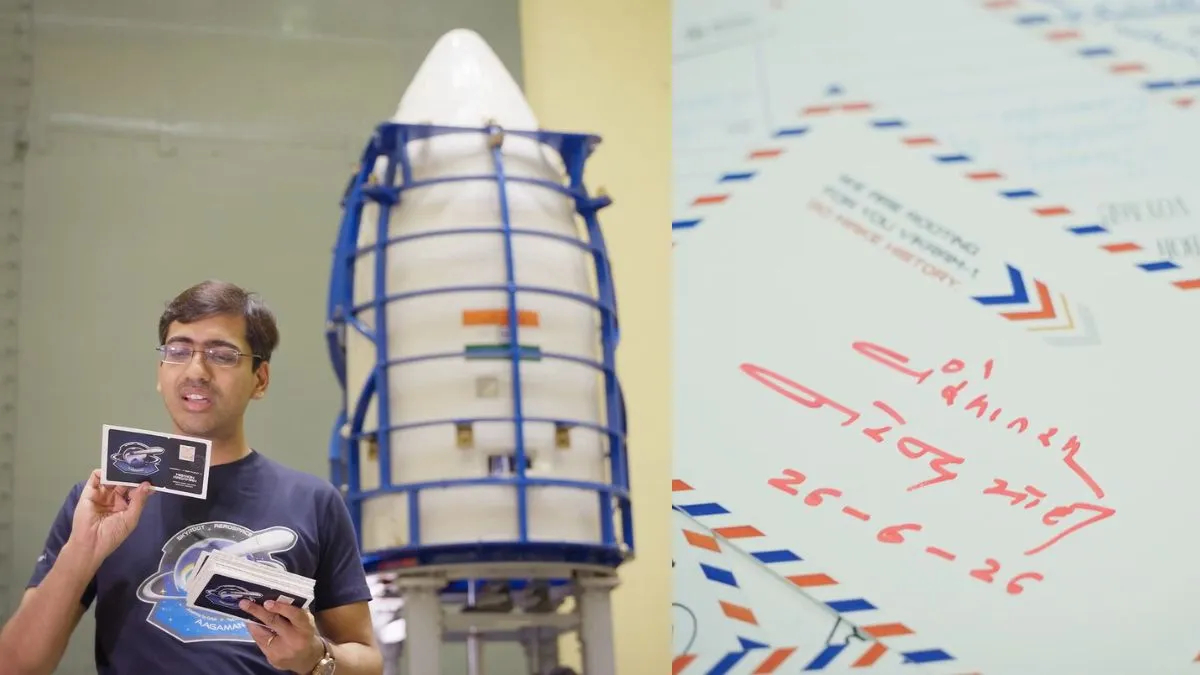
India’s private space sector is about to take a leap and achieve another milestone by launching the new Vikram-1 Test Flight-1. The mission is applauded by a lot of investors and praisers, and the most exciting thing for the team of Skyroot Aerospace is that they received the handwritten postcard from Prime Minister Modi.
The postcard was inscribed with ‘Vande Mataram’, along with the date and PM’s name on it. This postcard, along with handwritten messages from Skyroot’s team, investors, policymakers, and supporters, will be heading to space on Skyroot Aerospace's Vikram-1 Test Flight-1.

Narendra Modi on a postcard gives a boost to the Skyroot Aerospace team
- That simple postcard captured everyone’s attention in the Skyroom Aerospace team.
- ‘Vande Mataram’, written by the Prime Minister’s own hand, stood out among the payloads for this flight.
- Skyroot shared the news online via a social media video, which was posted on their official X handle (formerly known as Twitter).
The team called this one of the most meaningful payloads they have ever launched. The card does not just ride; it carries the weight of a country’s hopes and says that with pride: India means business in the global space race.
About Mission Aagaman
The Vikram-1 launcher has been named after Dr Vikram Sarabhai, who kick-started India’s space journey. Skyroot has designed it to carry small satellites with up to 350 kg into low Earth orbit. This mission will be shooting for a 450 km altitude at a 60-degree tilt, according to the reports.
And it is not just Vikram-1; ISRO has its own Small Satellite Launch Vehicle (SSLV) in play, and ‘Agnikul’ is reportedly working on its own line of rockets. All these projects promise to deliver a solid boost when it comes to sending the satellites into a lower orbit of India, especially when it is getting quite busy due to constellations like Starlink and OneWeb, which have already been pushing up the fleets of small satellites for things like satellite internet service.
The private space in India has grown immensely, and since then, the doors have opened wide for non-government players. Startups like Skyroot are following ISRO’s path, and now they are building their own space rockets.
Mission Aagaman signals that things are changing. This is not just about science and technology anymore. Rather, it is about forging a space community that brings together scientists, entrepreneurs, investors, policymakers, and everyday citizens.