
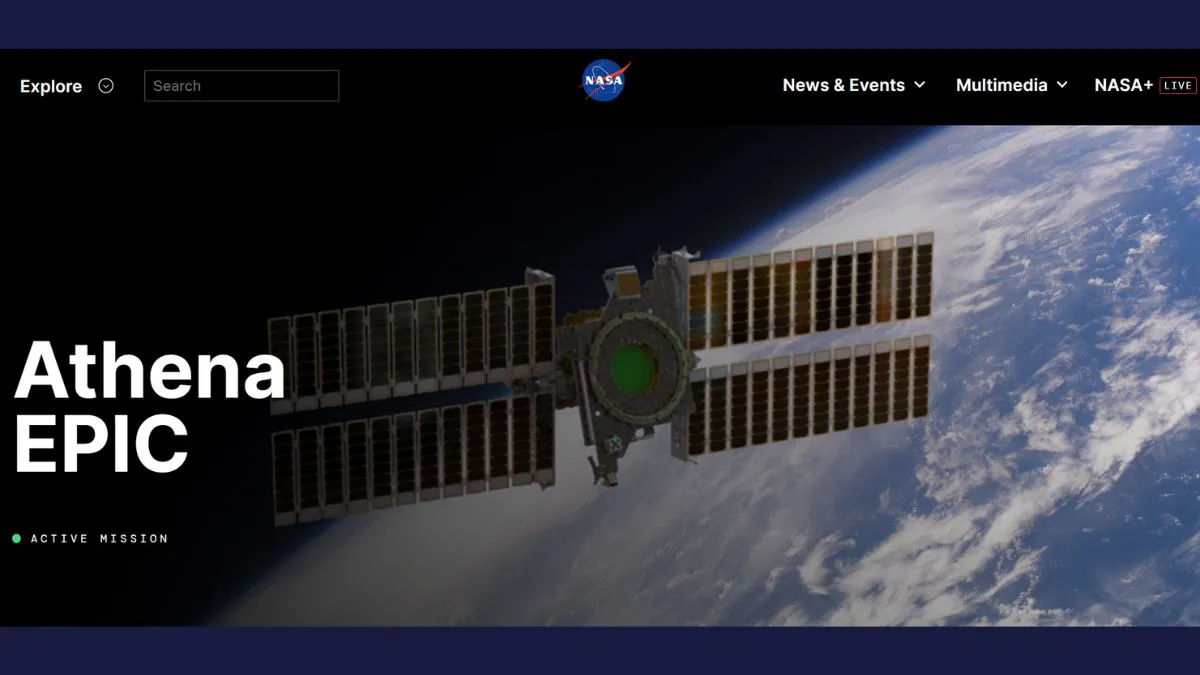
NASA (National Aeronautics and Space Administration), a space research agency based in the US, is reportedly working on a new way to build and launch satellites, which will be faster and cheaper than the existing ones. With the mission, named Athena EPIC, the agency is testing small, modular spacecraft which is capable of carrying multiple instruments without needing separate systems for each.
This could help the space agency launch climate and weather sensors more quickly and at a lower cost. The Athena satellite will launch with SpaceX in mid-2025 to test how well this new system works in space.
Modular satellite design for easy integration
NASA's new Athena EPIC satellite is reportedly made by using eight connected modules called HISats (Hyper-Integrated Satlets). These blocks form a complete satellite system known as a “SensorCraft,” which can share power, data, and control systems across all the instruments onboard. This makes it easier and faster to prepare the satellite for launch.
NASA is also testing similar ideas with its Pathfinder Technology Demonstrator (PTD) program.
For example, PTD-3 used a small CubeSat to test a laser system that sent data back to Earth at record speeds—200 gigabits per second.
Private companies are also contributing
NASA is working with companies like Blue Canyon Technologies, which built two small CubeSats for NASA's CLICK mission. These CubeSats tested laser communication between satellites.

The company is also building four more satellites for NASA’s Starling mission, which will test how small satellites can fly together in formation. These ready-made systems help NASA test new ideas without spending years building big, custom satellites.
Why does this new technology in space research matter? Faster, cheaper, and more science
By using modular designs and reusing old parts, NASA can save time and money. Instead of spending billions on a single satellite, these smaller systems can cost just a few million. If something goes wrong, they are cheaper and easier to replace. NASA officials believe that as satellites get smaller, we need new, faster ways to get them into space. This could lead to more frequent missions and better science data.