
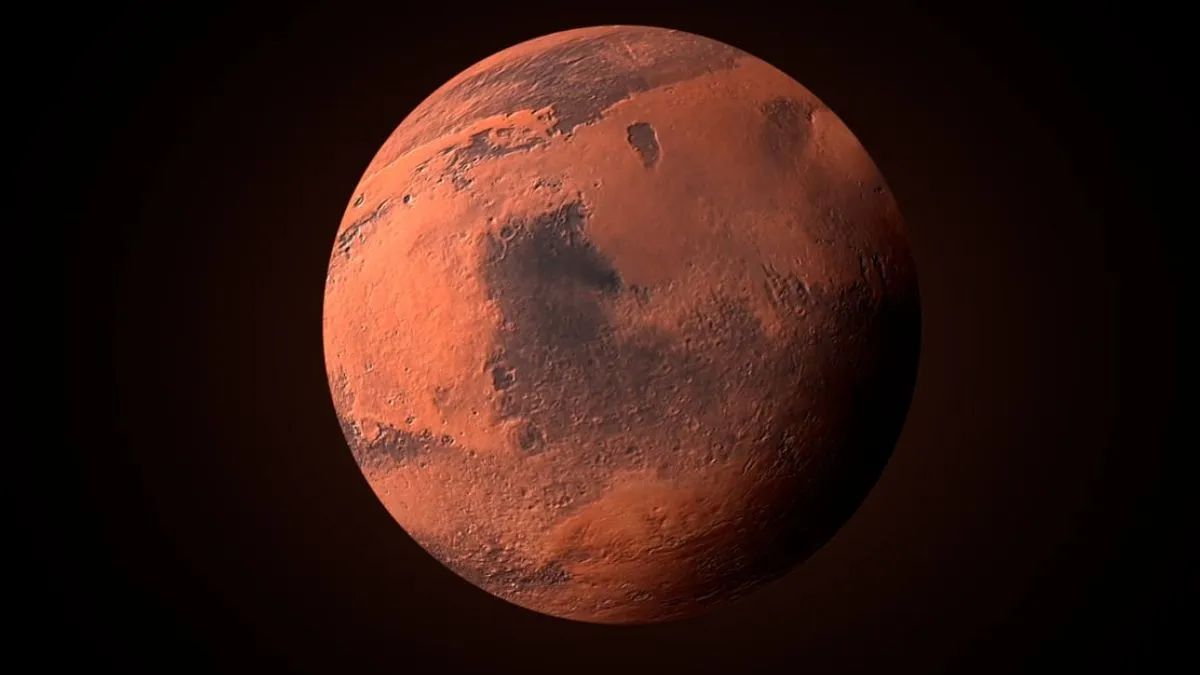
A huge solar storm just gave scientists a fresh clue about how Mars lost so much of its atmosphere, and all that ancient water. A team at West Virginia University spotted something unusual after a powerful solar eruption slammed into the planet. Their observations, published in Nature Communications, suggest Mars is still losing its atmosphere today, right under our noses.
Solar storm triggered rare atmospheric activity on Mars
On December 10, 2023, NASA’s MAVEN orbiter picked up odd plasma structures in Mars’ ionosphere, way up—about 185 kilometres above the surface. These plasma formations only appeared after a massive burst of solar material, a coronal mass ejection (CME), hit the planet. Five of these giant plasma blobs raced through the upper atmosphere, and where they passed, plasma density dropped by a whopping 30 to 40 per cent.
The culprit is the rare process called the Zwan-Wolf effect, which triggered sudden shifts and compression in ionospheric particles.
Why Mars is more vulnerable than Earth
Mars gets hit especially hard by this kind of space weather. Unlike Earth, Mars doesn’t have a strong global magnetic field to shield it. Earth’s magnetic bubble fends off most of the solar onslaught, but Mars is basically exposed. That means solar wind slams straight into the atmosphere, gradually stripping away gases and turning what might have been a warm, wet planet into the cold, dry world we see now.
Discovery could help future Mars missions
Researchers think these plasma structures might be a constant feature on Mars, as they just slip by undetected most of the time because regular instruments can’t pick them up. It actually took this unusually powerful solar storm to catch them in the act.
For future missions, that matters a lot. The study highlights just how much space weather can mess with Mars’ atmosphere and how it could affect both astronauts and equipment when humans visit the planet.
Similar effects may exist on other worlds
And Mars is not alone here. The same processes might be happening on other worlds that don’t have magnetic shields, like Venus or Saturn’s moon Titan. Now that scientists have a better window into how solar storms interact with planetary atmospheres, they can start to piece together how planets evolve, or lose their atmospheres over billions of years. The story’s not over yet.
