
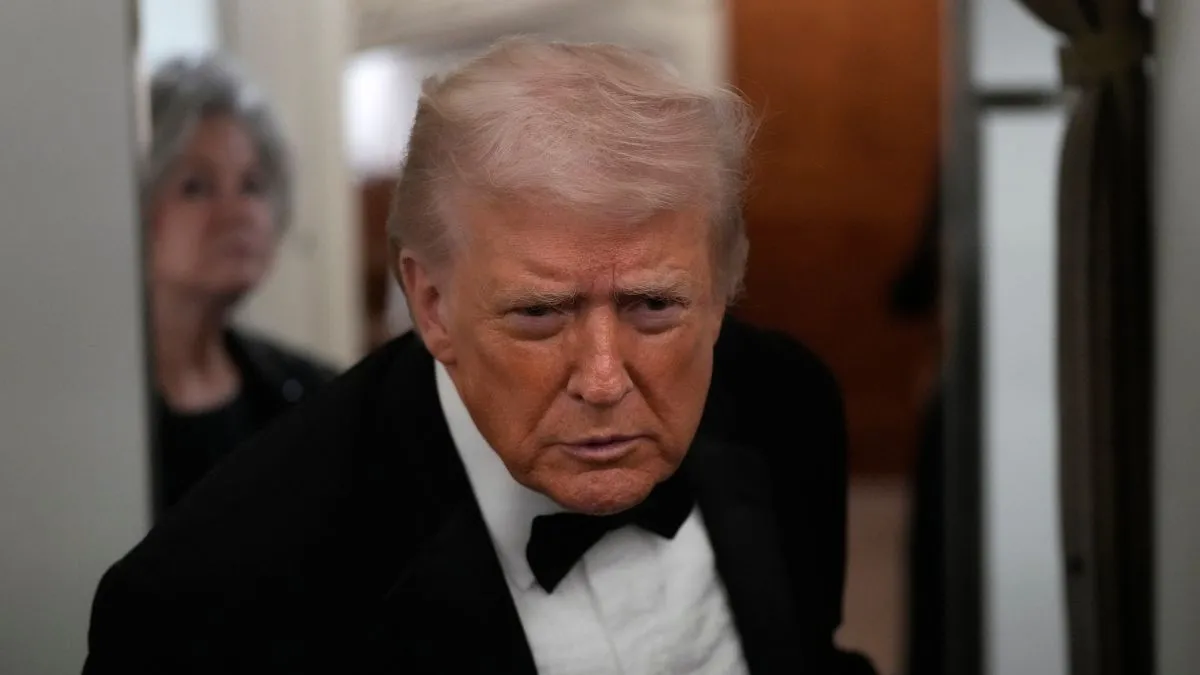
US President Donald Trump said on Sunday that the negotiations to acquire Greenland are underway and are nearing an agreement. Speaking to reporters aboard Air Force One, the 79-year-old Republican president further stated that the deal is crucial for the national security of the United States.
This is the second time in around 10 days when Trump has said that a deal over Denmark is nearing.
"We have started a negotiation, and I think it’s pretty well agreed to. I mean, they want us to do it," he said. "I think it’s gonna be a good deal for everybody, very important deal actually, from a national security point of view, very, very important deal. I think we’re going to make a deal there."
Greenland is an autonomous territory of Denmark. Lately, Trump has pushing for a deal to acquire Greenland, citing threats from Russia and China. He even threatened to impose tariffs on his allies from the Northern Treaty Atlantic Organization (NATO). His threats have left his European partners at an unease.
Will US use force to acquire Greenland?
But on January 21, during 2026 World Economic Forum (WEF) in Switzerland's Davos, the US president said that his country will not use any force to acquire Greenland. He even said that a "framework of a deal" has been reached with NATO secretary general Mark Rutte. Although he had refused to name a reasonable price for the United States to buy Danish territory.
"There's a bigger price, and that's the price of safety and security and national security and international security having to do with many of your countries," Trump had said. "That's really the price. It's a big price."
However, Trump's European partners have been critical of his move, with Sweden's Deputy Prime Minister Ebba Busch saying that Europe must take a tough stand against the US president. Busch even said that Europe won't be "bullied or blackmailed" into letting go of a territory.
Meanwhile, Danish Prime Minister Mette Frederiksen has said that her country will not negotiate on the country's sovereignty. The security in the Artic region, she said, is a matter for the entire NATO.
