
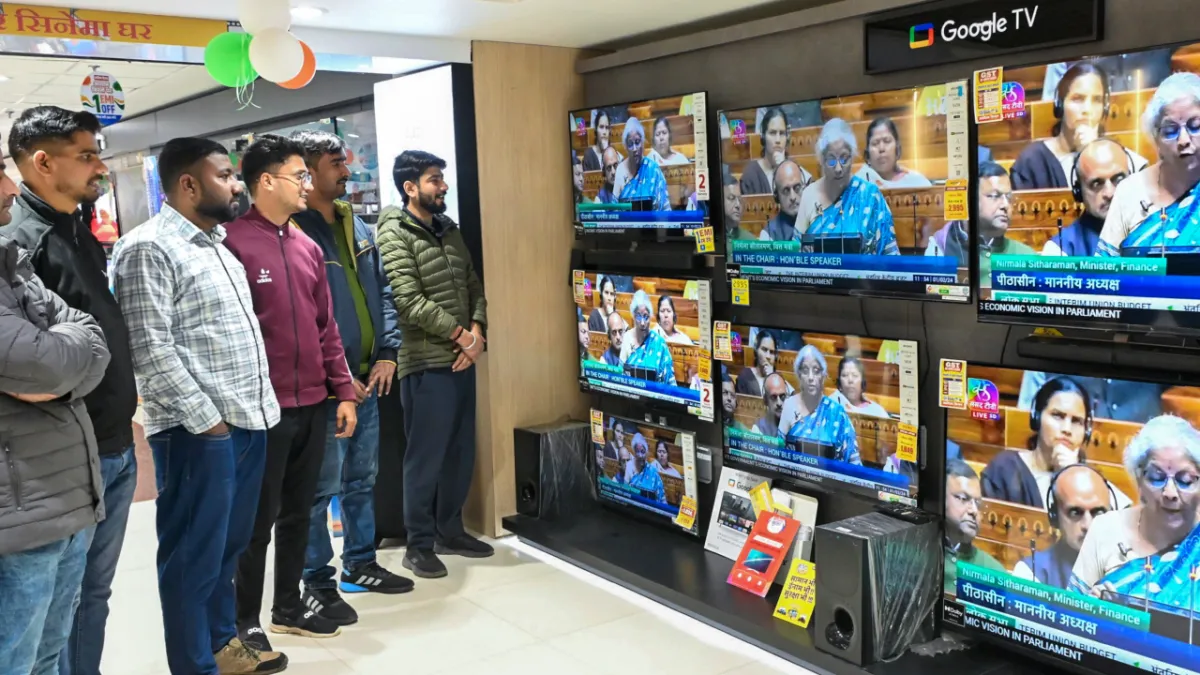
While tax slabs remain steady, the Aam Aadmi benefits from a streamlined tax ecosystem where income up to Rs 12.75 lakh remains tax-free. Significant relief comes through cheaper cancer life-saving drugs, reduced TCS on foreign education, and a massive Rs 12.2 lakh crore capex push aimed at high-quality job creation for the next generation.
Operation Sindoor impact: A massive leap in Defence modernisation
The defence budget has spiked to Rs 7.85 lakh crore, featuring a significant 21.84% increase in modernisation funds. Under the spirit of Operation Sindoor, the capital outlay reaches Rs 2.19 lakh crore, prioritizing aircraft and aero engines. Increased allocations for operations and pensions further strengthen national security and military readiness.
Fiscal sovereign anchor
India is positioning itself as the stability play for global investors amidst volatile US trade policies.
Deficit compression: The fiscal deficit is pegged at 4.3 per cent of GDP for FY27, continuing the glide path from 4.4 per cent in the previous year.
Debt-to-GDP target: A new fiscal anchor has been established to bring the debt-to-GDP ratio to 50% by 2030, prioritizing sovereign credit stability.
Borrowing strategy: Net market borrowing is set at Rs 11.7 lakh crore, reflecting a disciplined approach to public debt management.
Manufacturing 2.0: From assembly to innovation
By moving beyond basic incentives, the roadmap focuses on securing critical supply chains and creating localized economic engines. This budget marks the birth of PLI 2.0, focusing on frontier technology rather than just scale.
Biopharma SHAKTI: A Rs 10,000 crore outlay is dedicated to transforming India into a global hub for biologics and advanced biotechnology.
ISM 2.0: The India Semiconductor Mission has shifted focus toward manufacturing chip-making equipment and securing domestic IP.
Critical mineral security: Dedicated Rare Earth Corridors in Odisha, Kerala, Andhra Pradesh, and Tamil Nadu will be developed to ensure a steady supply of minerals for green energy.
Infrastructure: From roads to growth connectors
Capex expansion: Capital expenditure is increased to Rs 12.2 lakh crore, an 11.5% jump aimed at high-multiplier assets.
High-speed rail: Seven new corridors, including Delhi-Varanasi and Mumbai-Pune, are planned to transform rail travel into a high-efficiency economic driver.
Modal shift: Significant investment is directed toward coastal shipping and inland waterways to reduce logistics costs to below 9% of GDP.
Taxation: Simplification over slabs
The Old Regime is being systematically phased out in favor of a trust-based, simplified code.
New Income Tax Act, 2025: Effective April 1, 2026, this new code replaces the 1961 Act, utilizing plain language to minimize legal disputes and eliminate redundant provisos.
Market regulation: The Securities Transaction Tax (STT) on futures rises to 0.05% and options to 0.15% to mitigate excessive retail speculation in derivatives.
Buyback parity: Proceeds from share buybacks are now taxed as capital gains for the shareholder, removing the previous tax advantage over dividends.
Geopolitical Resilience
Export fortification: Customs duties on raw materials for leather, textiles, and marine products have been slashed to keep Indian exports competitive against global tariff volatility.
Energy sovereignty: Basic customs duty exemptions for nuclear power projects are extended until 2035 to accelerate the transition to carbon-neutral baseload power.
Strategic stockpiles: Funding is allocated for the expansion of strategic petroleum and mineral reserves to buffer against global supply chain shocks.
The 'City Economic Region' Strategy
A shift in strategy from national corridors to localised growth hubs.
Urban challenge fund: A Rs 1 lakh crore fund will be allocated to cities that demonstrate the most viable plans for economic densification and sustainable transit.
Satellite hubs: The strategy focuses on developing Tier-2 and Tier-3 cities into self-sustaining growth clusters through high-speed connectivity to major metros.
Housing and amenities: The expansion of urban infrastructure includes a mandate for STEM-focused girls' hostels and university townships to foster localized talent pools.
