
Today, the Directors General of Operations from the Army, Air Force, and Navy held a press conference to inform the citizens about the country's air defense systems, which successfully thwarted Pakistan's air invasion following India's launch of Operation Sindoor as a response to the terrorist attack in Pahalgam. Director General of Air Operations, A.K. Bharti, emphasised that India’s air defense systems serve as a formidable barrier, making it nearly impossible for the enemy to breach. He reflected on how the Indian forces have significantly minimise damage to both civilian and military infrastructure, despite relentless attacks from Pakistani forces. Bharti highlighted that India’s air defense system boasts a diverse array of multilayered sensors and weapon systems.
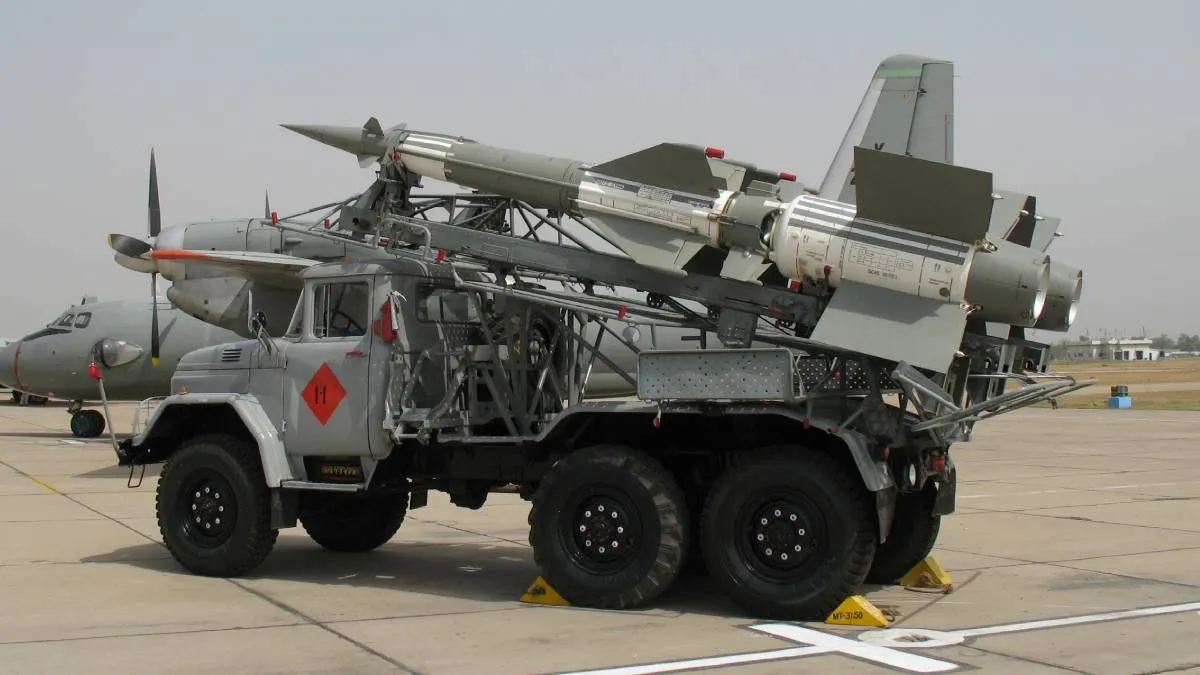
He underscored the performance and effectiveness of older, battle-proven systems like the Pechora and Osa-AKM, which have bravely confronted Pakistani air assaults head-on. Here are all the details you need to know about the Pechora air defence system.
S-125/Pechora air defence system
The S-125 Pechora is a Soviet-made surface-to-air missile system that has served as the backbone of the Indian Air Force’s air defense for many years. Originally introduced by the Soviet Union in 1961, this system has now been operational for over six decades. It has played a significant role in nearly every contemporary conflict and has successfully engaged numerous adversaries, achieving countless kills. The Indian Air Force operates 25 Pechora squadrons, which include both fixed land-based systems and mobile truck-mounted variants.
Designed by Aleksei Isaev, the S-125 Neva/Pechora was developed as an enhancement to the earlier S-25 and S-75 systems. With a maximum speed reaching between 3 and 3.5 Mach, the Pechora can effectively engage targets at altitudes below 20 kilometers and has an operational range of 30 kilometers.
ALSO READ: ‘Sham no Varunah’: What is the meaning of Sanskrit phrase invoked by DG of Naval Operations
